Lesson 005 · posted Wed Sep 2 2026
Keep Messing Up?
What Judaism says about starting again: five ideas, each with its source.
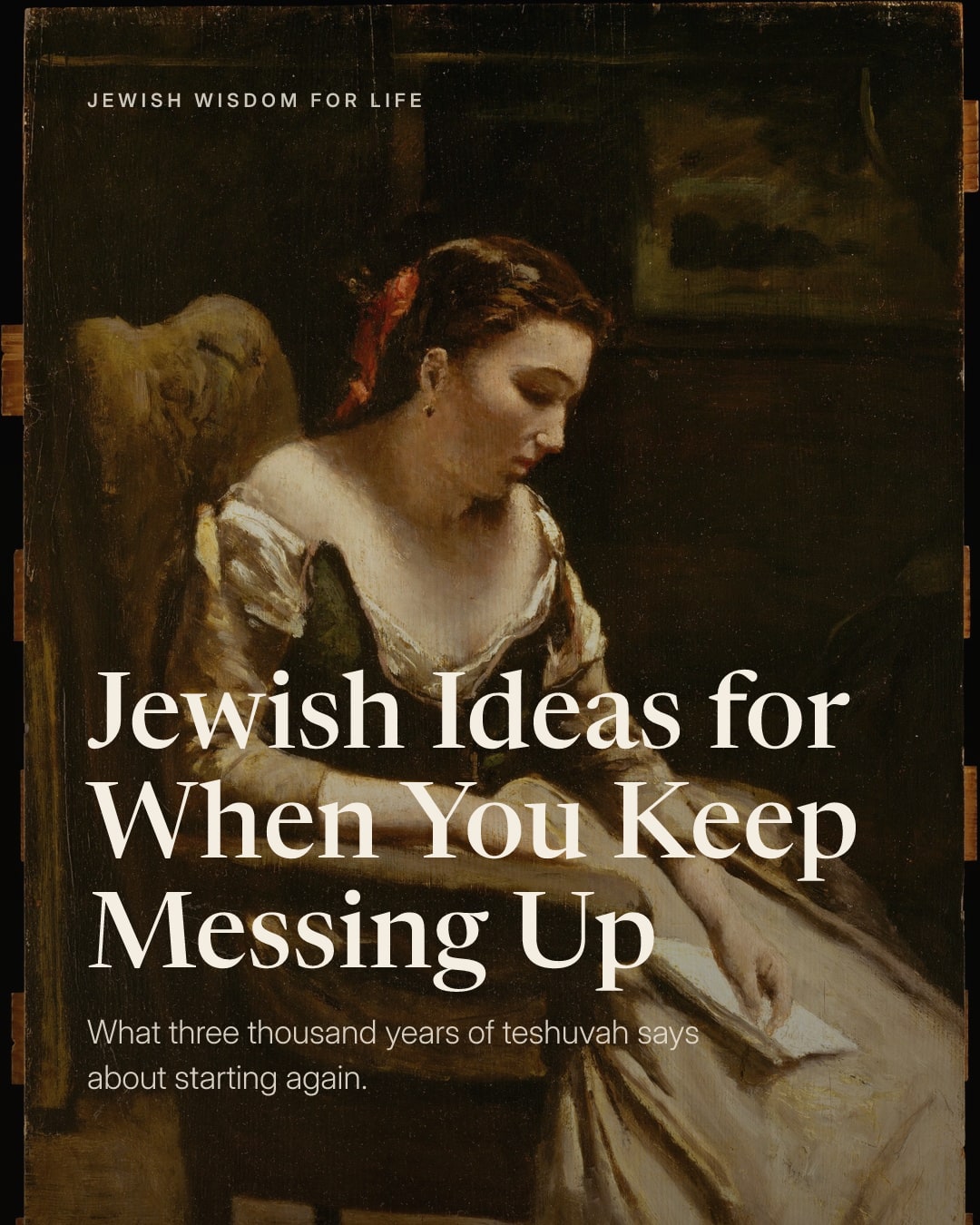
What three thousand years of teshuvah says about starting again. Your worst chapter is not your last one. In this tradition, starting again is the oldest skill there is.

- 1
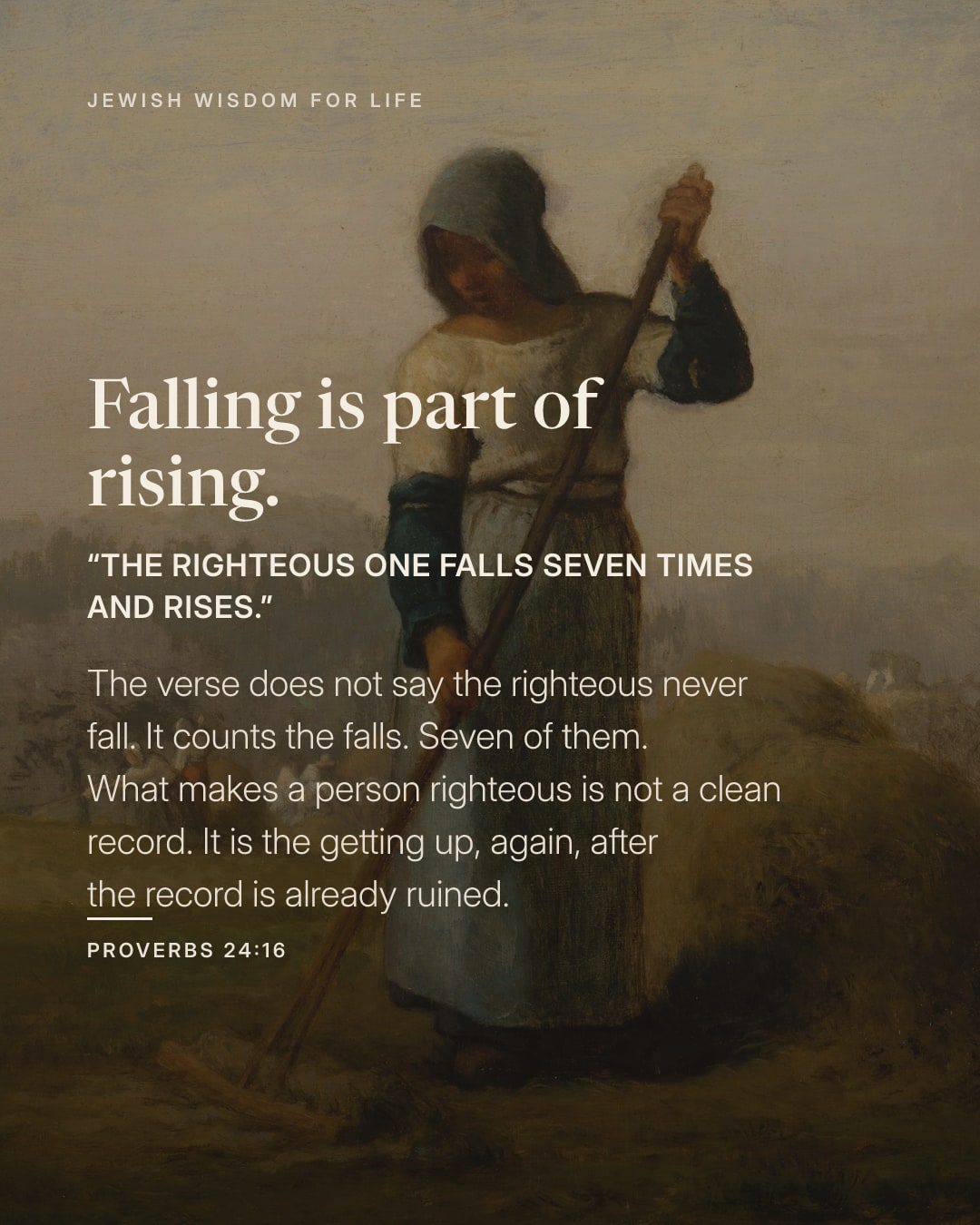
Falling is part of rising.
שבע יפול“The righteous one falls seven times and rises.”Proverbs 24:16
The verse does not say the righteous never fall. It counts the falls. Seven of them. What makes a person righteous is not a clean record. It is the getting up, again, after the record is already ruined.
- 2
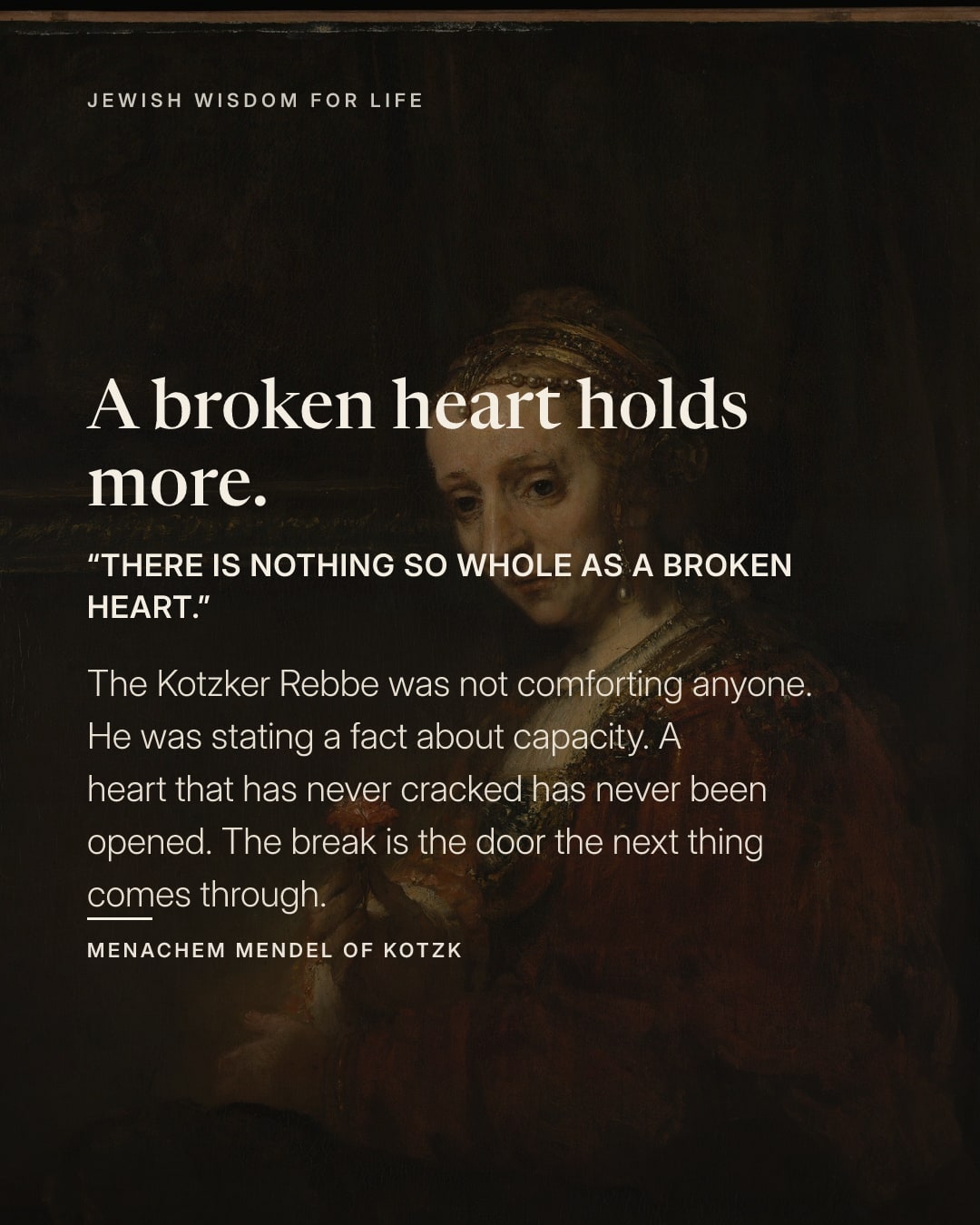
A broken heart holds more.
לב נשבר“There is nothing so whole as a broken heart.”Menachem Mendel of Kotzk
The Kotzker Rebbe was not comforting anyone. He was stating a fact about capacity. A heart that has never cracked has never been opened. The break is the door the next thing comes through.
- 3
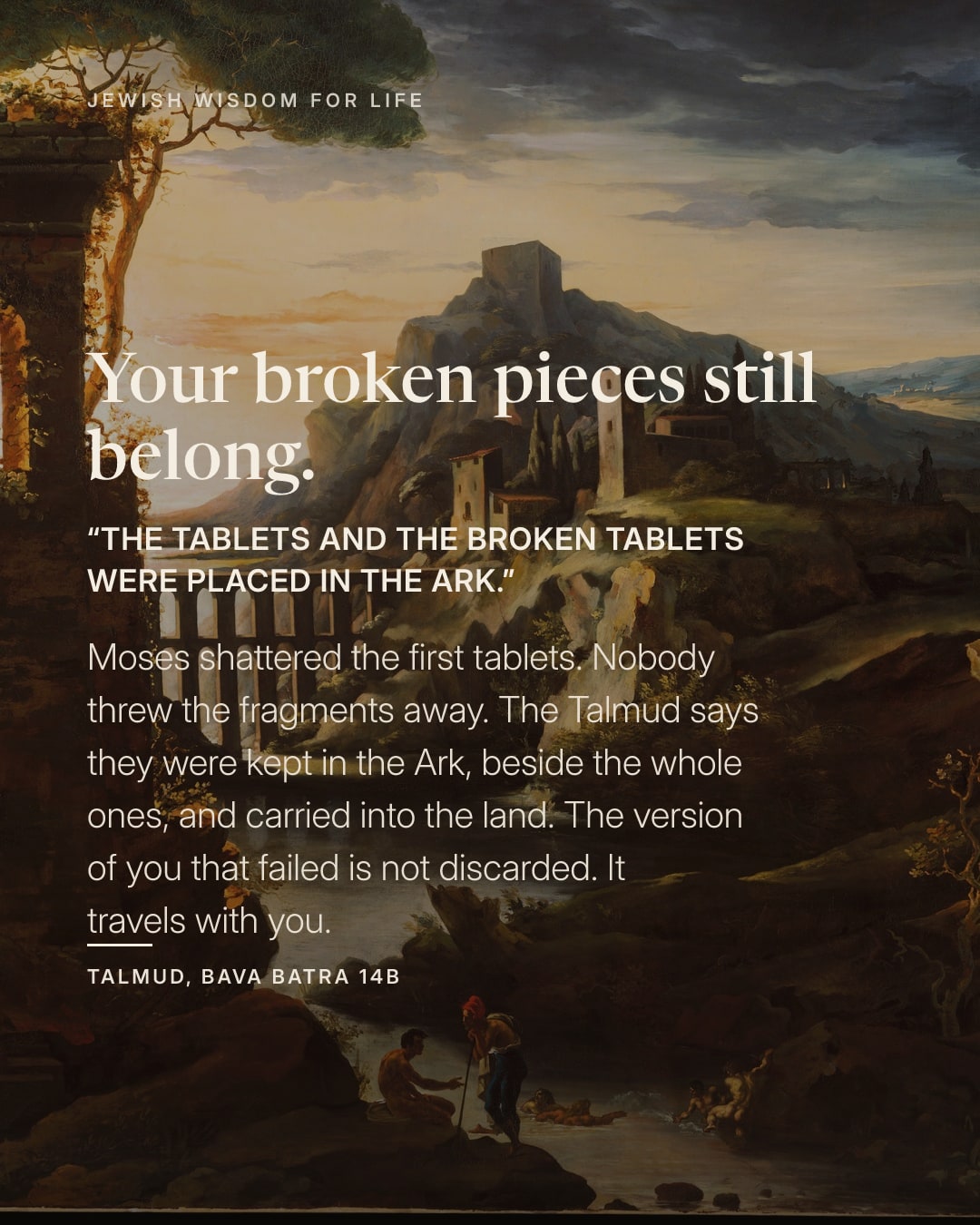
Your broken pieces still belong.
שברי לוחות“The tablets and the broken tablets were placed in the Ark.”Talmud, Bava Batra 14b
Moses shattered the first tablets. Nobody threw the fragments away. The Talmud says they were kept in the Ark, beside the whole ones, and carried into the land. The version of you that failed is not discarded. It travels with you.
- 4
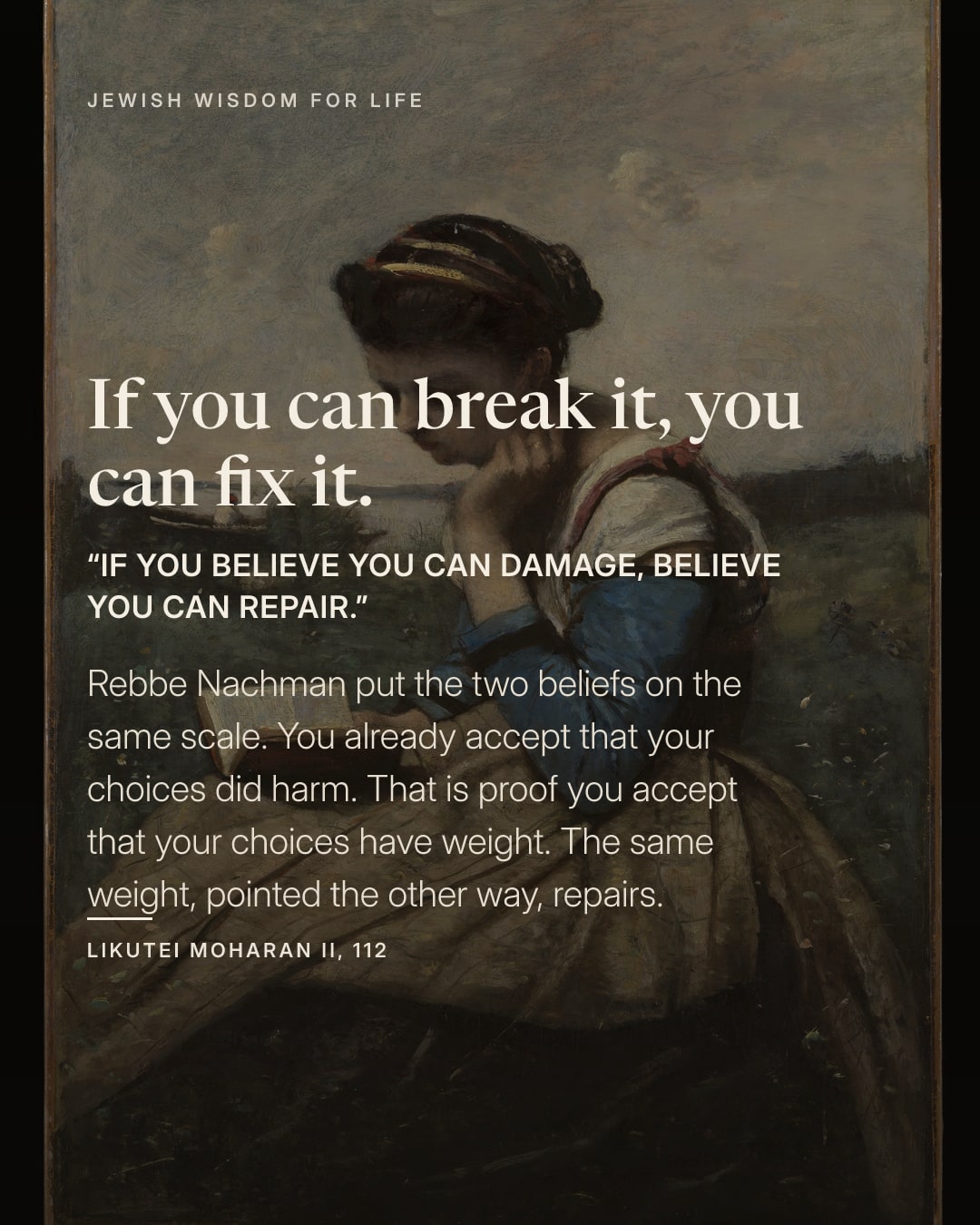
If you can break it, you can fix it.
לתקן“If you believe you can damage, believe you can repair.”Likutei Moharan II, 112
Rebbe Nachman put the two beliefs on the same scale. You already accept that your choices did harm. That is proof you accept that your choices have weight. The same weight, pointed the other way, repairs.
- 5
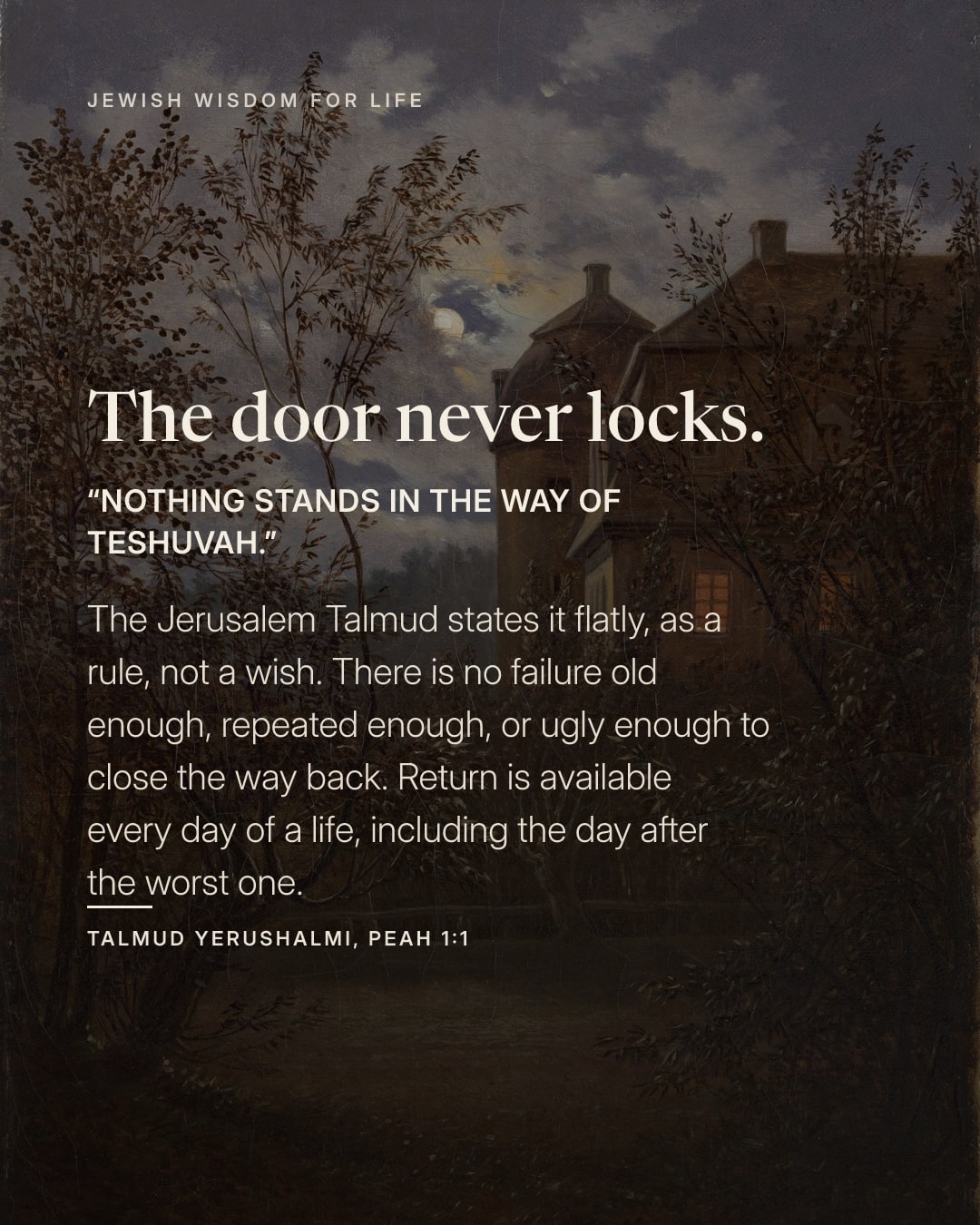
The door never locks.
תשובה“Nothing stands in the way of teshuvah.”Talmud Yerushalmi, Peah 1:1
The Jerusalem Talmud states it flatly, as a rule, not a wish. There is no failure old enough, repeated enough, or ugly enough to close the way back. Return is available every day of a life, including the day after the worst one.
Your worst chapter is not your last one.
In this tradition, starting again is the oldest skill there is.
Save this for the day after a fall. Send it to someone starting over.
Sources
- Proverbs 24:16 on Sefaria
- Menachem Mendel of Kotzk
- Talmud, Bava Batra 14b on Sefaria
- Likutei Moharan II, 112 on Sefaria
- Talmud Yerushalmi, Peah 1:1 on Sefaria
Art on the slides: Camille Corot, The Letter (ca. 1865) · Jean-François Millet, Woman with a Rake (probably 1856–57) · Rembrandt (Rembrandt van Rijn), Woman with a Pink (early 1660s) · Théodore Géricault, Evening: Landscape with an Aqueduct (1818) · Camille Corot, A Woman Reading (1869 and 1870) · Carl Gustav Carus, Schloss Milkel in Moonlight (ca. 1833–35) · Léon-Germain Pelouse, January: Cernay, near Rambouillet (). The Metropolitan Museum of Art, open access.