Lesson 012 · posted Thu Sep 3 2026
Everyone Seems Ahead of You?
What Judaism says about envy, and where it actually points: five ideas, each with its source.
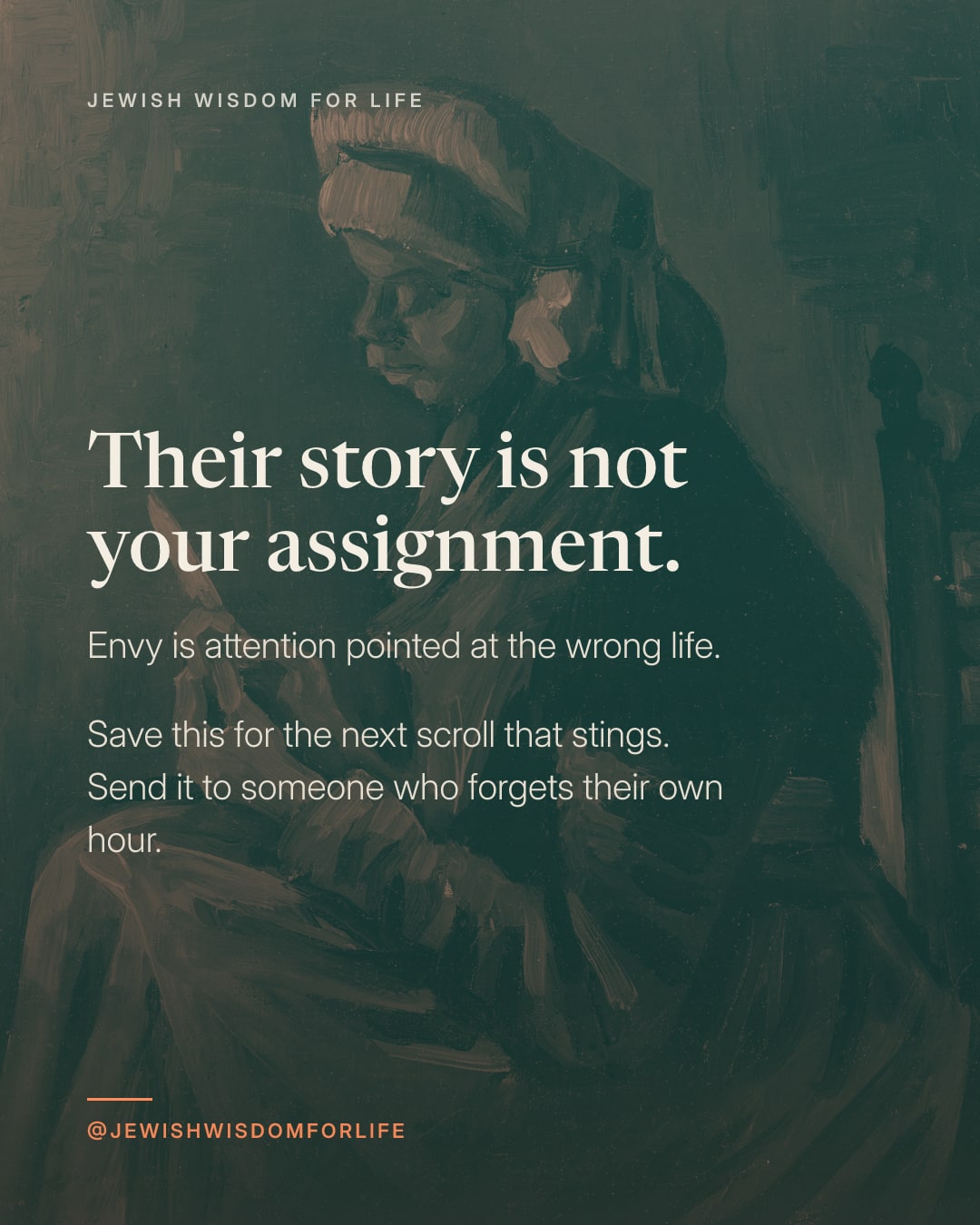
What the tradition says about envy, and where it actually points. Their story is not your assignment. Envy is attention pointed at the wrong life.


- 1
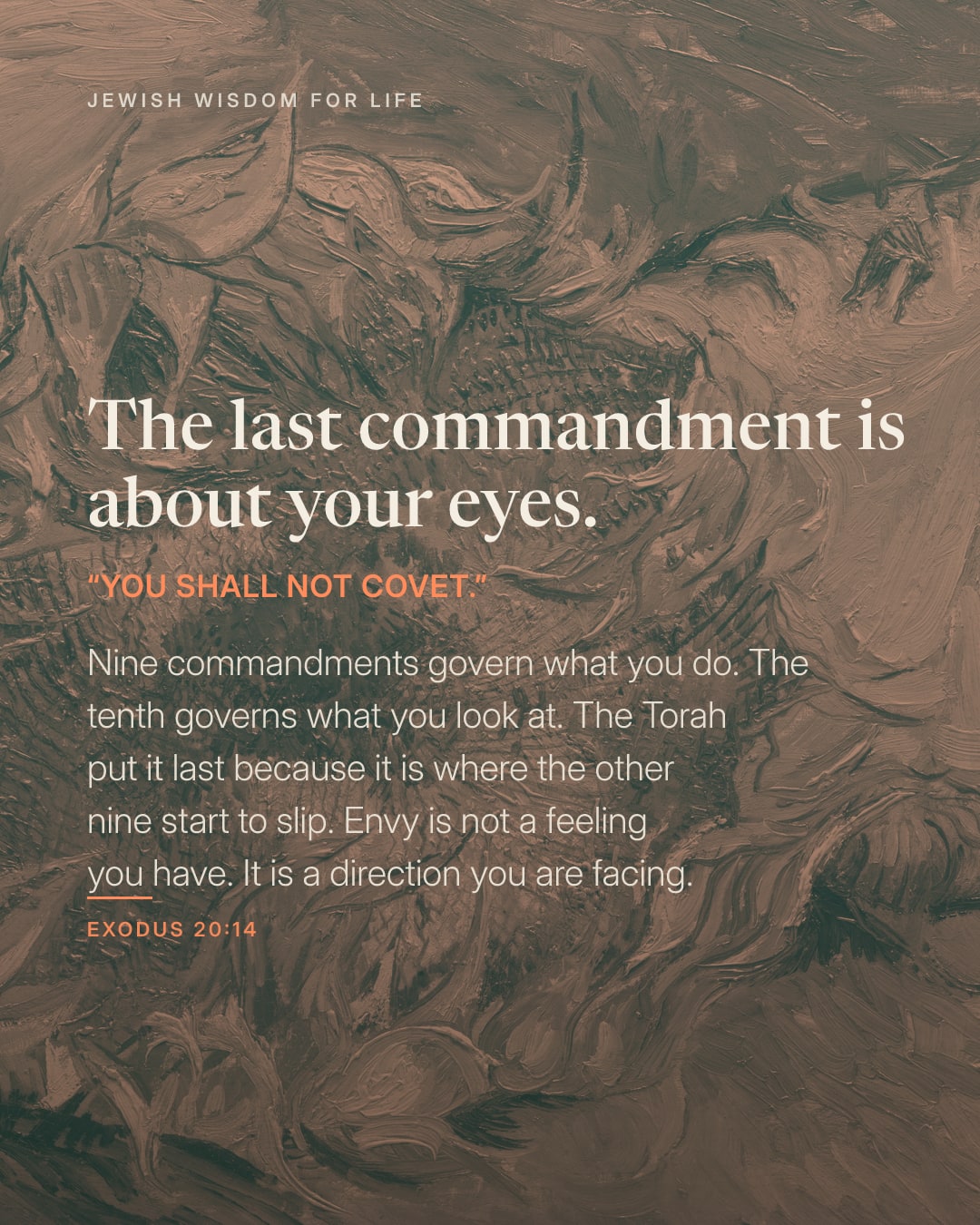
The last commandment is about your eyes.
לא תחמוד“You shall not covet.”Exodus 20:14
Nine commandments govern what you do. The tenth governs what you look at. The Torah put it last because it is where the other nine start to slip. Envy is not a feeling you have. It is a direction you are facing.
- 2
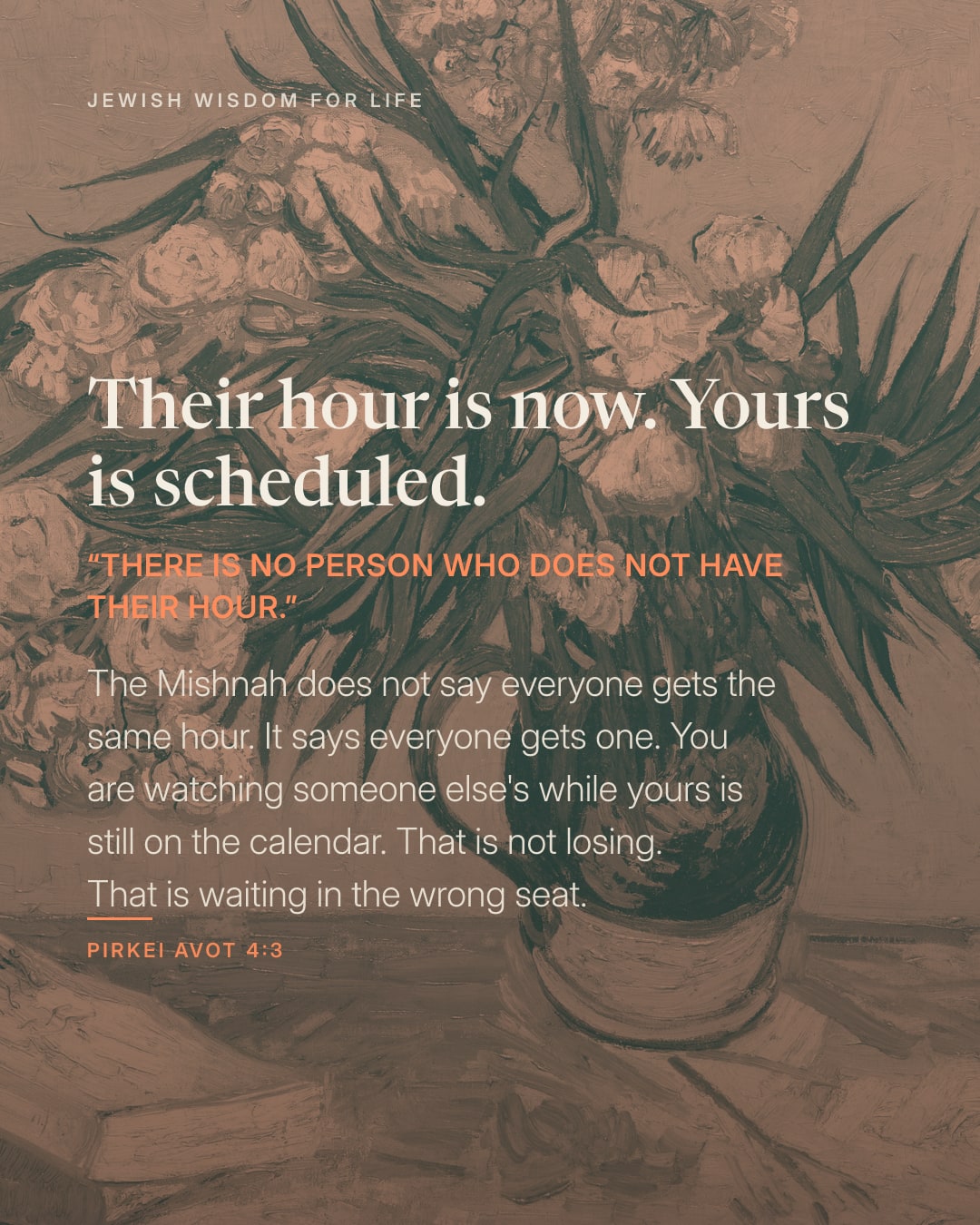
Their hour is now. Yours is scheduled.
שעה“There is no person who does not have their hour.”Pirkei Avot 4:3
The Mishnah does not say everyone gets the same hour. It says everyone gets one. You are watching someone else's while yours is still on the calendar. That is not losing. That is waiting in the wrong seat.
- 3
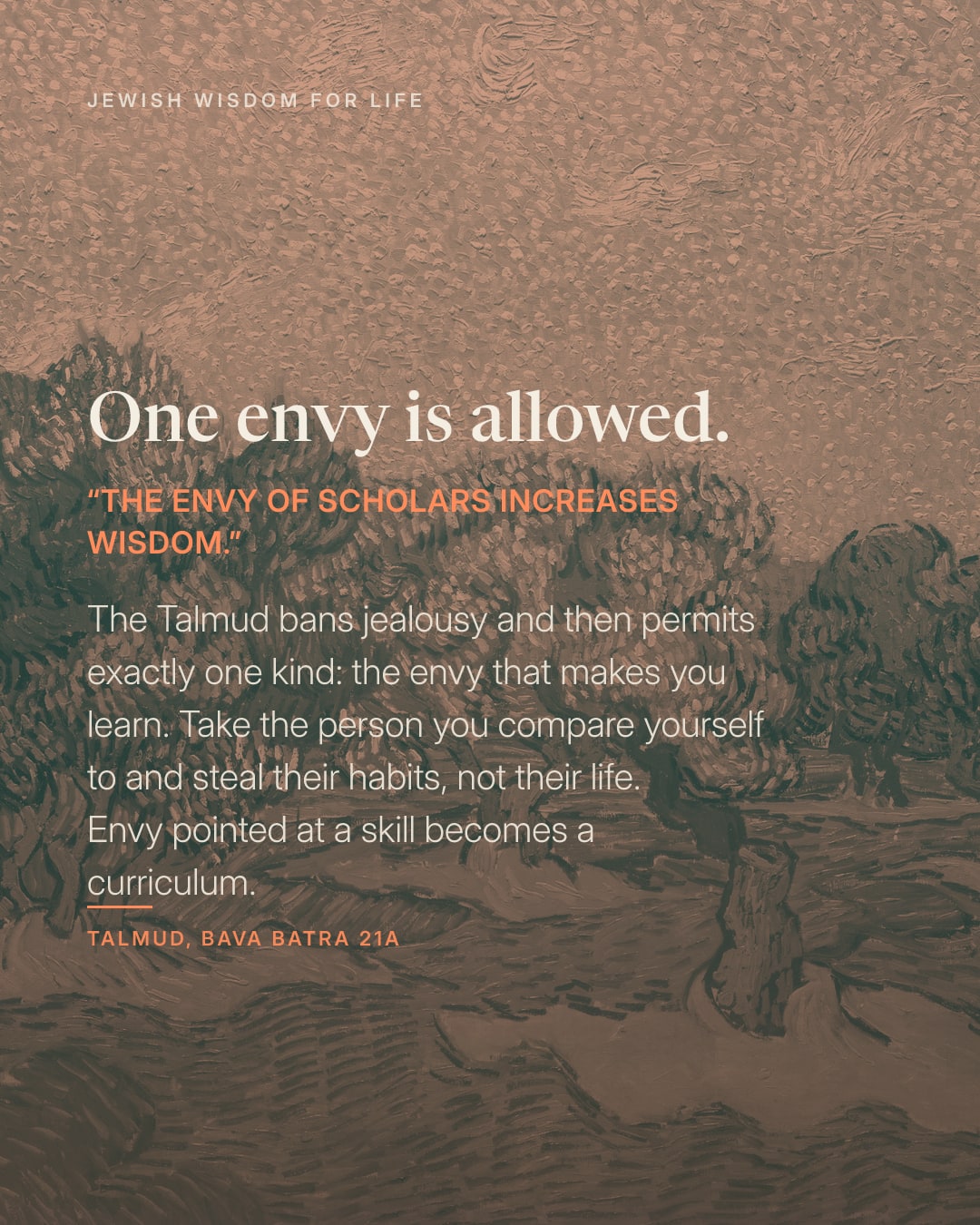
One envy is allowed.
קנאת סופרים“The envy of scholars increases wisdom.”Talmud, Bava Batra 21a
The Talmud bans jealousy and then permits exactly one kind: the envy that makes you learn. Take the person you compare yourself to and steal their habits, not their life. Envy pointed at a skill becomes a curriculum.
- 4
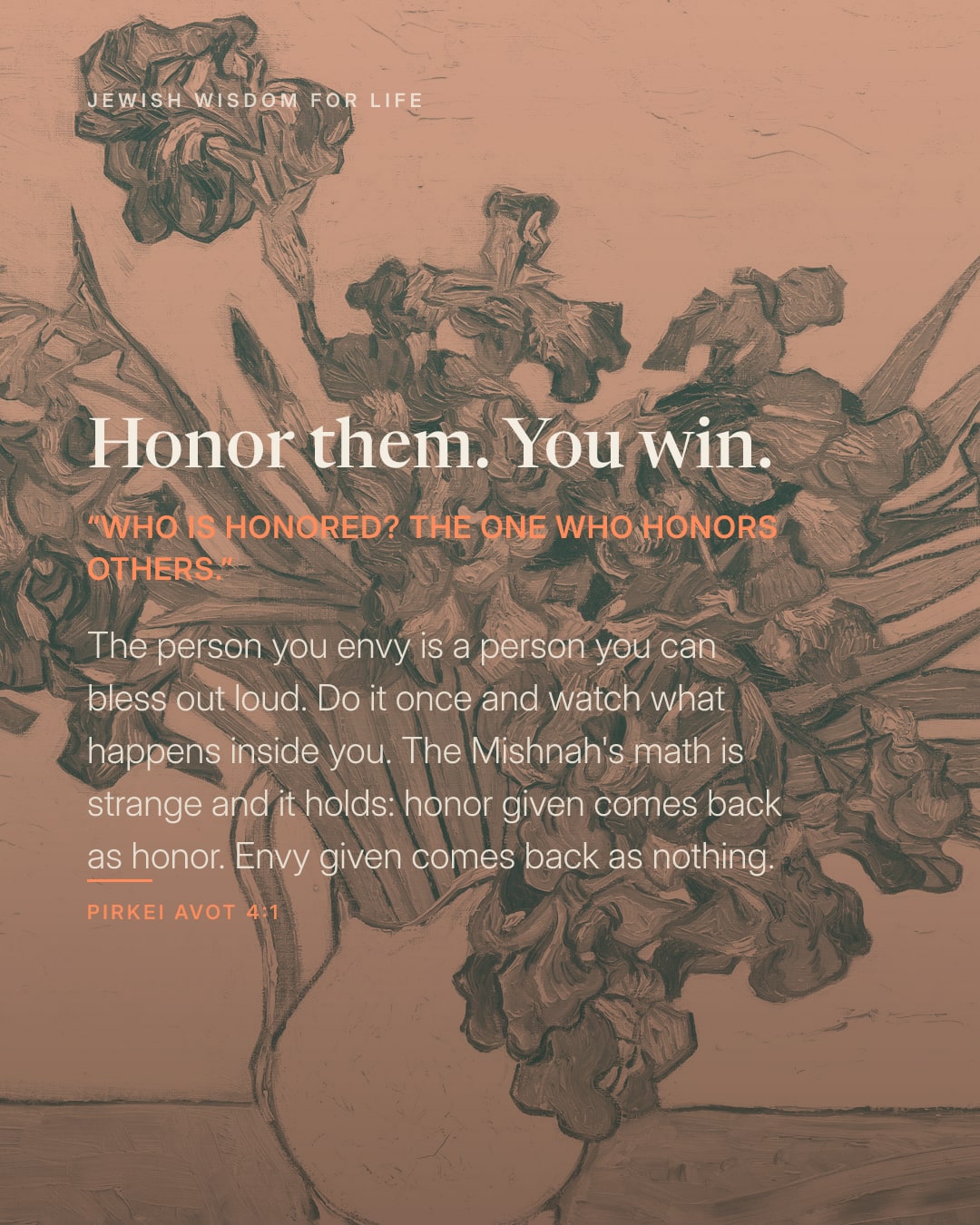
Honor them. You win.
מכבד“Who is honored? The one who honors others.”Pirkei Avot 4:1
The person you envy is a person you can bless out loud. Do it once and watch what happens inside you. The Mishnah's math is strange and it holds: honor given comes back as honor. Envy given comes back as nothing.
- 5
No one else can run your race.
חותם“Humans are stamped from one seal, yet no two are alike.”Talmud, Sanhedrin 37a
A king mints coins and every coin matches. God stamps people from one seal and none of them match. You cannot lose a race that no one else is in. The comparison was never a fair fight because it was never a fight.
Their story is not your assignment.
Envy is attention pointed at the wrong life.
Save this for the next scroll that stings. Send it to someone who forgets their own hour.
Sources
- Exodus 20:14 on Sefaria
- Pirkei Avot 4:3 on Sefaria
- Talmud, Bava Batra 21a on Sefaria
- Pirkei Avot 4:1 on Sefaria
- Talmud, Sanhedrin 37a on Sefaria
Art on the slides: Vincent van Gogh, Wheat Field with Cypresses (1889) · Vincent van Gogh, Sunflowers (1887) · Vincent van Gogh, Oleanders (1888) · Vincent van Gogh, Olive Trees (1889) · Vincent van Gogh, Irises (1890) · Vincent van Gogh, Self-Portrait with a Straw Hat (obverse: The Potato Peeler) (1887) · Vincent van Gogh, The Potato Peeler (reverse: Self-Portrait with a Straw Hat) (1885). The Metropolitan Museum of Art, open access.