Lesson 021 · posted Thu Sep 3 2026
Rosh Hashanah Is Coming
Five things to know before Rosh Hashanah, September 11 at sundown. The year is turning. Turn with it. Rosh Hashanah begins the evening of September 11.
- 1
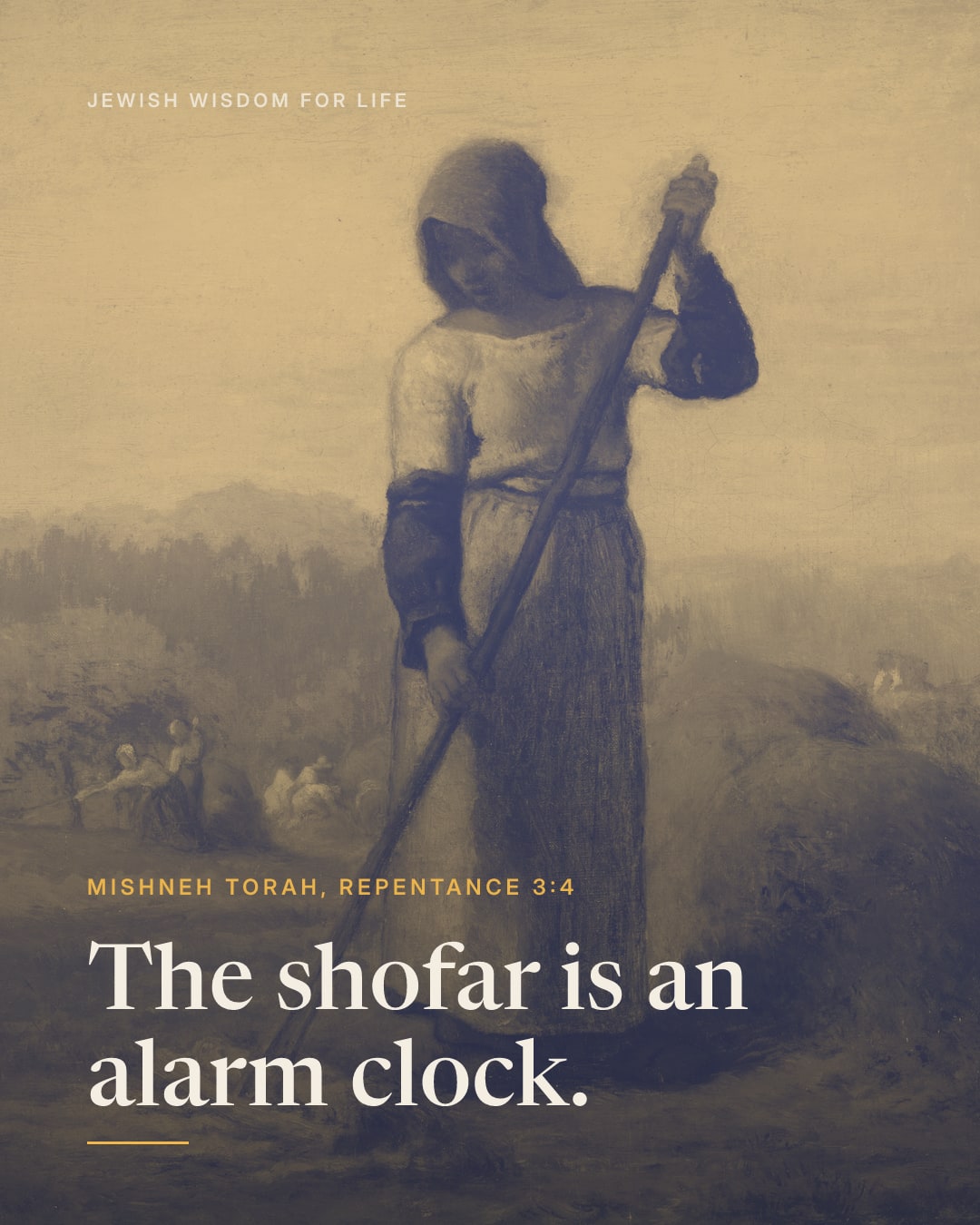
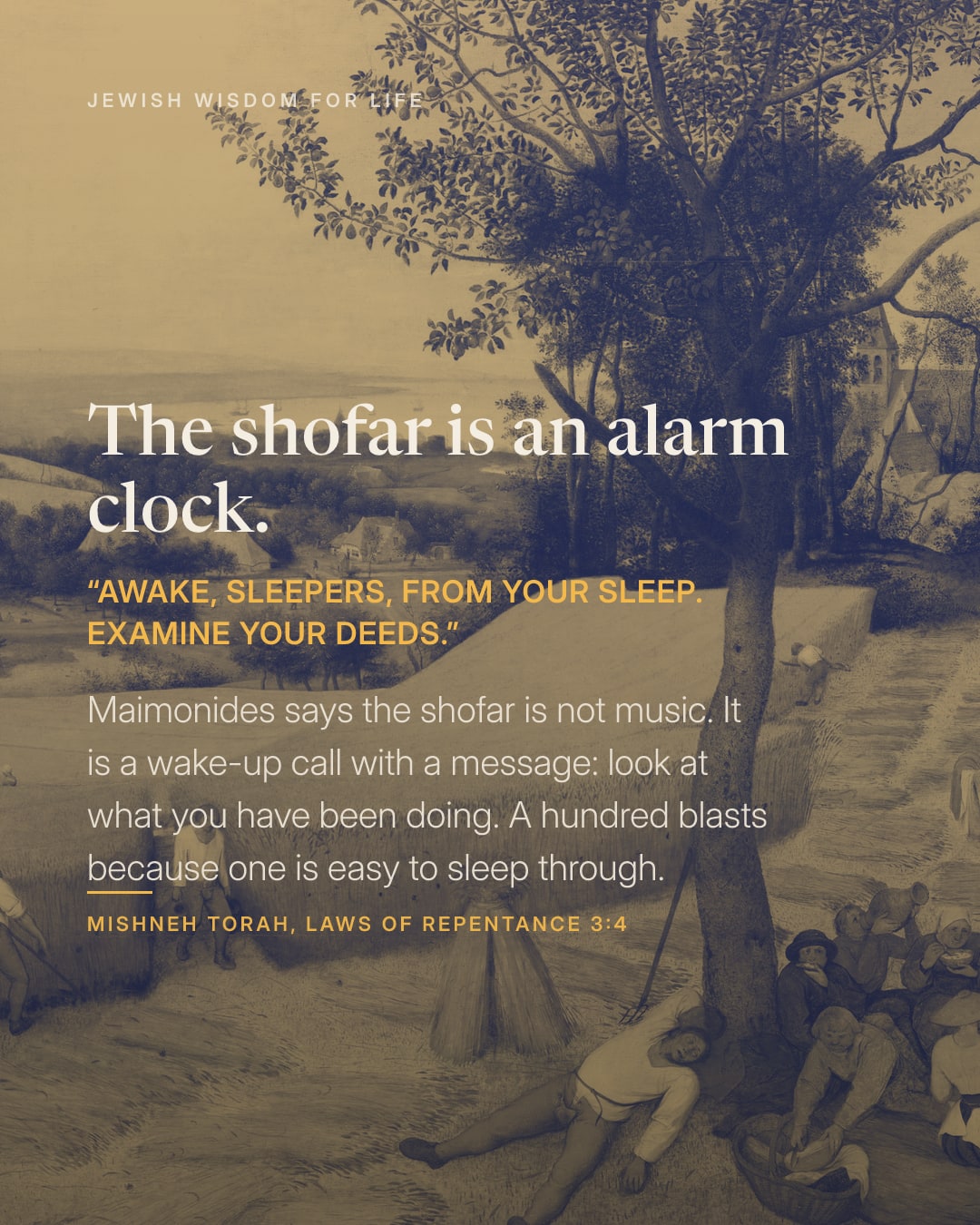
The shofar is an alarm clock.
עורו ישנים“Awake, sleepers, from your sleep. Examine your deeds.”Mishneh Torah, Laws of Repentance 3:4
Maimonides says the shofar is not music. It is a wake-up call with a message: look at what you have been doing. A hundred blasts because one is easy to sleep through.
- 2
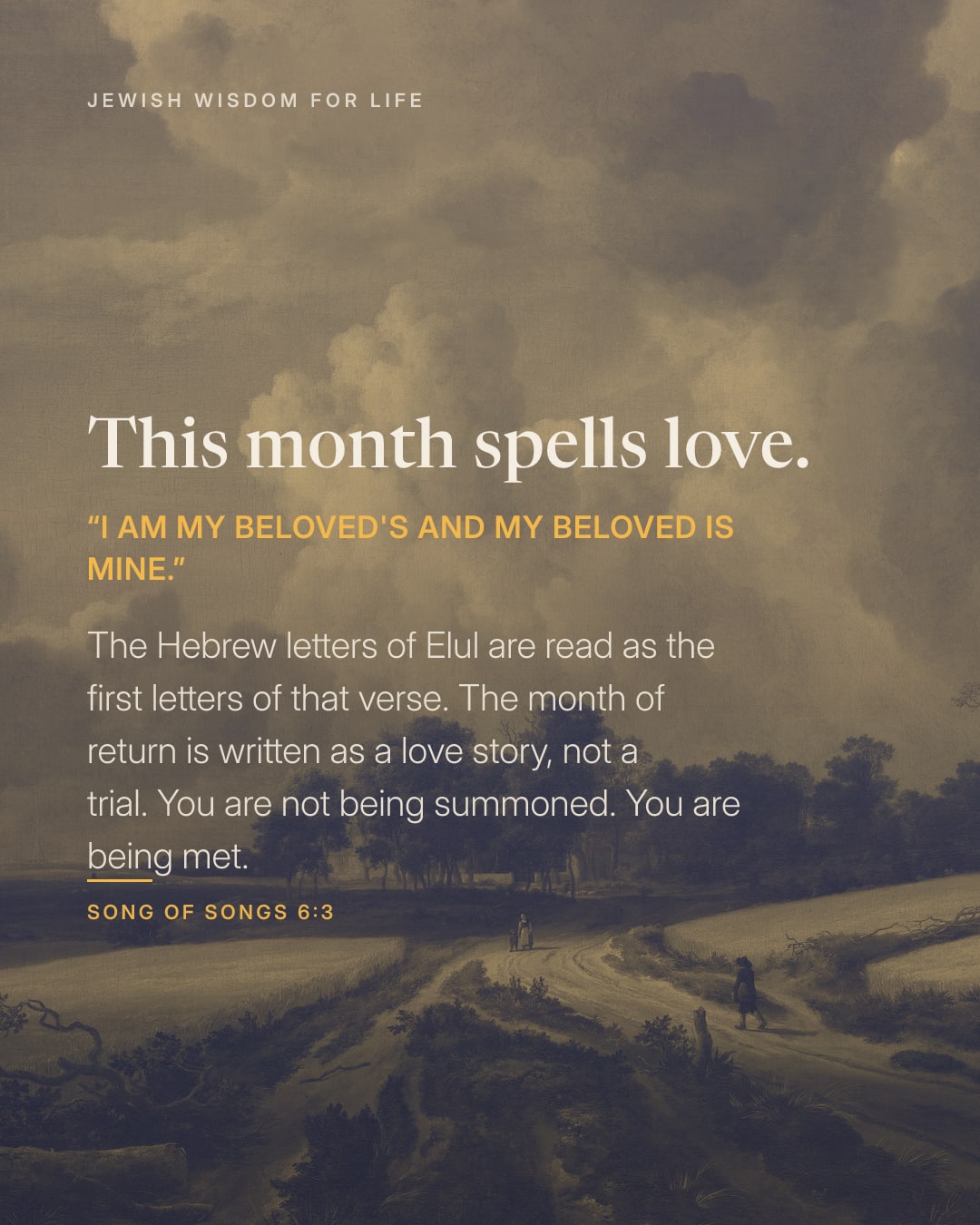
This month spells love.
אני לדודי“I am my beloved's and my beloved is mine.”Song of Songs 6:3
The Hebrew letters of Elul are read as the first letters of that verse. The month of return is written as a love story, not a trial. You are not being summoned. You are being met.
- 3
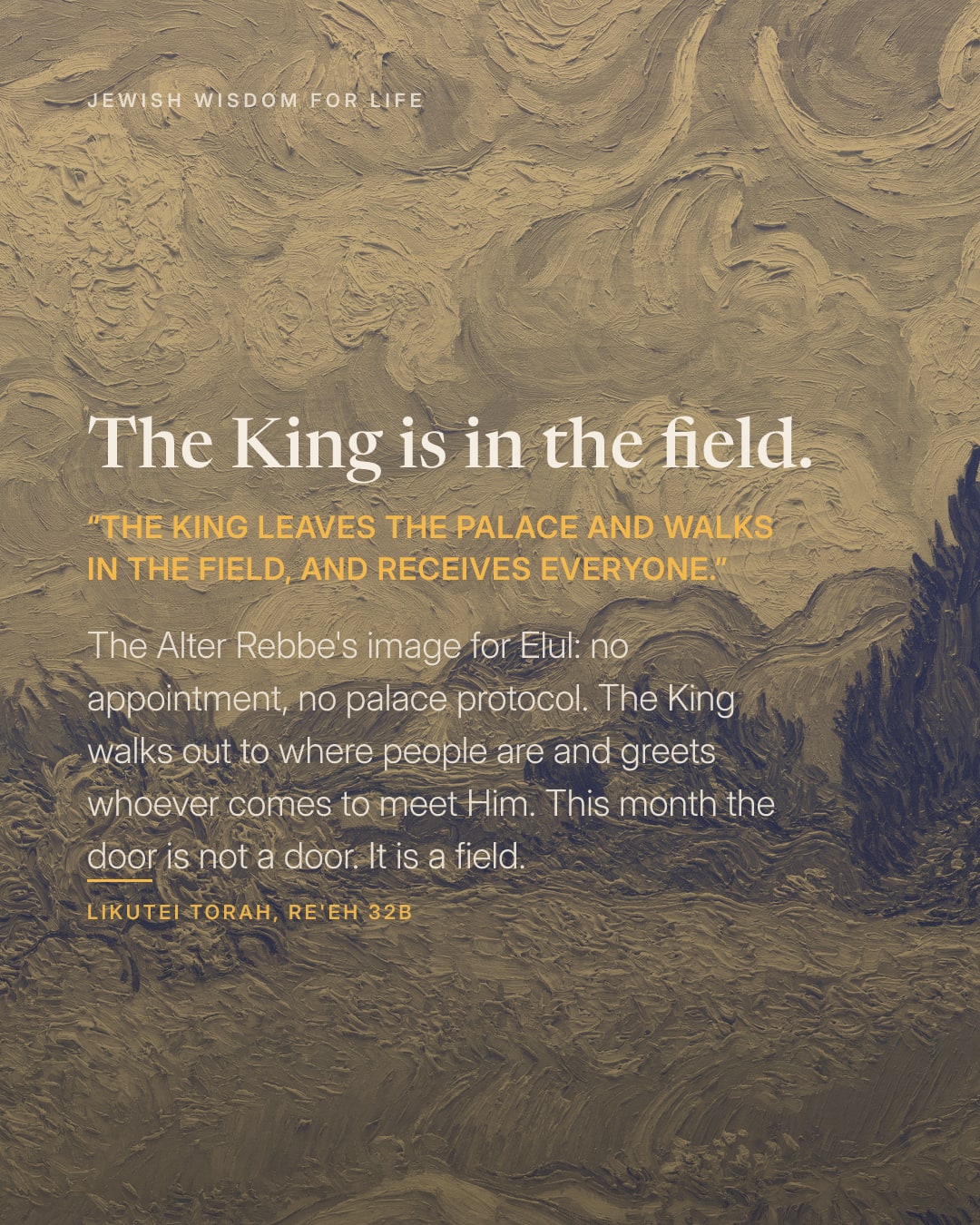
The King is in the field.
מלך בשדה“The King leaves the palace and walks in the field, and receives everyone.”Likutei Torah, Re'eh 32b
The Alter Rebbe's image for Elul: no appointment, no palace protocol. The King walks out to where people are and greets whoever comes to meet Him. This month the door is not a door. It is a field.
- 4
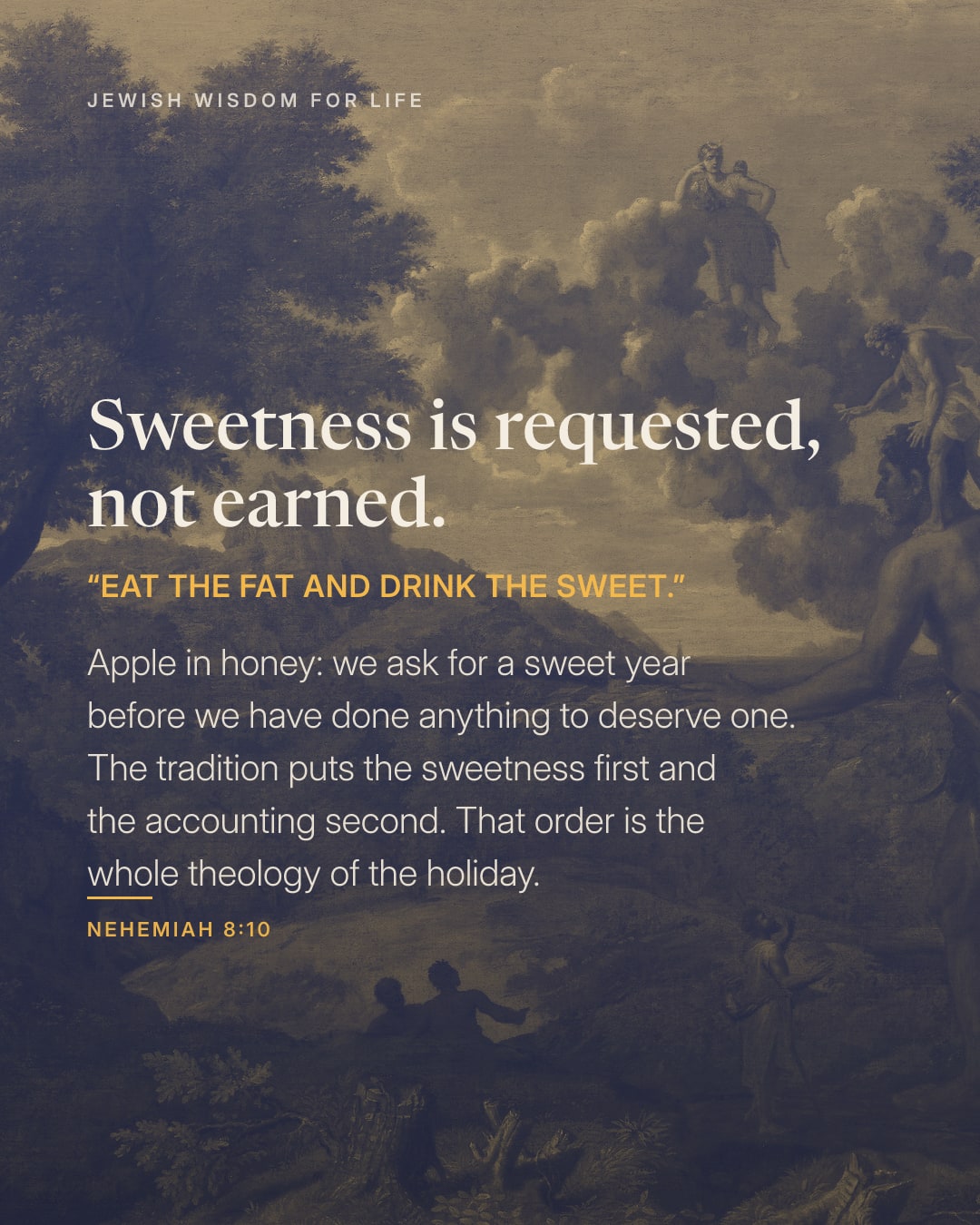
Sweetness is requested, not earned.
שנה טובה“Eat the fat and drink the sweet.”Nehemiah 8:10
Apple in honey: we ask for a sweet year before we have done anything to deserve one. The tradition puts the sweetness first and the accounting second. That order is the whole theology of the holiday.
- 5
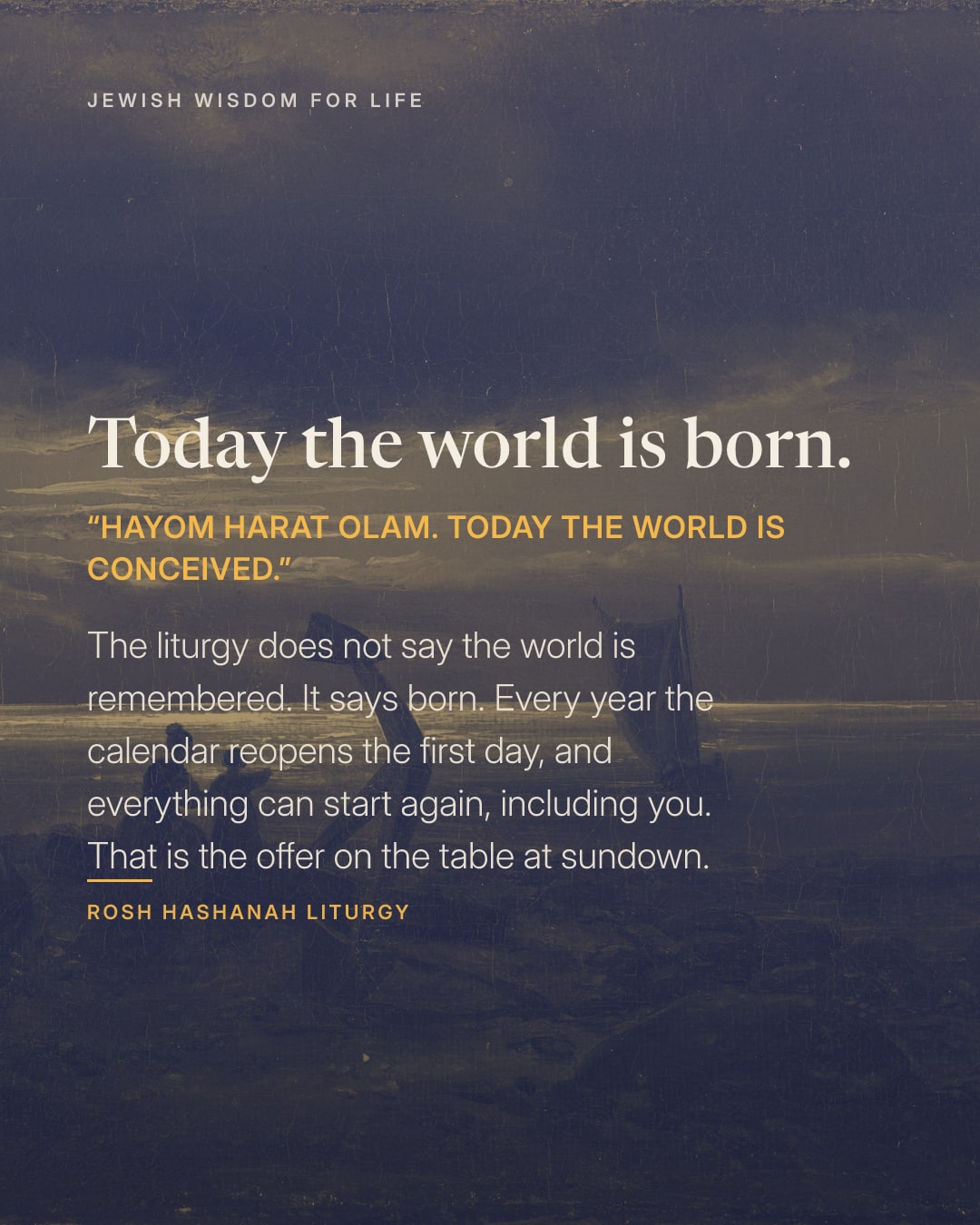
Today the world is born.
היום הרת עולם“Hayom harat olam. Today the world is conceived.”Rosh Hashanah liturgy
The liturgy does not say the world is remembered. It says born. Every year the calendar reopens the first day, and everything can start again, including you. That is the offer on the table at sundown.
The year is turning. Turn with it.
Rosh Hashanah begins the evening of September 11.
Save this for the table. Send it to someone you want a sweet year with.
Sources
- Mishneh Torah, Laws of Repentance 3:4
- Song of Songs 6:3
- Likutei Torah, Re'eh 32b
- Nehemiah 8:10
- Rosh Hashanah liturgy
Art on the slides: Jean-François Millet, Woman with a Rake (probably 1856–57) · Pieter Bruegel the Elder, The Harvesters (1565) · Jacob van Ruisdael, Wheat Fields (ca. 1670) · Vincent van Gogh, Wheat Field with Cypresses (1889) · Nicolas Poussin, Blind Orion Searching for the Rising Sun (1658) · Johan Christian Dahl, Mother and Child by the Sea (1830) · Joseph Mallord William Turner, Saltash with the Water Ferry, Cornwall (1811). The Metropolitan Museum of Art, open access.