Lesson 043 · posted Sun Sep 13 2026
Complicated With a Parent?
What Judaism says about honoring imperfect parents: five ideas, each with its source.
5 things Judaism says about honoring imperfect parents. Honor them. Don't drown for them. The commandment is conduct, not closeness. Both can be holy.
- 1
Honor is commanded. Love isn't.
כבד את אביך“Honor is commanded. Love isn't.”Exodus 20:12
“Honor your father and your mother.” — Exodus 20:12. The Torah asks for honor — conduct — not feeling. You can honor someone you're not close to.
- 2
A stranger set the standard.
דמא בן נתינה“A stranger set the standard.”Kiddushin 31a
The Talmud's model of honoring parents is Dama ben Netina — a non-Jew who lost a fortune rather than wake his father. — Kiddushin 31a. The bar is behavior, not history.
- 3
Honor has a limit.
כולכם חייבים בכבודי“Honor has a limit.”Yevamot 6a
If a parent says to break the Torah, you don't. — Yevamot 6a. “Honor” never meant “obey into harm.”
- 4
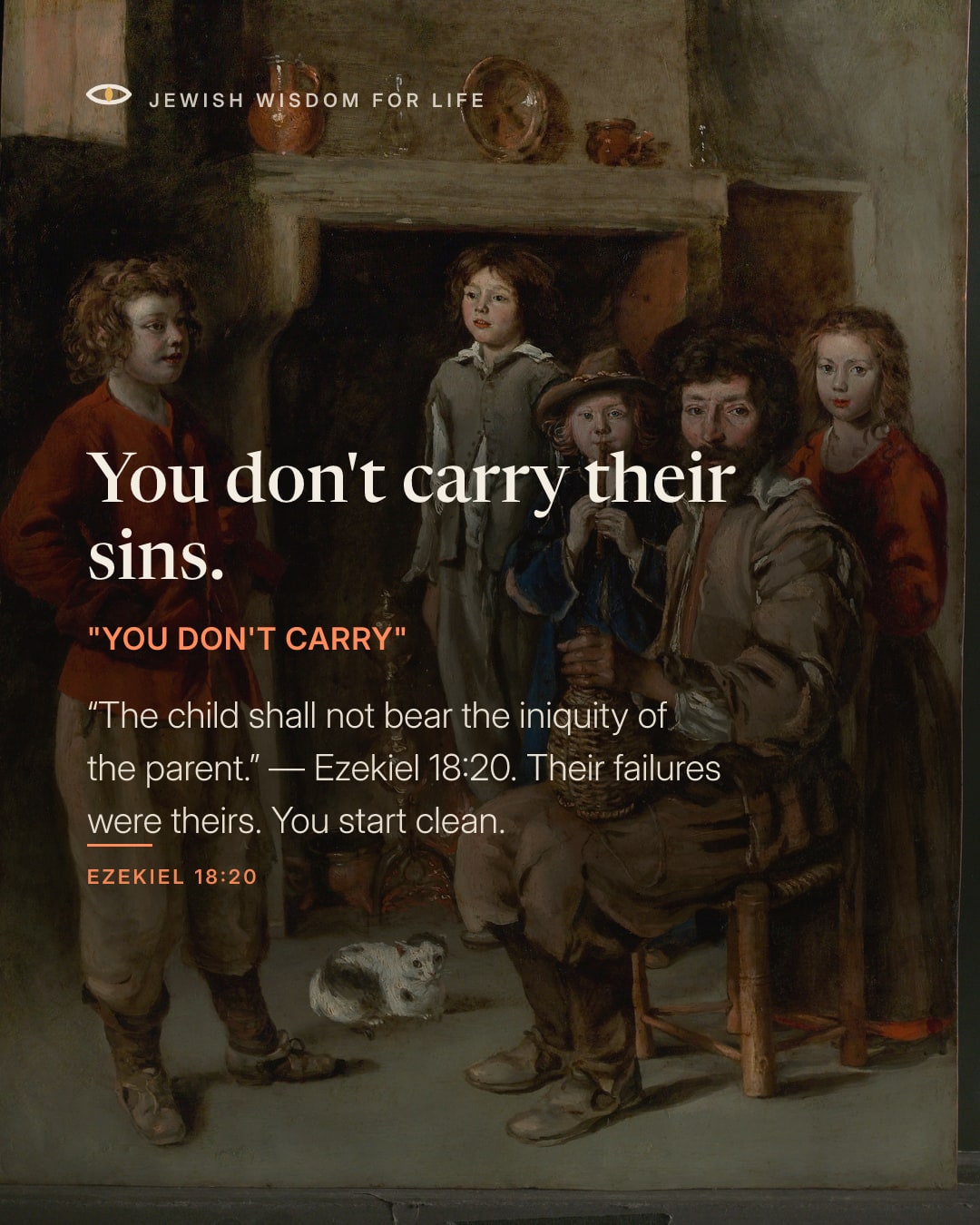
You don't carry their sins.
בן לא ישא“You don't carry their sins.”Ezekiel 18:20
“The child shall not bear the iniquity of the parent.” — Ezekiel 18:20. Their failures were theirs. You start clean.
- 5
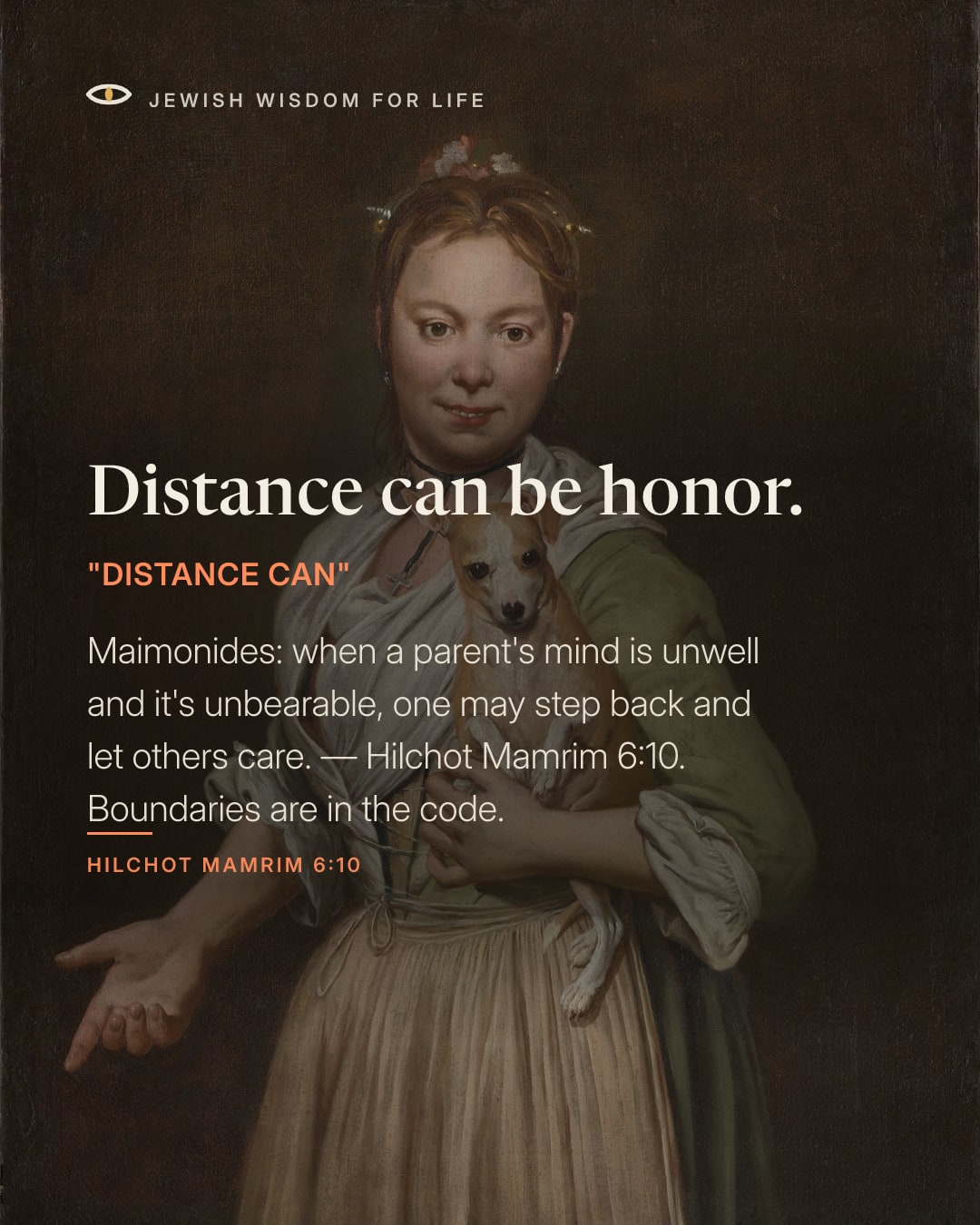
Distance can be honor.
יניחנו וילך“Distance can be honor.”Hilchot Mamrim 6:10
Maimonides: when a parent's mind is unwell and it's unbearable, one may step back and let others care. — Hilchot Mamrim 6:10. Boundaries are in the code.
Honor them. Don't drown for them.
The commandment is conduct, not closeness. Both can be holy.
Save this for a hard holiday — and send it to someone dreading the call home.
Sources
- Exodus 20:12 on Sefaria
- Kiddushin 31a on Sefaria
- Yevamot 6a on Sefaria
- Ezekiel 18:20
- Hilchot Mamrim 6:10
Art on the slides: Gustave Courbet, Madame Frederic Breyer (Fanny Hélène Van Bruyssel, 1830–1894) (1858) · Marie Guillemine Benoist, Madame Philippe Panon Desbassayns de Richemont (Jeanne Eglé Mourgue, 1778–1855) and Her Son, Eugène (1800–1859) (1802) · François Meuret, Portrait of a Woman, Said to Be Marie de Mautesson (ca. 1830) · Georges de La Tour, The Fortune-Teller (probably 1630s) · Antoine Le Nain, A Peasant Family (ca. 1640–48) · Giacomo Ceruti, A Woman with a Dog (1740s) · Velázquez (Diego Rodríguez de Silva y Velázquez), Philip IV (1605–1665), King of Spain (probably 1624). The Metropolitan Museum of Art, open access.