Lesson 046 · posted Tue Sep 15 2026
Why Pray Three Times a Day?
What Judaism says about the Jewish prayer rhythm: five ideas, each with its source.
5 things about the Jewish prayer rhythm. Three appointments. One relationship. You don't wait to feel it. You show up and it comes.
- 1
Three ancestors, three prayers.
אבות תקנום“Three ancestors,”Berakhot 26b
The Talmud: Avraham established morning prayer, Yitzchak afternoon, Yaakov evening. — Berakhot 26b. You're keeping an appointment three people made 3,000 years ago.
- 2
Evening, morning, and noon.
ערב ובקר וצהרים“Evening, morning,”Psalm 55:18
“Evening, morning, and noon, I complain and moan, and my voice is heard.” — Psalm 55:18. David did it too. And complained. Out loud.
- 3
Daniel opened the window.
תלתא זמנין“Daniel opened”Daniel 6:11
In exile, facing a death decree, Daniel still prayed three times a day toward Jerusalem — window open. — Daniel 6:11.
- 4
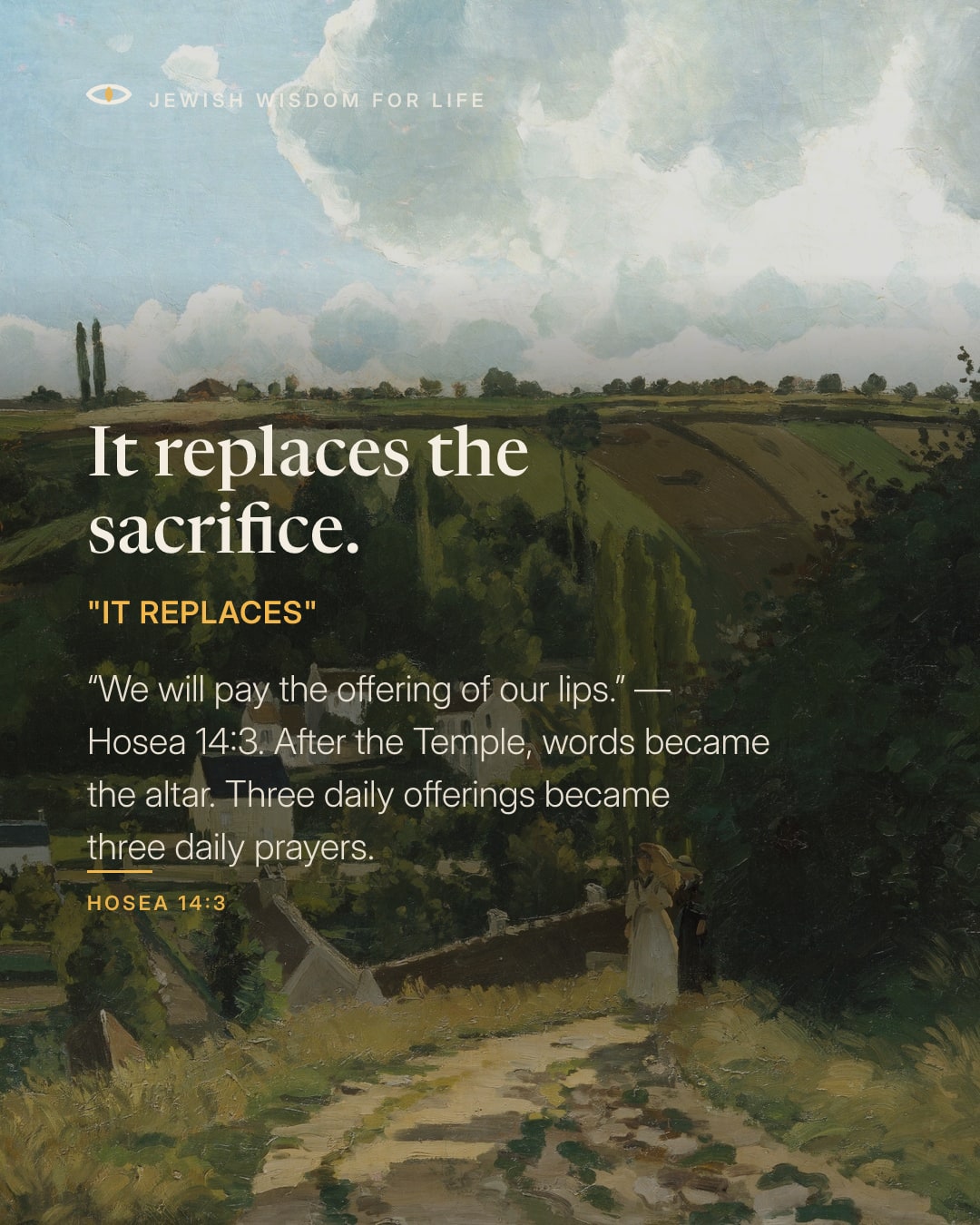
It replaces the sacrifice.
פרים שפתינו“It replaces”Hosea 14:3
“We will pay the offering of our lips.” — Hosea 14:3. After the Temple, words became the altar. Three daily offerings became three daily prayers.
- 5
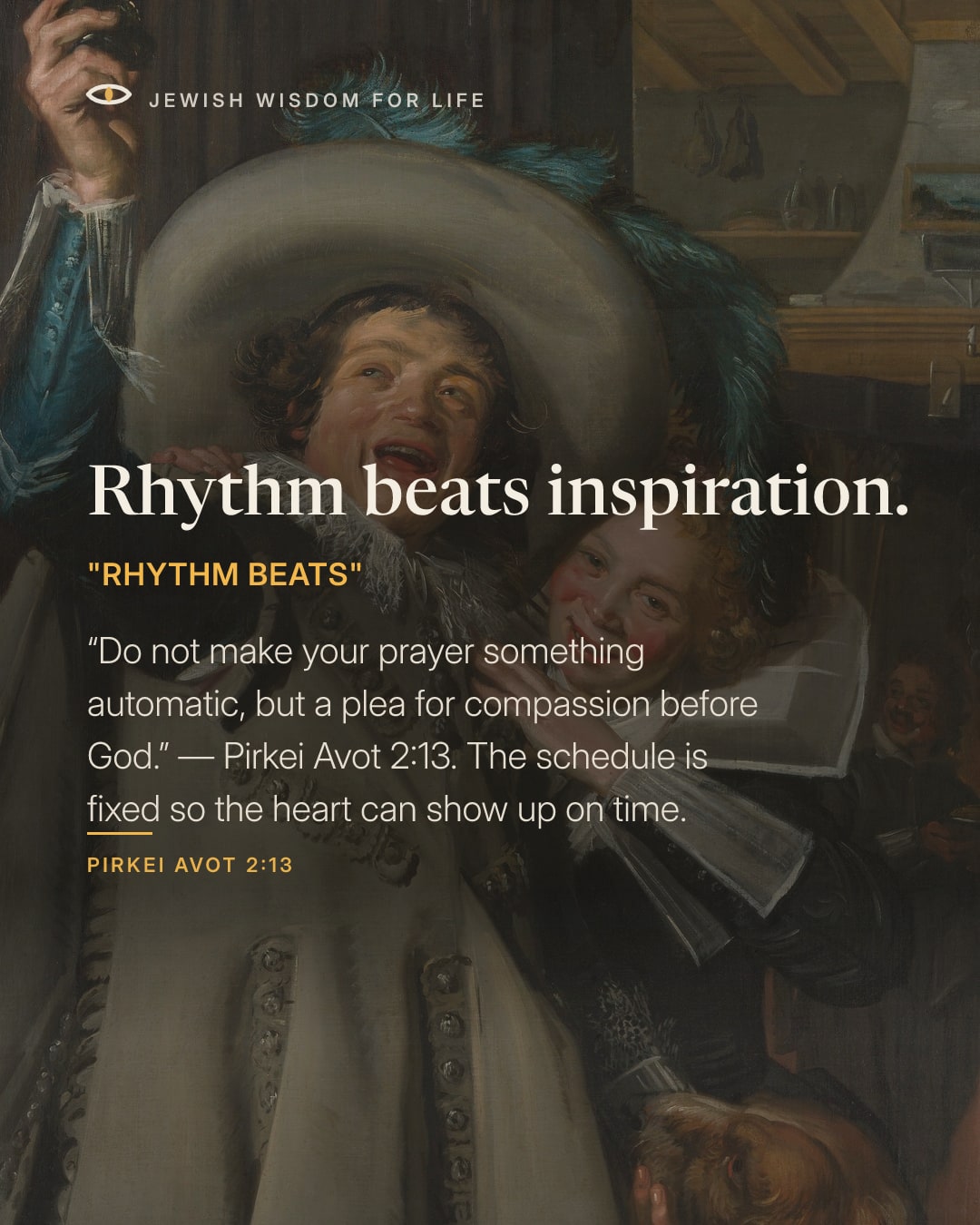
Rhythm beats inspiration.
אל תעש תפלתך קבע“Rhythm beats”Pirkei Avot 2:13
“Do not make your prayer something automatic, but a plea for compassion before God.” — Pirkei Avot 2:13. The schedule is fixed so the heart can show up on time.
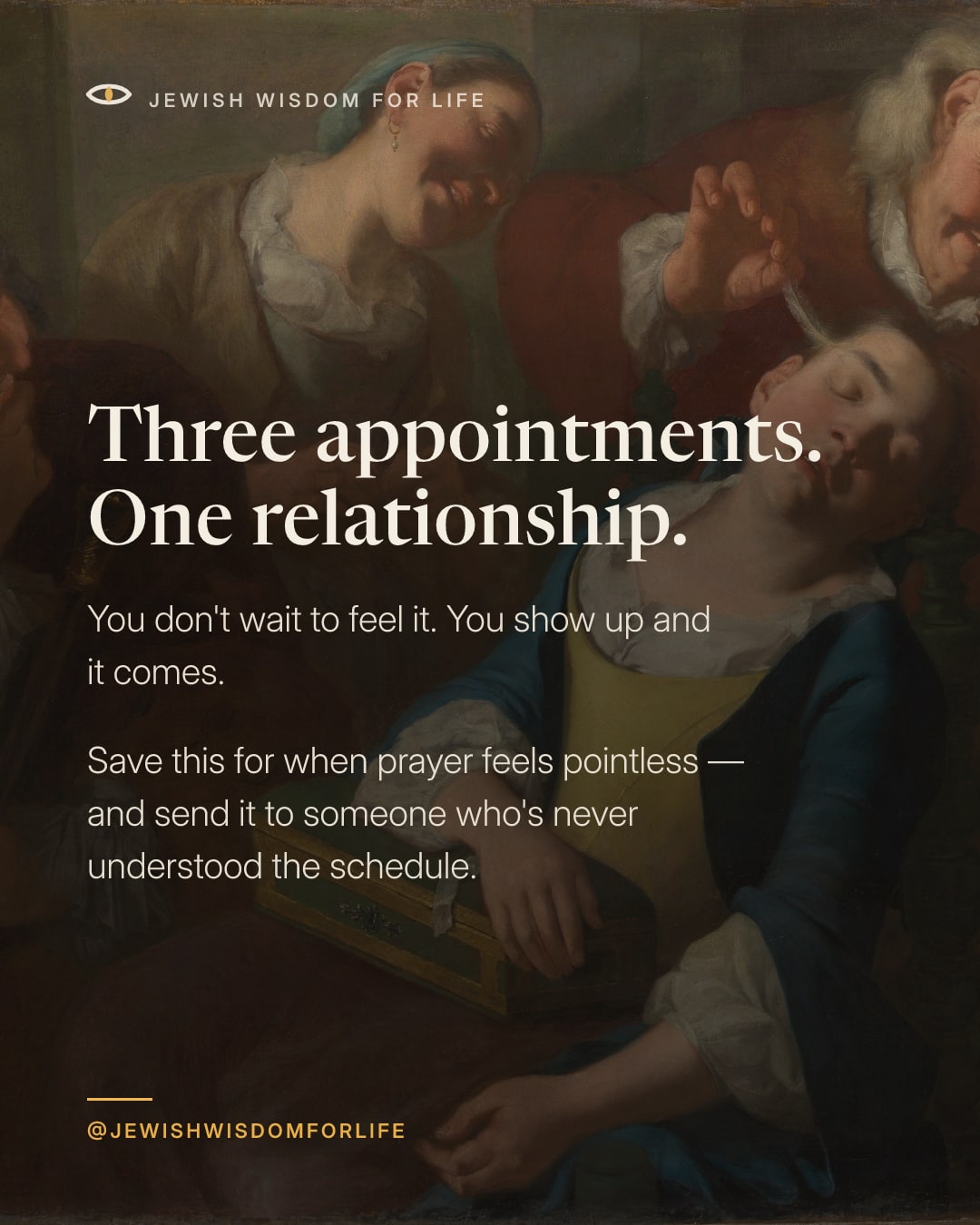
Three appointments. One relationship.
You don't wait to feel it. You show up and it comes.
Save this for when prayer feels pointless — and send it to someone who's never understood the schedule.
Sources
- Berakhot 26b on Sefaria
- Psalm 55:18 on Sefaria
- Daniel 6:11
- Hosea 14:3 on Sefaria
- Pirkei Avot 2:13 on Sefaria
Art on the slides: El Greco (Domenikos Theotokopoulos), Portrait of an Old Man (ca. 1595–1600) · Théodore Rousseau, An Early Summer Morning in the Forest of Fontainebleau (probably 1861) · Jean-François Millet, Autumn Landscape with a Flock of Turkeys (1872–73) · Paul Cézanne, The Card Players (1890–92) · Camille Pissarro, Jalais Hill, Pontoise (1867) · Frans Hals, Young Man and Woman in an Inn (1623) · Gaspare Traversi, Teasing a Sleeping Girl (ca. 1760). The Metropolitan Museum of Art, open access.