Lesson 014 · posted Thu Sep 3 2026
Being Kind Feels Pointless?
What Judaism says about kindness, and what it is holding up: five ideas, each with its source.
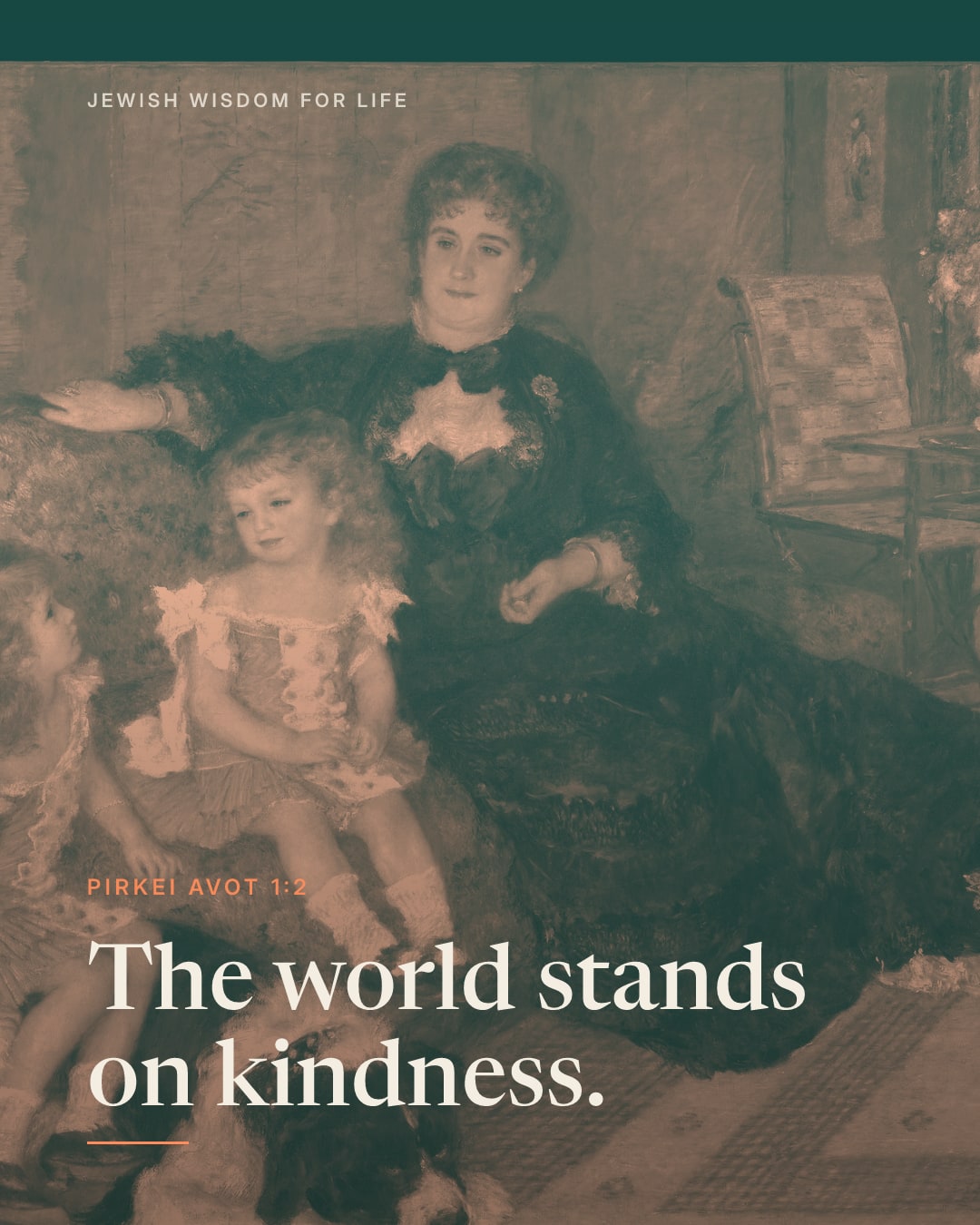
What the tradition says about kindness, and what it is holding up. Kindness is not extra credit. It is the floor the world is standing on.
- 1
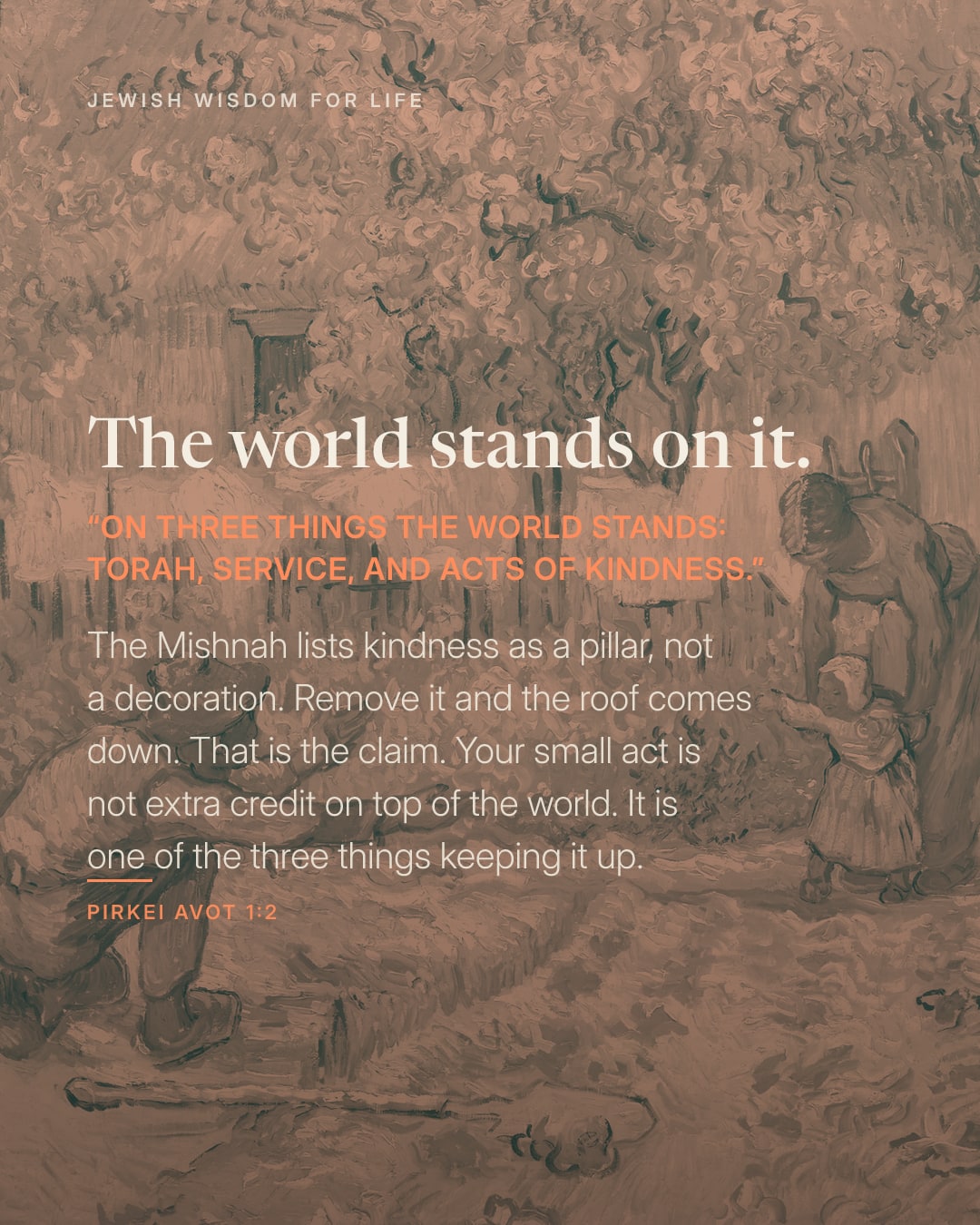
The world stands on it.
גמילות חסדים“On three things the world stands: Torah, service, and acts of kindness.”Pirkei Avot 1:2
The Mishnah lists kindness as a pillar, not a decoration. Remove it and the roof comes down. That is the claim. Your small act is not extra credit on top of the world. It is one of the three things keeping it up.
- 2
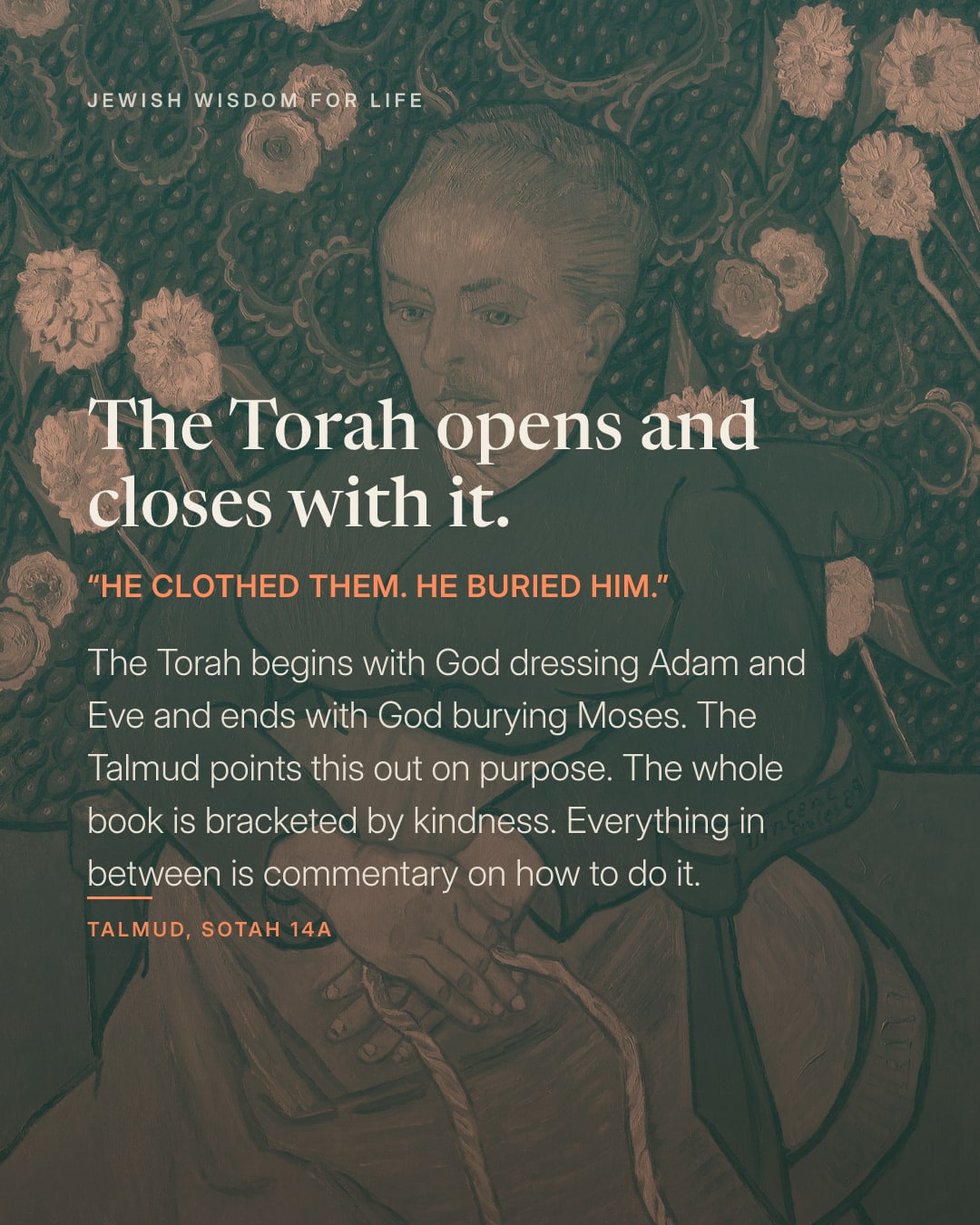
The Torah opens and closes with it.
תורה“He clothed them. He buried him.”Talmud, Sotah 14a
The Torah begins with God dressing Adam and Eve and ends with God burying Moses. The Talmud points this out on purpose. The whole book is bracketed by kindness. Everything in between is commentary on how to do it.
- 3
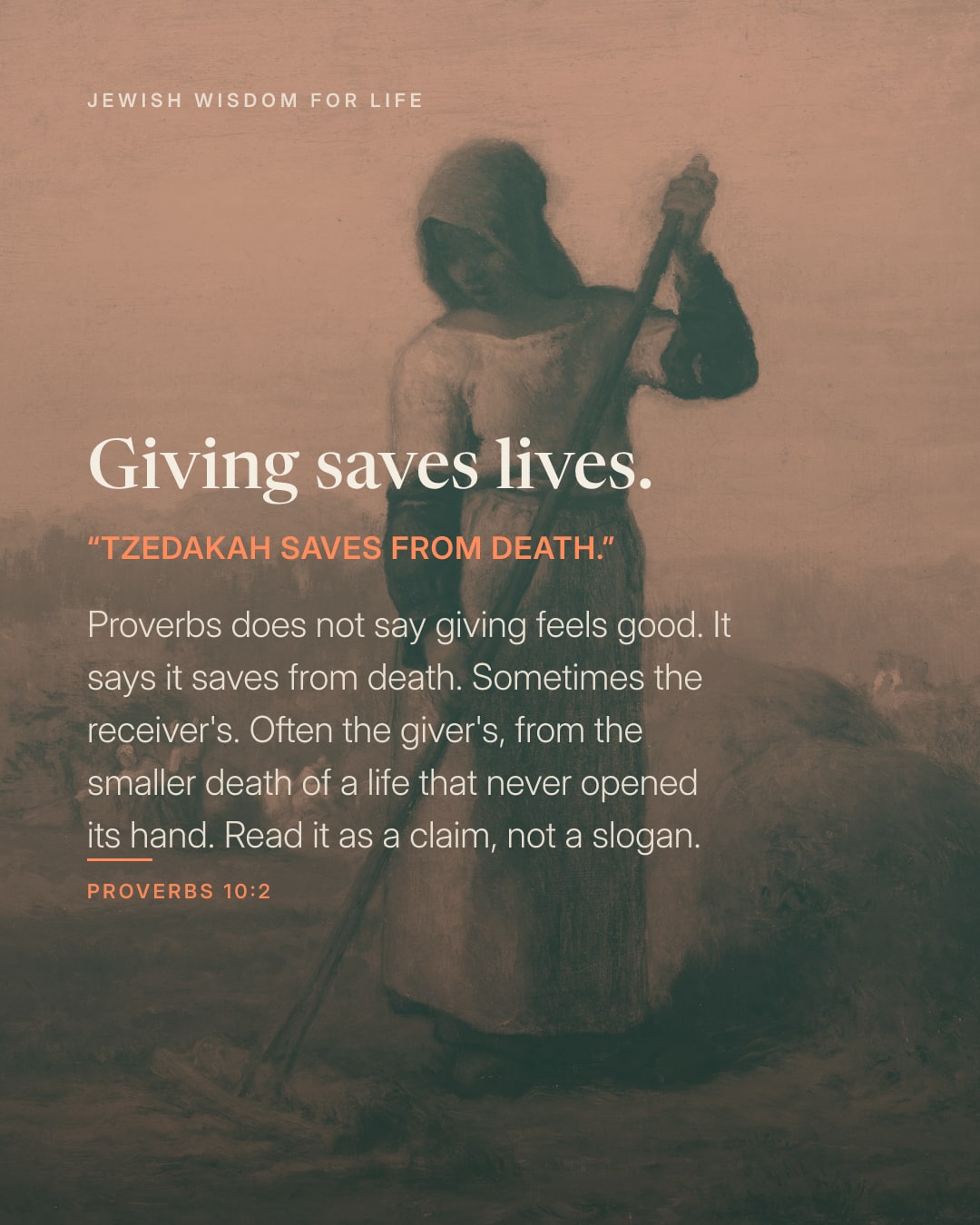
Giving saves lives.
צדקה“Tzedakah saves from death.”Proverbs 10:2
Proverbs does not say giving feels good. It says it saves from death. Sometimes the receiver's. Often the giver's, from the smaller death of a life that never opened its hand. Read it as a claim, not a slogan.
- 4
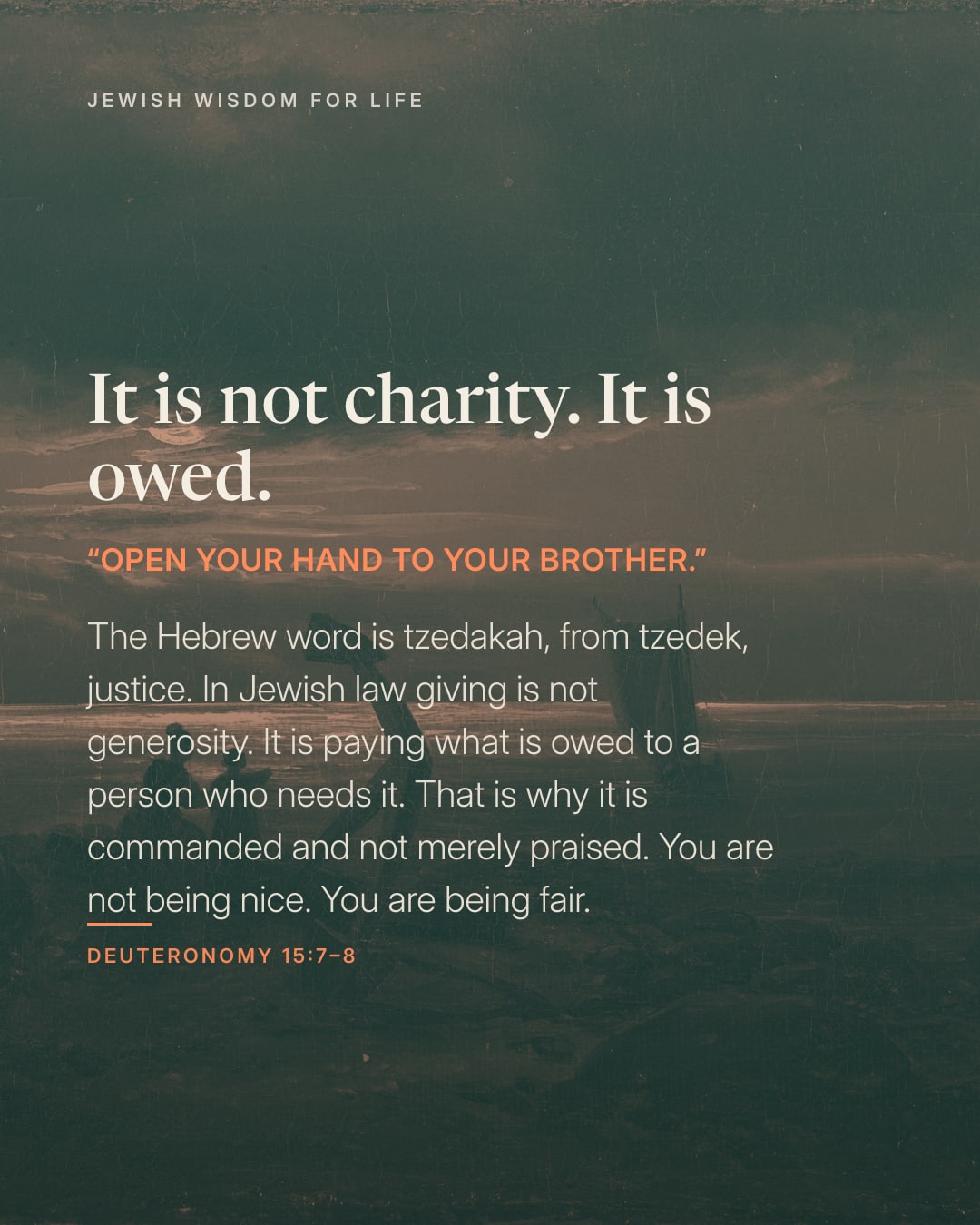
It is not charity. It is owed.
צדק“Open your hand to your brother.”Deuteronomy 15:7–8
The Hebrew word is tzedakah, from tzedek, justice. In Jewish law giving is not generosity. It is paying what is owed to a person who needs it. That is why it is commanded and not merely praised. You are not being nice. You are being fair.
- 5
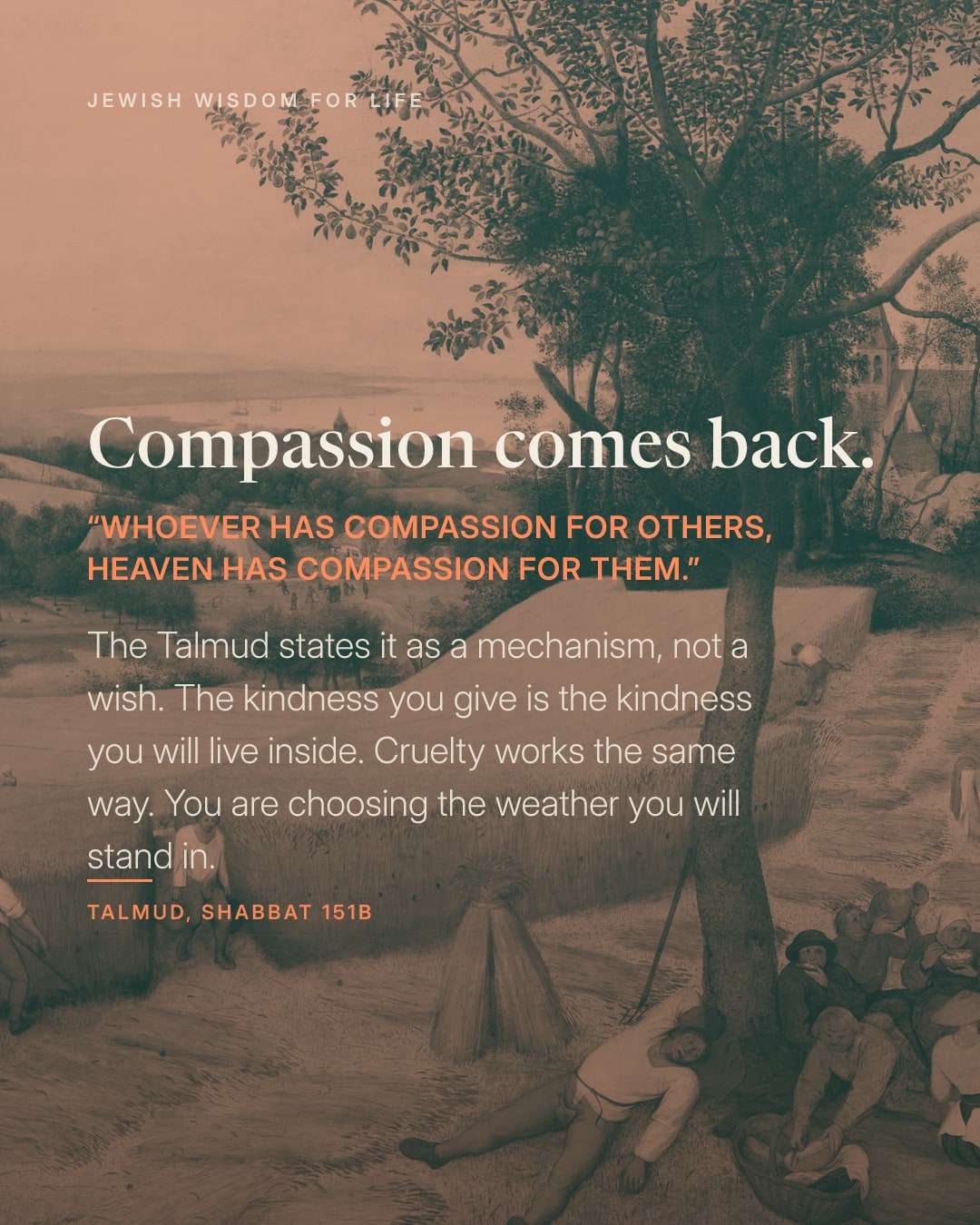
Compassion comes back.
רחמים“Whoever has compassion for others, Heaven has compassion for them.”Talmud, Shabbat 151b
The Talmud states it as a mechanism, not a wish. The kindness you give is the kindness you will live inside. Cruelty works the same way. You are choosing the weather you will stand in.
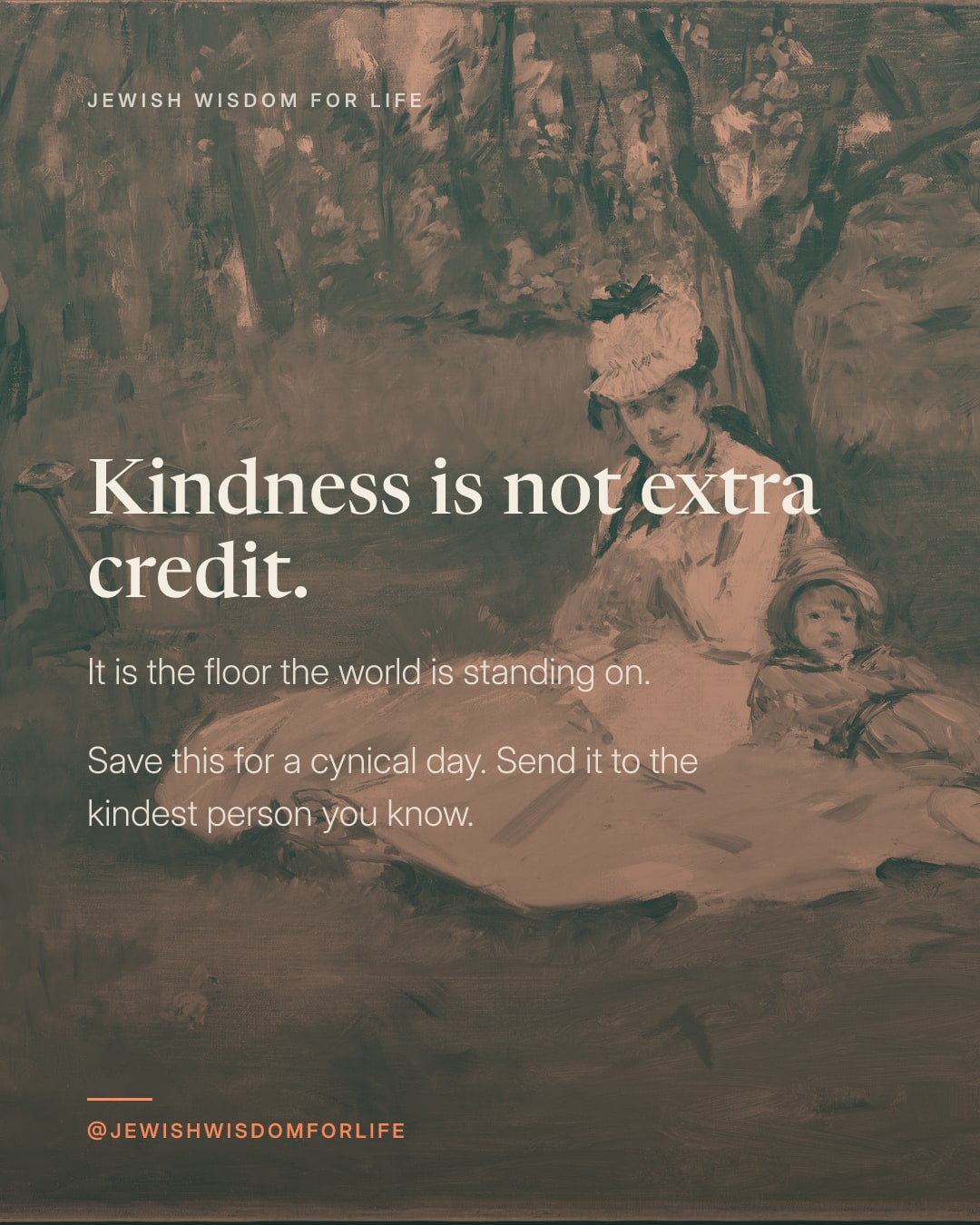
Kindness is not extra credit.
It is the floor the world is standing on.
Save this for a cynical day. Send it to the kindest person you know.
Sources
- Pirkei Avot 1:2 on Sefaria
- Talmud, Sotah 14a on Sefaria
- Proverbs 10:2 on Sefaria
- Deuteronomy 15:7–8 on Sefaria
- Talmud, Shabbat 151b on Sefaria
Art on the slides: Auguste Renoir, Madame Georges Charpentier (Marguerite-Louise Lemonnier, 1848–1904) and Her Children, Georgette-Berthe (1872–1945) and Paul-Emile-Charles (1875–1895) (1878) · Vincent van Gogh, First Steps, after Millet (1890) · Vincent van Gogh, La Berceuse (Woman Rocking a Cradle; Augustine-Alix Pellicot Roulin, 1851–1930) (1889) · Jean-François Millet, Woman with a Rake (probably 1856–57) · Johan Christian Dahl, Mother and Child by the Sea (1830) · Pieter Bruegel the Elder, The Harvesters (1565) · Edouard Manet, The Monet Family in Their Garden at Argenteuil (1874). The Metropolitan Museum of Art, open access.