Lesson 015 · posted Thu Sep 3 2026
Lost Someone You Love?
What Judaism says about grief and mourning: five ideas, each with its source.
What Judaism says about grief and mourning. Love does not end. It changes address. The tradition does not ask you to get over it. It asks you to carry it well.


- 1
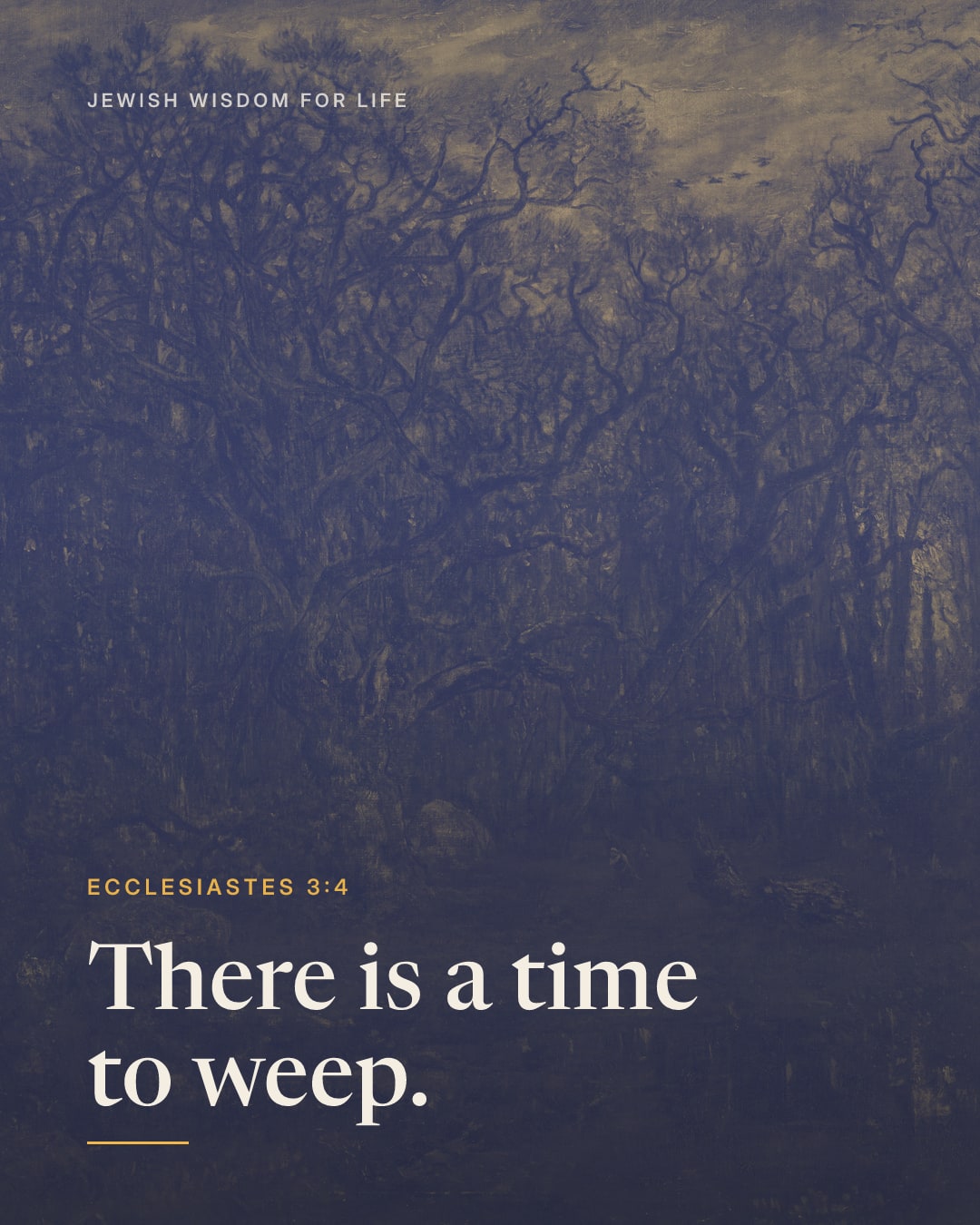
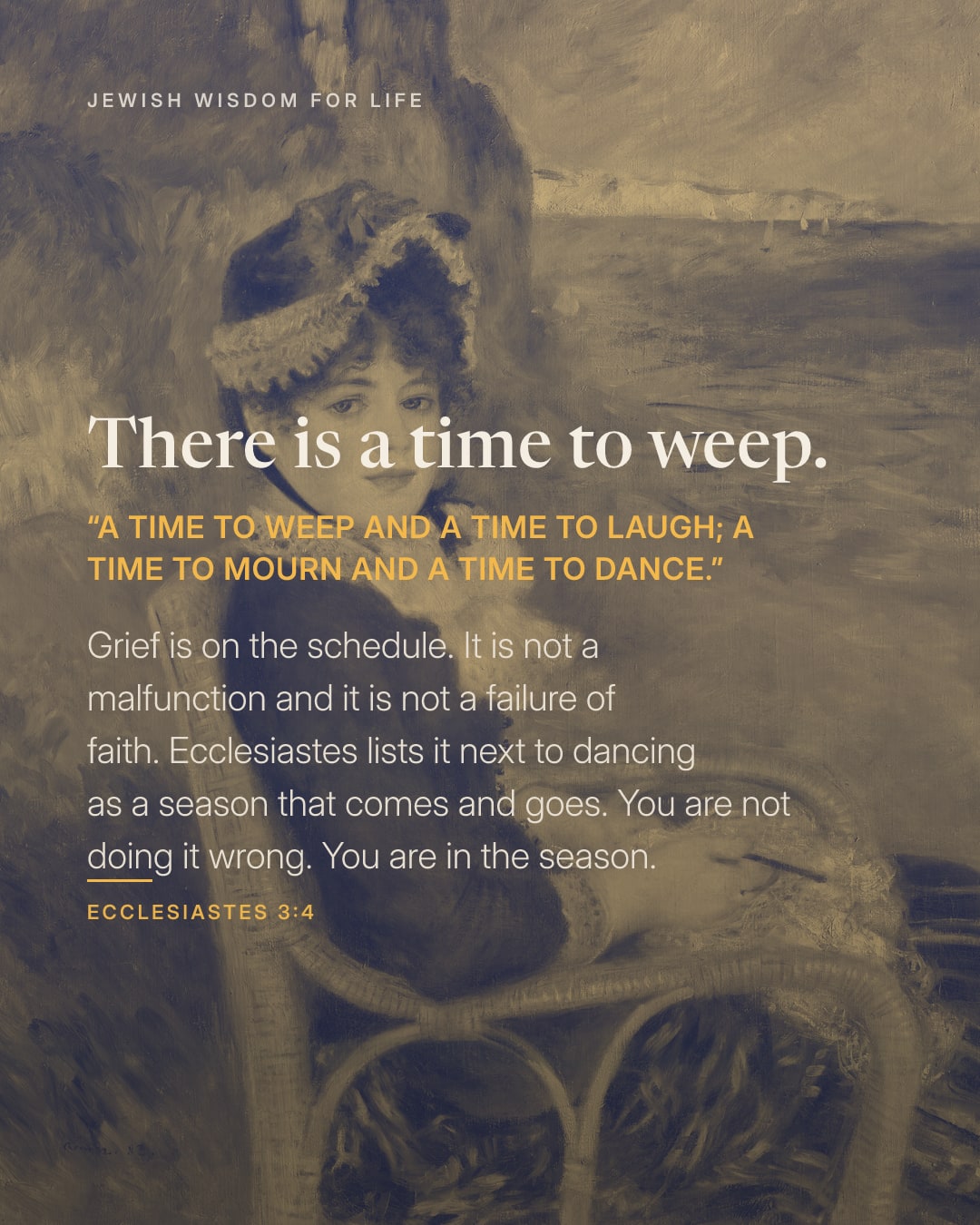
There is a time to weep.
עת לבכות“A time to weep and a time to laugh; a time to mourn and a time to dance.”Ecclesiastes 3:4
Grief is on the schedule. It is not a malfunction and it is not a failure of faith. Ecclesiastes lists it next to dancing as a season that comes and goes. You are not doing it wrong. You are in the season.
- 2
Sit. Do not fix. Stay.
שבעה“They sat with him on the ground seven days, and no one spoke a word.”Job 2:13
Job's friends got one thing right before they ruined it: they sat in silence for seven days. That silence became shiva. Presence beats advice. If you are the one grieving, let people sit. If you are the friend, sit.
- 3
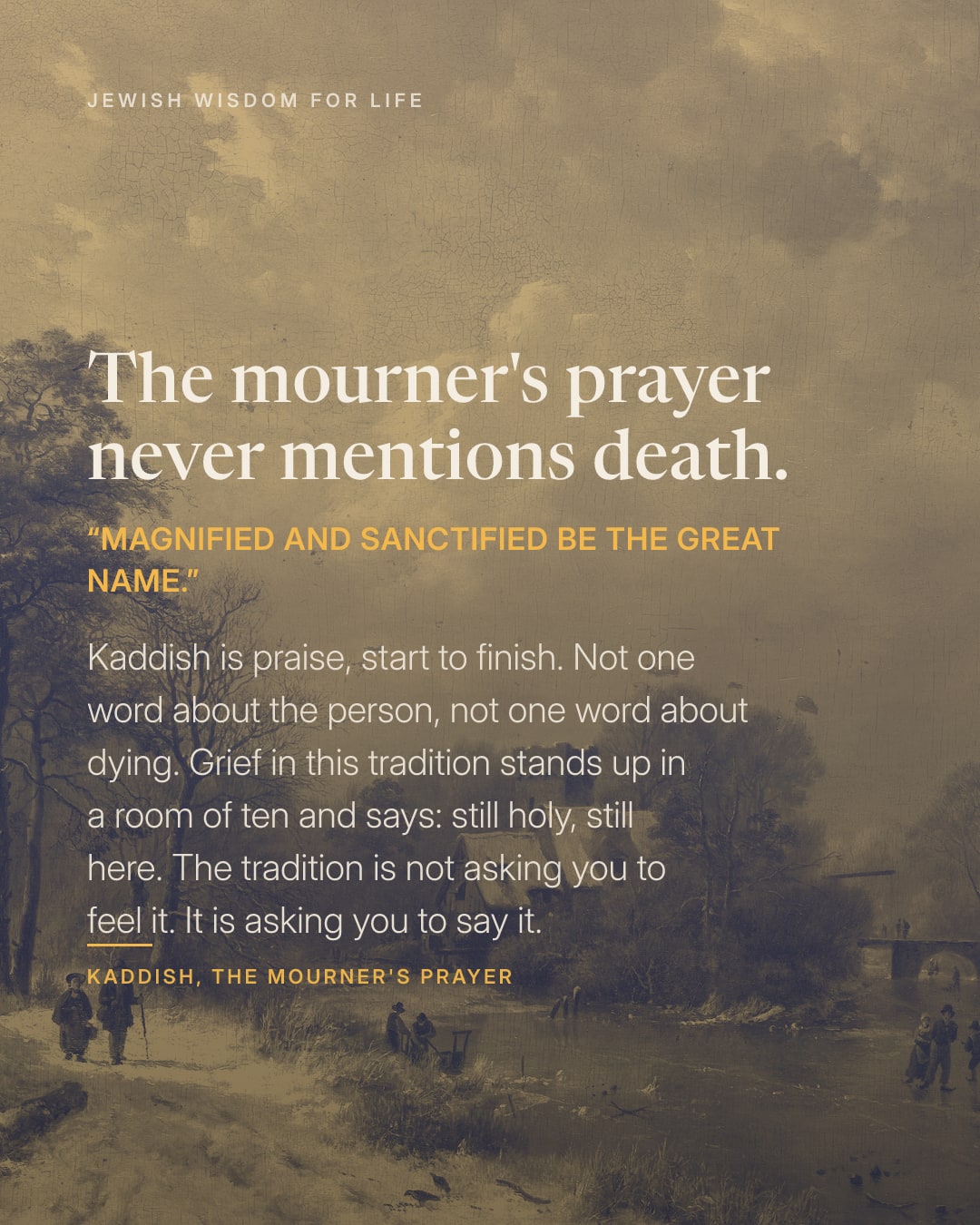
The mourner's prayer never mentions death.
קדיש“Magnified and sanctified be the great Name.”Kaddish, the mourner's prayer
Kaddish is praise, start to finish. Not one word about the person, not one word about dying. Grief in this tradition stands up in a room of ten and says: still holy, still here. The tradition is not asking you to feel it. It is asking you to say it.
- 4
Memory is a form of life.
זכרון“The righteous, even in their death, are called living.”Talmud, Berakhot 18a
Every time you tell their story, they act in the world again. The Talmud means this plainly. A person who is still changing what other people do is not finished. You are the place where they keep happening.
- 5
You mourn among mourners.
המקום ינחם“May you be comforted among the mourners of Zion and Jerusalem.”Traditional words of comfort to a mourner
The traditional words of comfort do not say you will feel better. They say among. You joined a people who have carried this for three thousand years and wrote down how. You are not the first, and you are not alone in the room.
Love does not end. It changes address.
The tradition does not ask you to get over it. It asks you to carry it well.
Save this for the day you need it. Send it to someone who is missing someone.
Sources
- Ecclesiastes 3:4 on Sefaria
- Job 2:13 on Sefaria
- Kaddish, the mourner's prayer
- Talmud, Berakhot 18a on Sefaria
- Traditional words of comfort to a mourner
Art on the slides: Théodore Rousseau, The Forest in Winter at Sunset (ca. 1846–67) · Auguste Renoir, By the Seashore (1883) · Joseph Mallord William Turner, Whalers (ca. 1845) · Barend Cornelis Koekkoek, Winter Landscape, Holland (1833) · Léon-Germain Pelouse, January: Cernay, near Rambouillet () · Johan Christian Dahl, Copenhagen Harbor by Moonlight (1846) · Théodore Géricault, Evening: Landscape with an Aqueduct (1818). The Metropolitan Museum of Art, open access.