Lesson 017 · posted Thu Sep 3 2026
Carrying Guilt?
What Judaism says about guilt, and the exit it built: five ideas, each with its source.
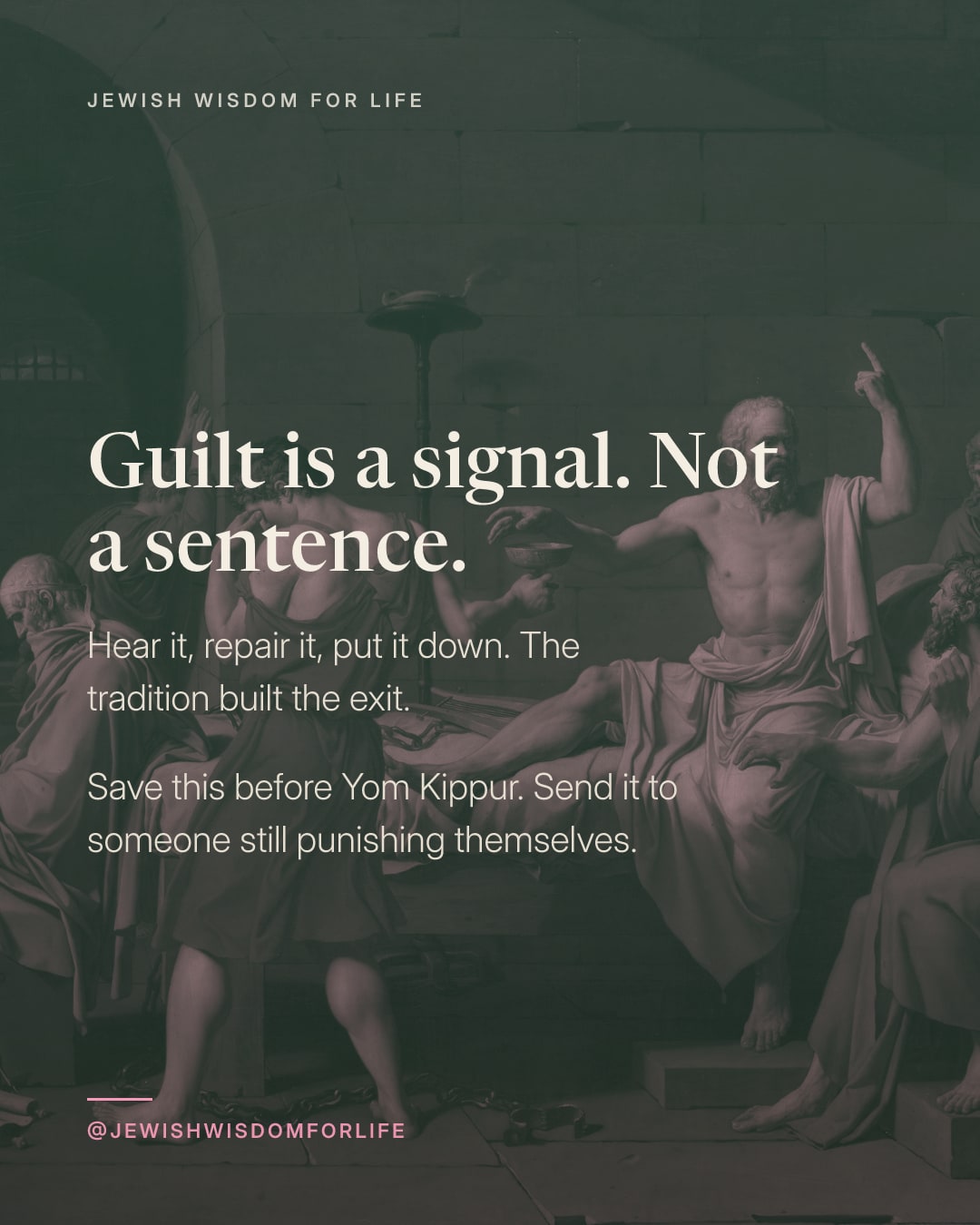
What the tradition says about guilt, and the exit it built. Guilt is a signal. Not a sentence. Hear it, repair it, put it down. The tradition built the exit.


- 1
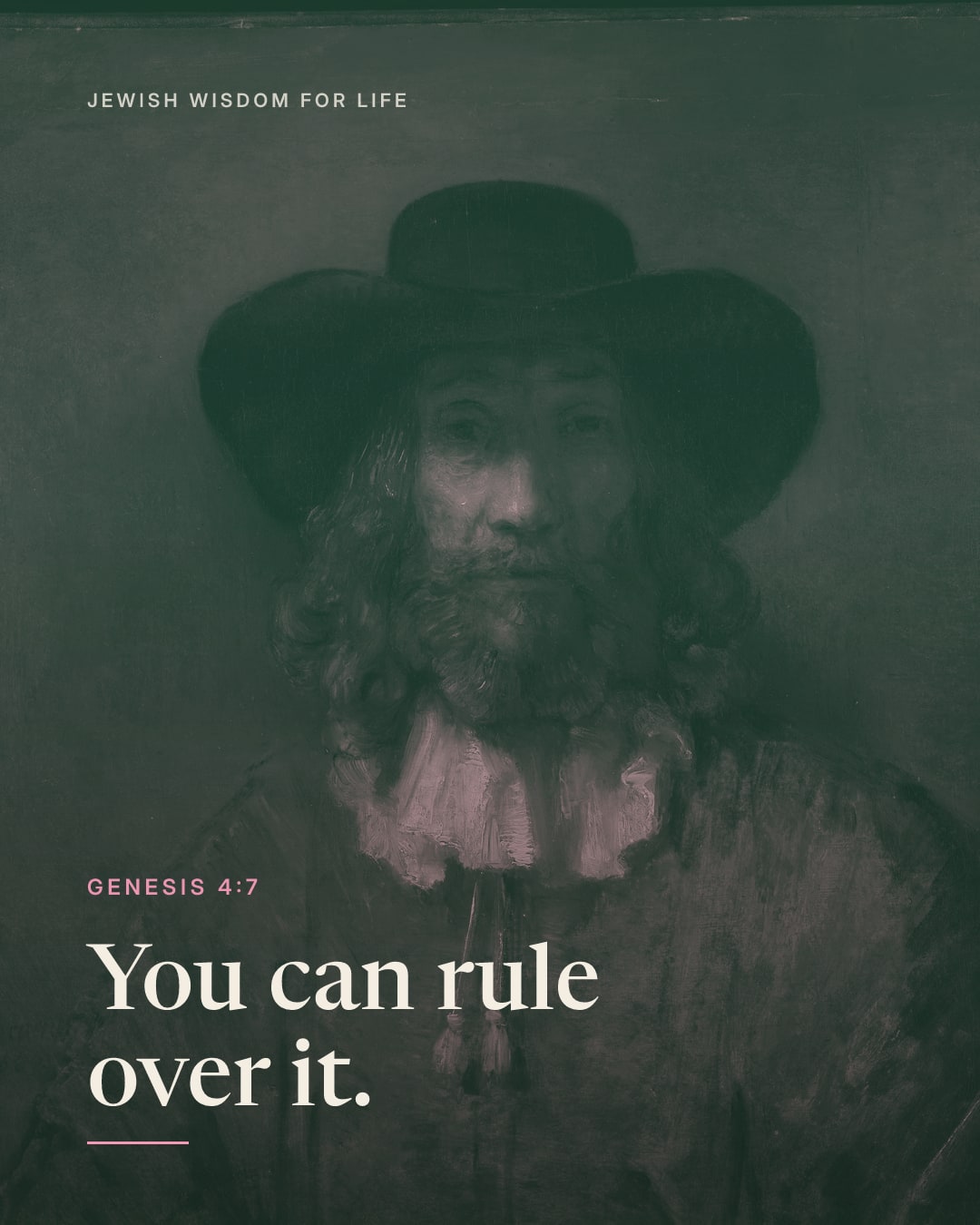
You can rule over it.
תמשל בו“Sin crouches at the door, but you can rule over it.”Genesis 4:7
God says this to Cain before the worst thing he ever does. Guilt tells you that you are the sin. The Torah tells you that you are the ruler. The thing at the door is real. So is the hand on the door.
- 2
Say it out loud.
וידוי“One must confess with words.”Mishneh Torah, Laws of Repentance 1:1
Confession in Jewish law is spoken, not thought. Naming the thing shrinks it to its real size. Guilt kept in the dark grows to fill the room. Said aloud, to God or to the person, it becomes the size of what actually happened.
- 3
There are steps. Take them.
חרטה“Abandon the sin, remove it from your thoughts, resolve never to return.”Mishneh Torah, Laws of Repentance 2:2
Maimonides wrote repentance down as a procedure: stop, regret, confess, resolve. Guilt is a feeling. Repair is a checklist. The feeling never ends on its own. The checklist does.
- 4
The returner stands higher.
בעלי תשובה“Where those who return stand, the perfectly righteous cannot stand.”Talmud, Berakhot 34b
The Talmud puts the person who fell and came back above the person who never fell. Your fall gave you a place the flawless cannot reach. That is not a consolation prize. It is the ranking.
- 5
A whole day exists to release you.
יום כיפור“On this day atonement shall be made for you. You shall be clean.”Leviticus 16:30
The calendar has a built-in reset. Yom Kippur is not a day to feel worse. It is the day the tradition says the thing is closed. If you are still carrying it after that, you are carrying something the law already put down.
Guilt is a signal. Not a sentence.
Hear it, repair it, put it down. The tradition built the exit.
Save this before Yom Kippur. Send it to someone still punishing themselves.
Sources
- Genesis 4:7 on Sefaria
- Mishneh Torah, Laws of Repentance 1:1
- Mishneh Torah, Laws of Repentance 2:2
- Talmud, Berakhot 34b on Sefaria
- Leviticus 16:30 on Sefaria
Art on the slides: Rembrandt, Man with a Beard · Velázquez, Portrait of a Man (ca. 1650) · Quinten Massys, Portrait of a Woman (ca. 1520) · El Greco (Domenikos Theotokopoulos), Portrait of an Old Man (ca. 1595–1600) · Anthony van Dyck, Study Head of an Old Man with a White Beard (ca. 1617–20) · Bartolomé Estebán Murillo, Don Andrés de Andrade y la Cal (ca. 1665–72) · Jacques Louis David, The Death of Socrates (1787). The Metropolitan Museum of Art, open access.