Lesson 016 · posted Thu Sep 3 2026
Worried About Money?
What Judaism says about provision, and what your worth is not: five ideas, each with its source.
What the tradition says about provision, and what your worth is not. You are more than your balance. Provision is a relationship, not a scoreboard.
- 1
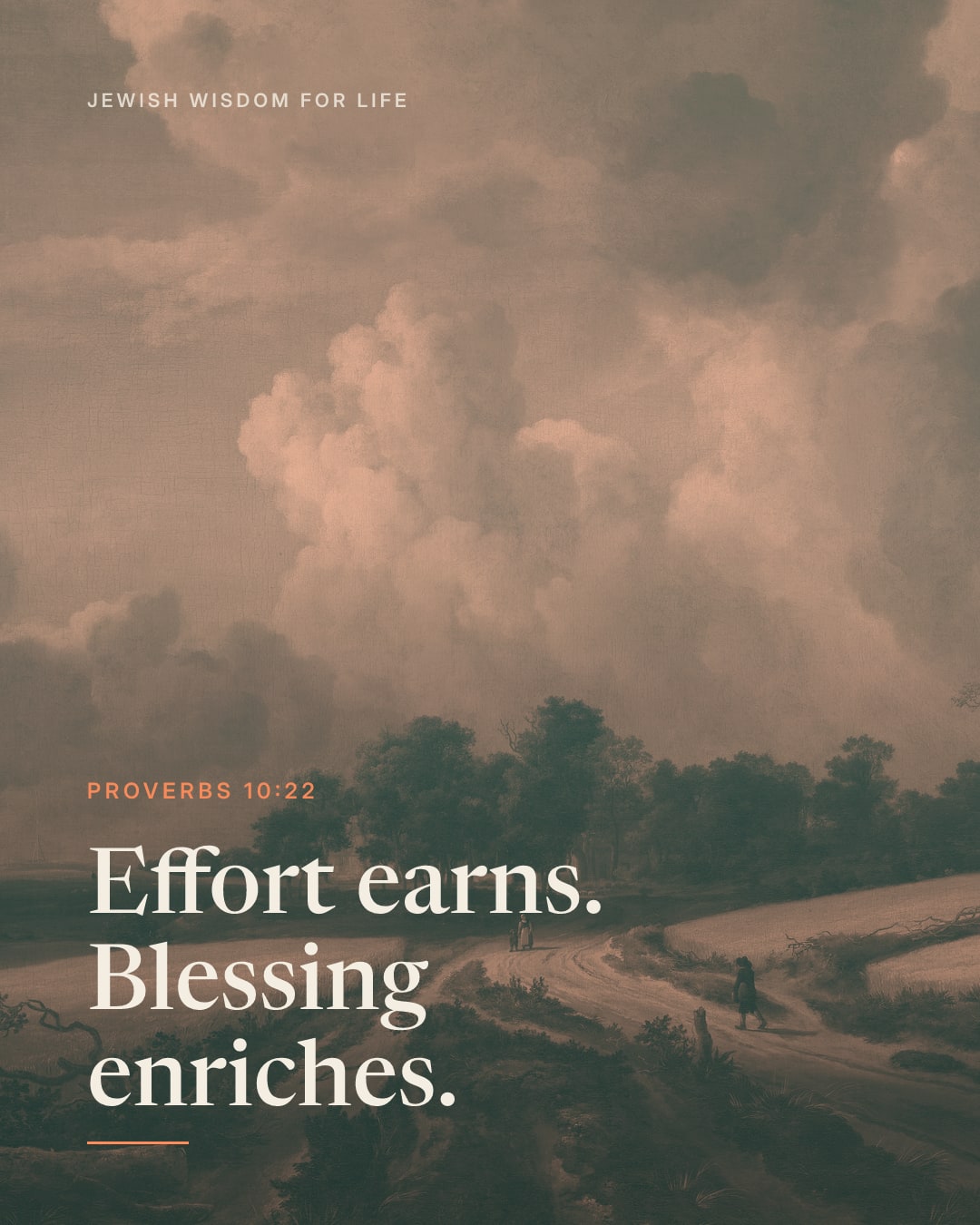
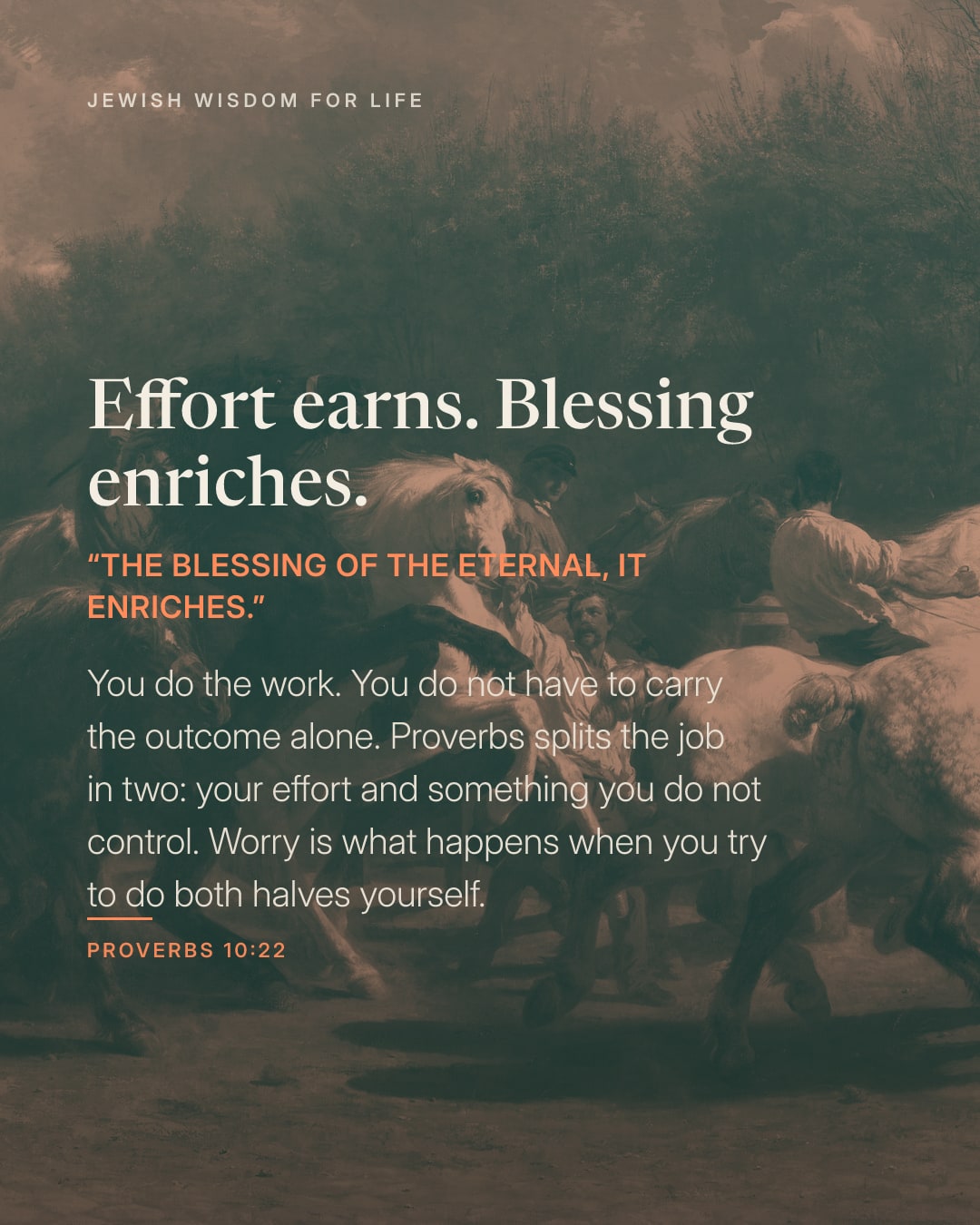
Effort earns. Blessing enriches.
ברכת ה׳“The blessing of the Eternal, it enriches.”Proverbs 10:22
You do the work. You do not have to carry the outcome alone. Proverbs splits the job in two: your effort and something you do not control. Worry is what happens when you try to do both halves yourself.
- 2
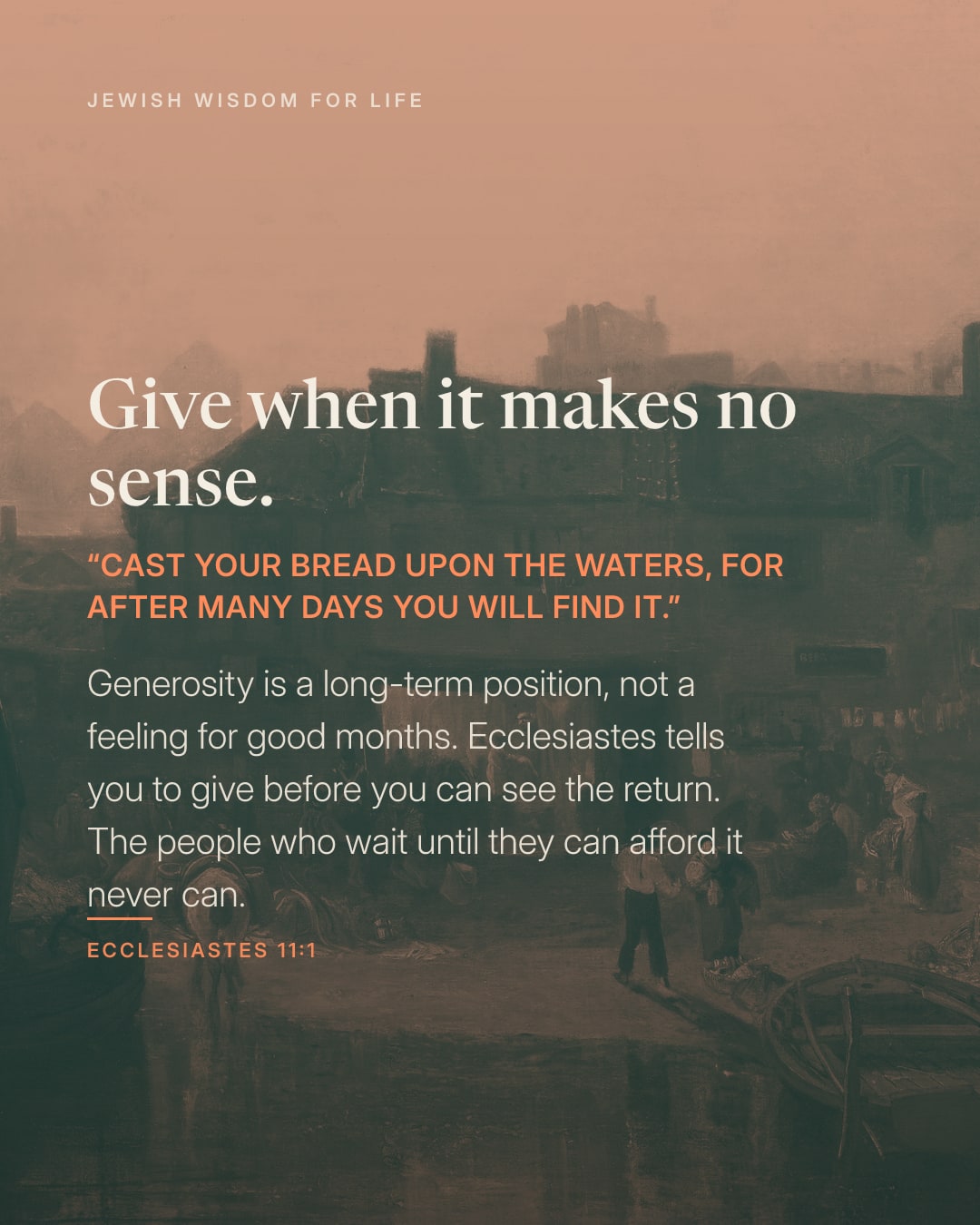
Give when it makes no sense.
לחמך“Cast your bread upon the waters, for after many days you will find it.”Ecclesiastes 11:1
Generosity is a long-term position, not a feeling for good months. Ecclesiastes tells you to give before you can see the return. The people who wait until they can afford it never can.
- 3
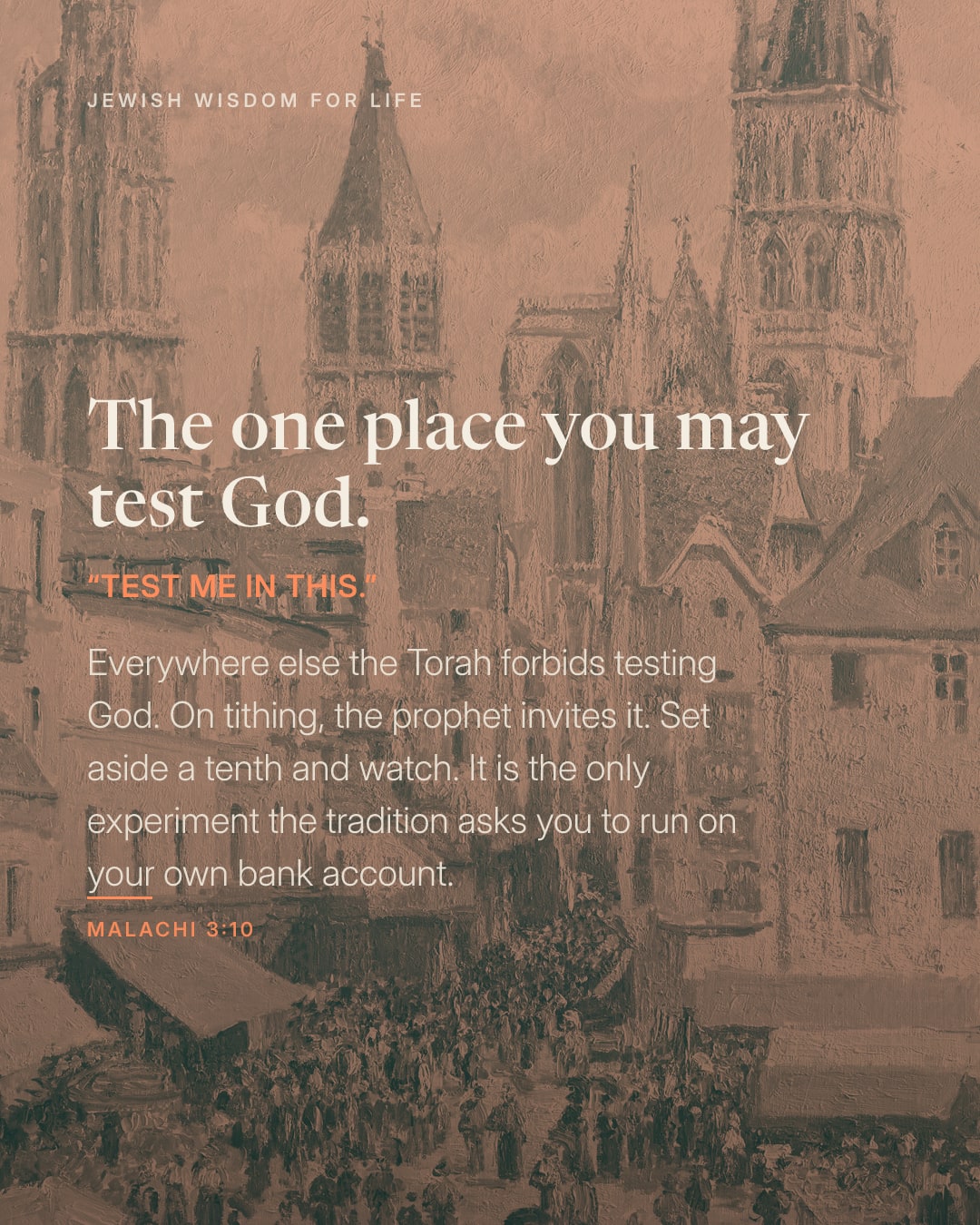
The one place you may test God.
מעשר“Test Me in this.”Malachi 3:10
Everywhere else the Torah forbids testing God. On tithing, the prophet invites it. Set aside a tenth and watch. It is the only experiment the tradition asks you to run on your own bank account.
- 4
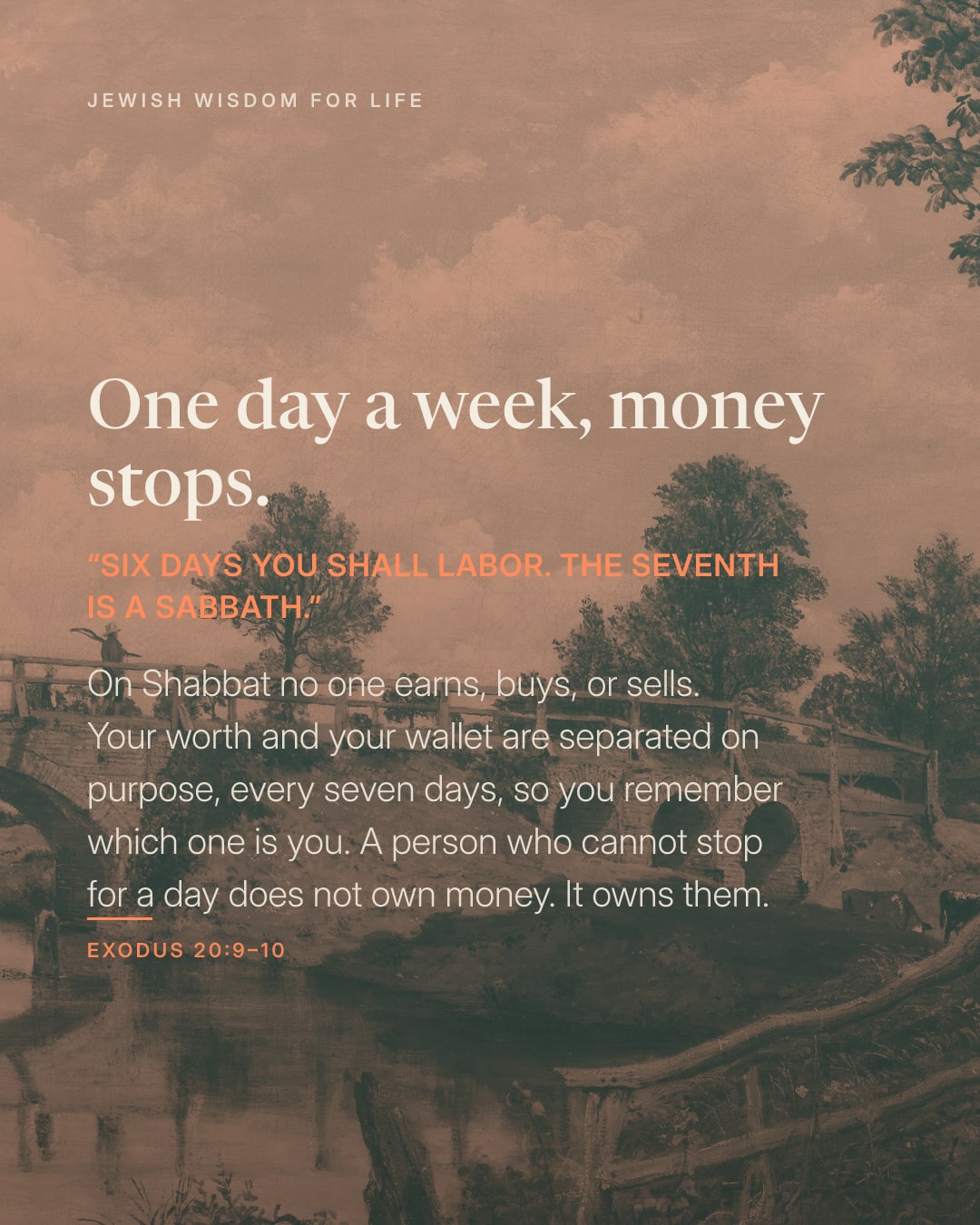
One day a week, money stops.
שבת“Six days you shall labor. The seventh is a Sabbath.”Exodus 20:9–10
On Shabbat no one earns, buys, or sells. Your worth and your wallet are separated on purpose, every seven days, so you remember which one is you. A person who cannot stop for a day does not own money. It owns them.
- 5
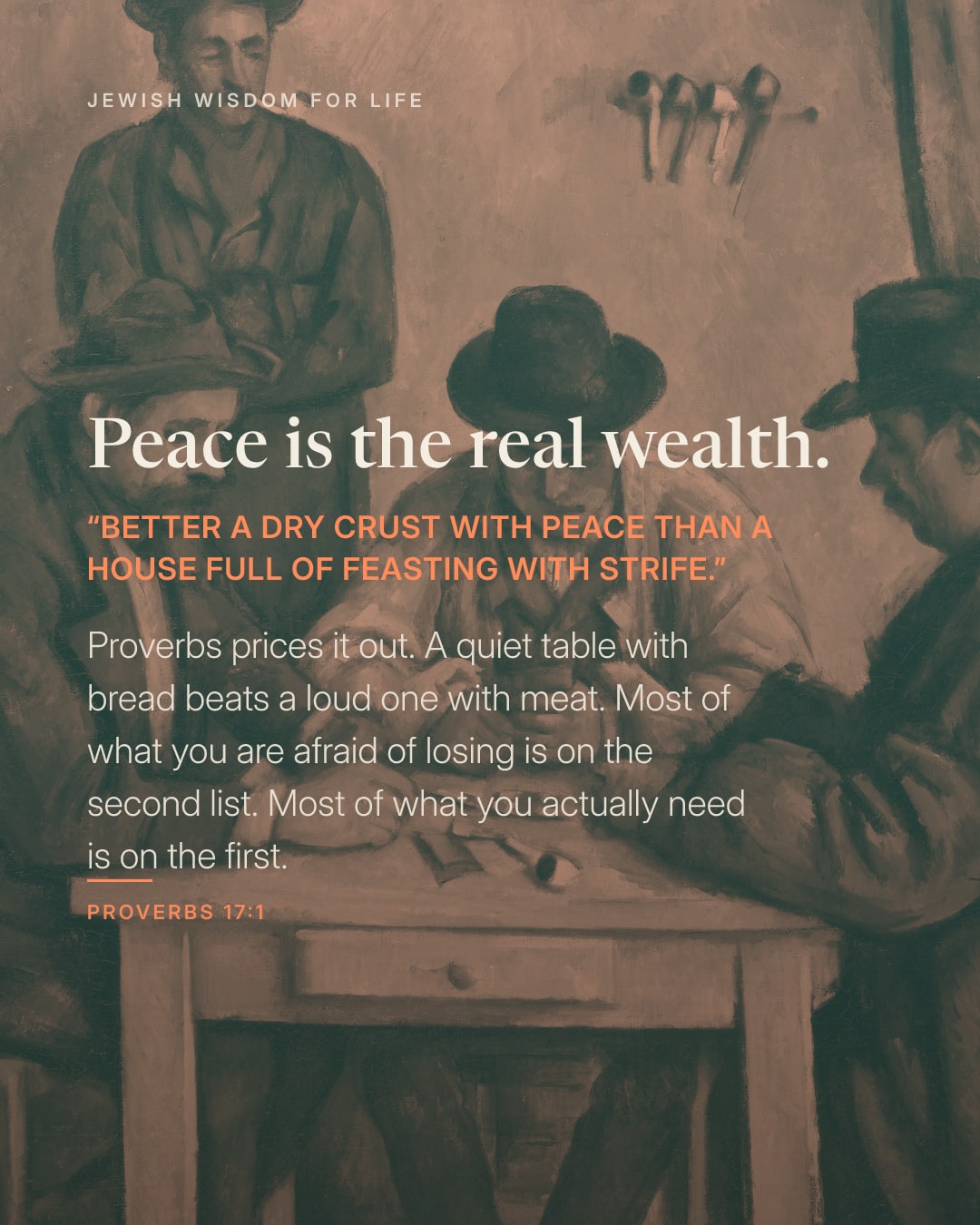
Peace is the real wealth.
פת חרבה“Better a dry crust with peace than a house full of feasting with strife.”Proverbs 17:1
Proverbs prices it out. A quiet table with bread beats a loud one with meat. Most of what you are afraid of losing is on the second list. Most of what you actually need is on the first.
You are more than your balance.
Provision is a relationship, not a scoreboard.
Save this for the first of the month. Send it to someone lying awake over bills.
Sources
- Proverbs 10:22 on Sefaria
- Ecclesiastes 11:1 on Sefaria
- Malachi 3:10
- Exodus 20:9–10 on Sefaria
- Proverbs 17:1 on Sefaria
Art on the slides: Jacob van Ruisdael, Wheat Fields (ca. 1670) · Rosa Bonheur, The Horse Fair (1852–55) · Joseph Mallord William Turner, Saltash with the Water Ferry, Cornwall (1811) · Camille Pissarro, Rue de l'Epicerie, Rouen (Effect of Sunlight) (1898) · Frederick Waters Watts, An Old Bridge at Hendon, Middlesex (ca. 1828) · Paul Cézanne, The Card Players (1890–92) · Jacob van Ruisdael, Landscape with a Village in the Distance (1646). The Metropolitan Museum of Art, open access.