Lesson 033 · posted Thu Sep 10 2026
Hard to Be Happy on Command?
What Judaism says about joy: five ideas, each with its source.
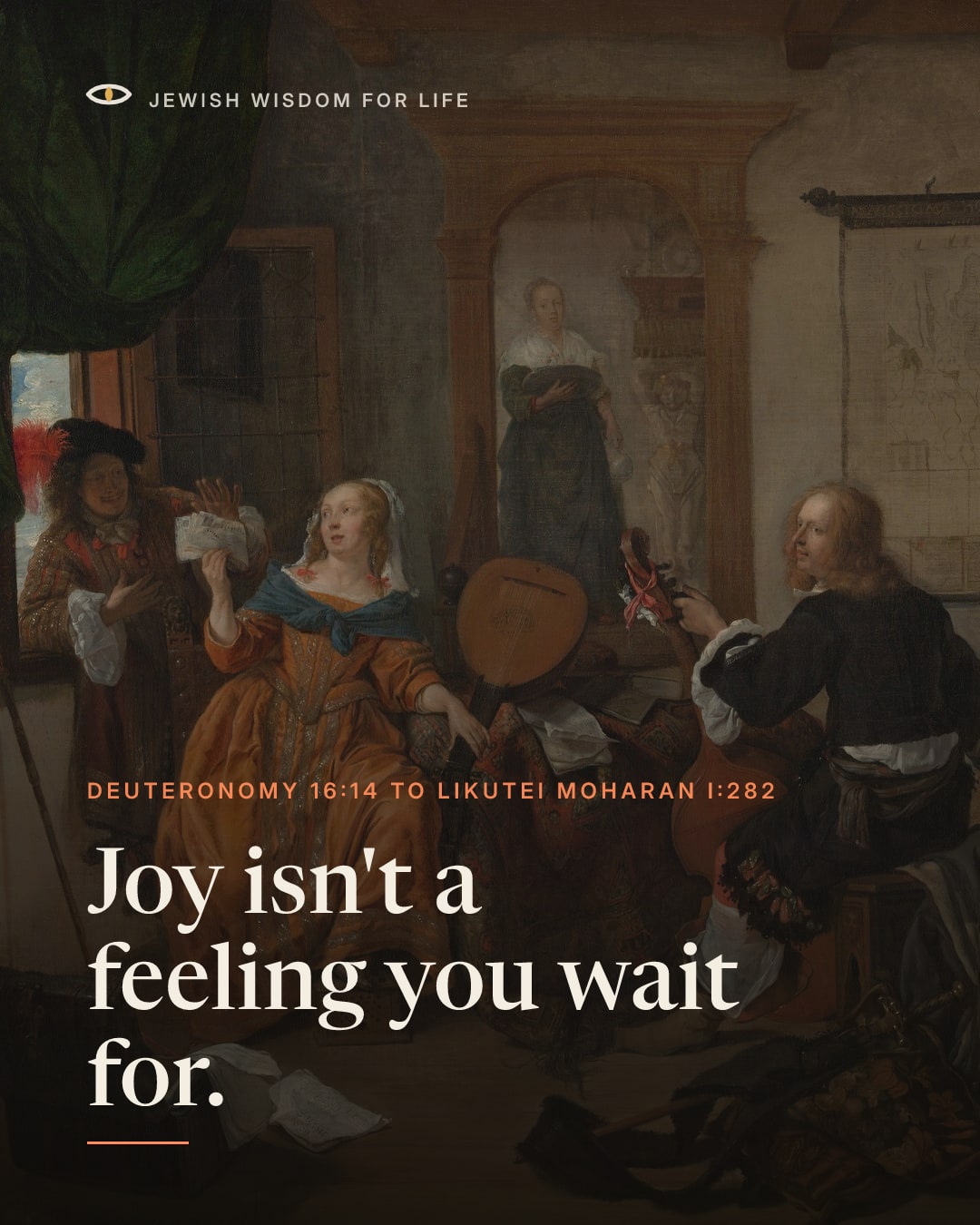
5 things Judaism can teach us about joy. Joy isn't a feeling you wait for. It's a table you set. Then you sit down.

- 1
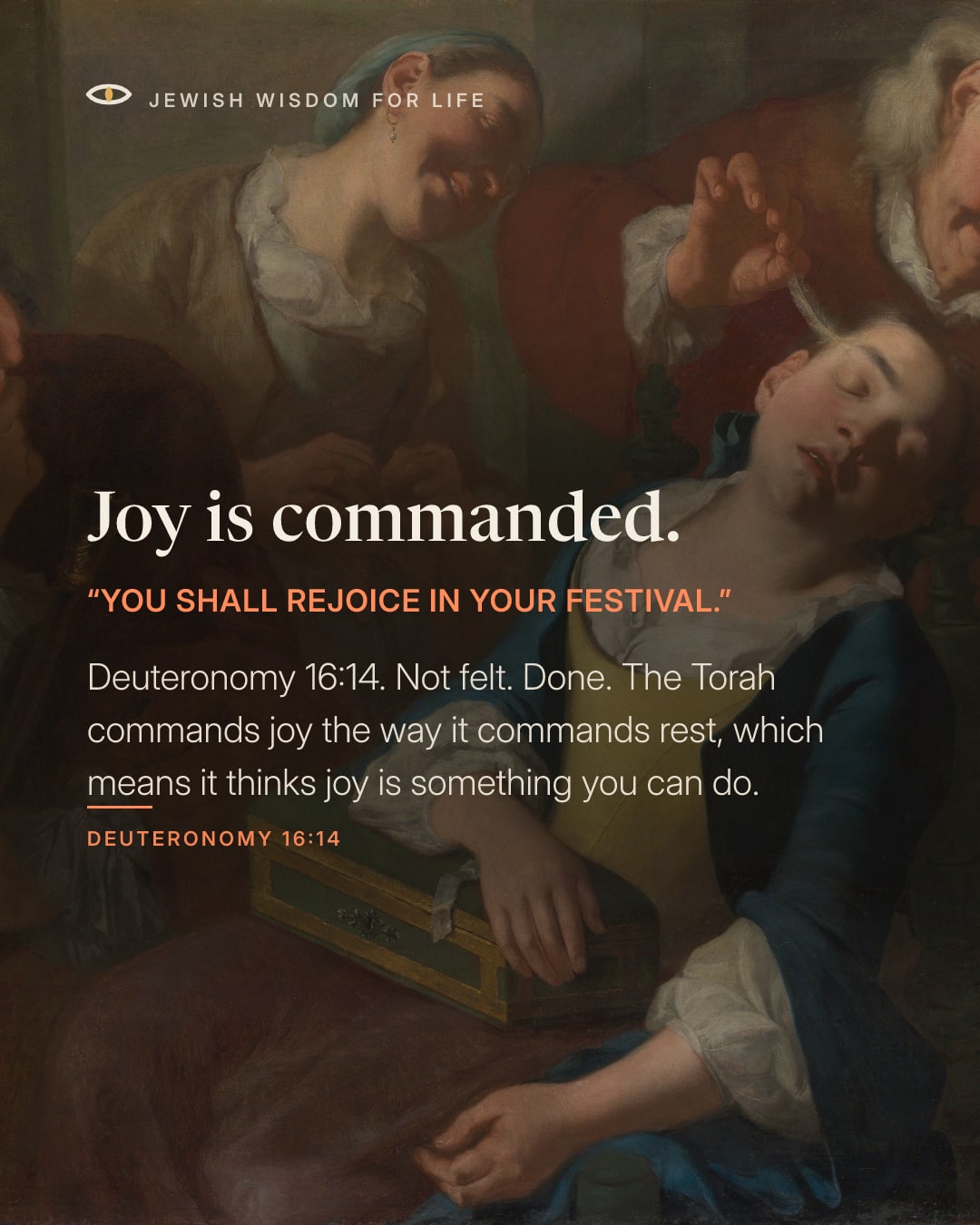
Joy is commanded.
ושמחת“You shall rejoice in your festival.”Deuteronomy 16:14
Deuteronomy 16:14. Not felt. Done. The Torah commands joy the way it commands rest, which means it thinks joy is something you can do.
- 2
Serve with joy.
עבדו בשמחה“Serve the Lord with gladness; come before Him with singing.”Psalm 100:2
Psalm 100:2. The how matters as much as the what. The same act done grimly and done singing are, in this verse, two different acts.
- 3
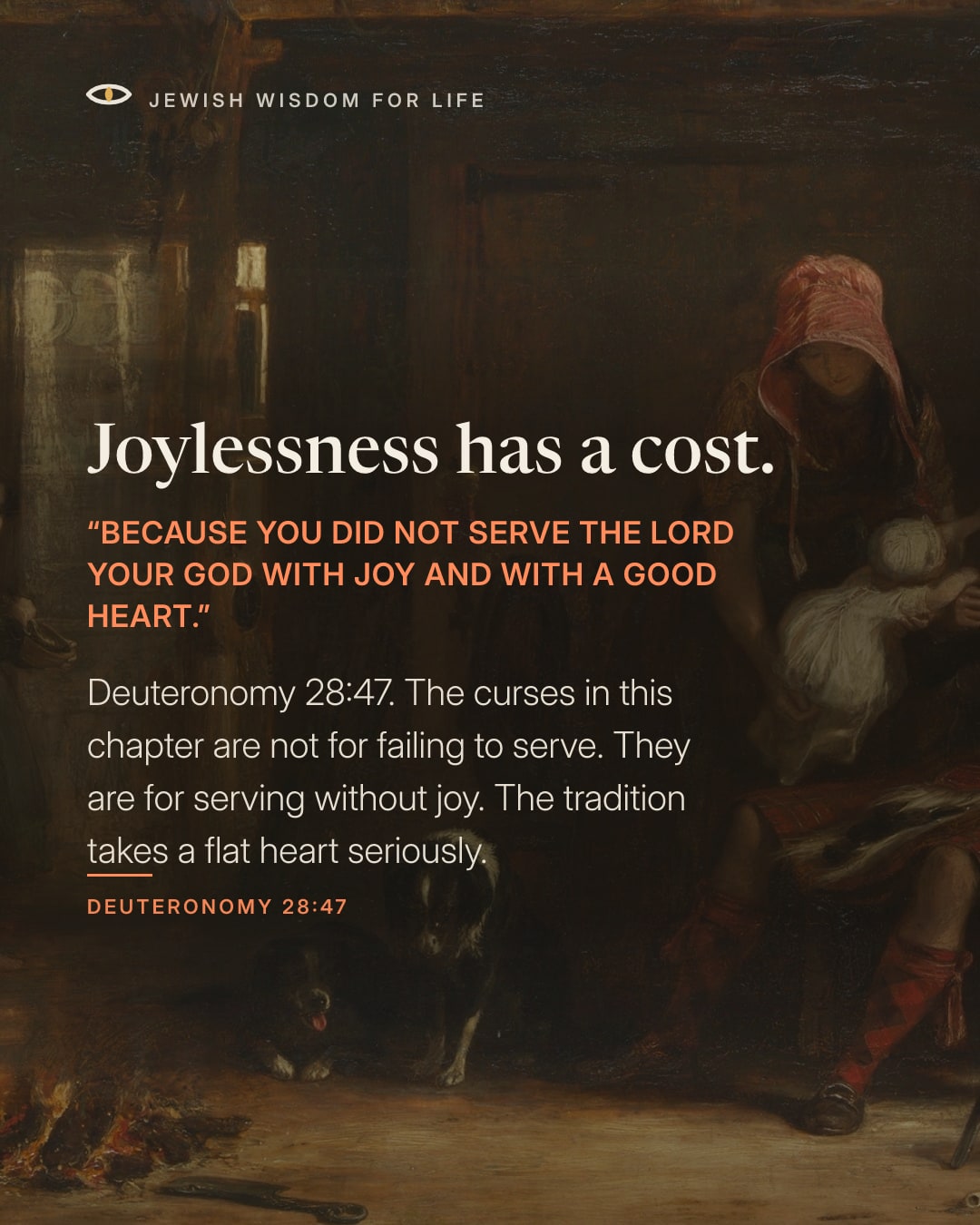
Joylessness has a cost.
בשמחה ובטוב לבב“Because you did not serve the Lord your God with joy and with a good heart.”Deuteronomy 28:47
Deuteronomy 28:47. The curses in this chapter are not for failing to serve. They are for serving without joy. The tradition takes a flat heart seriously.
- 4
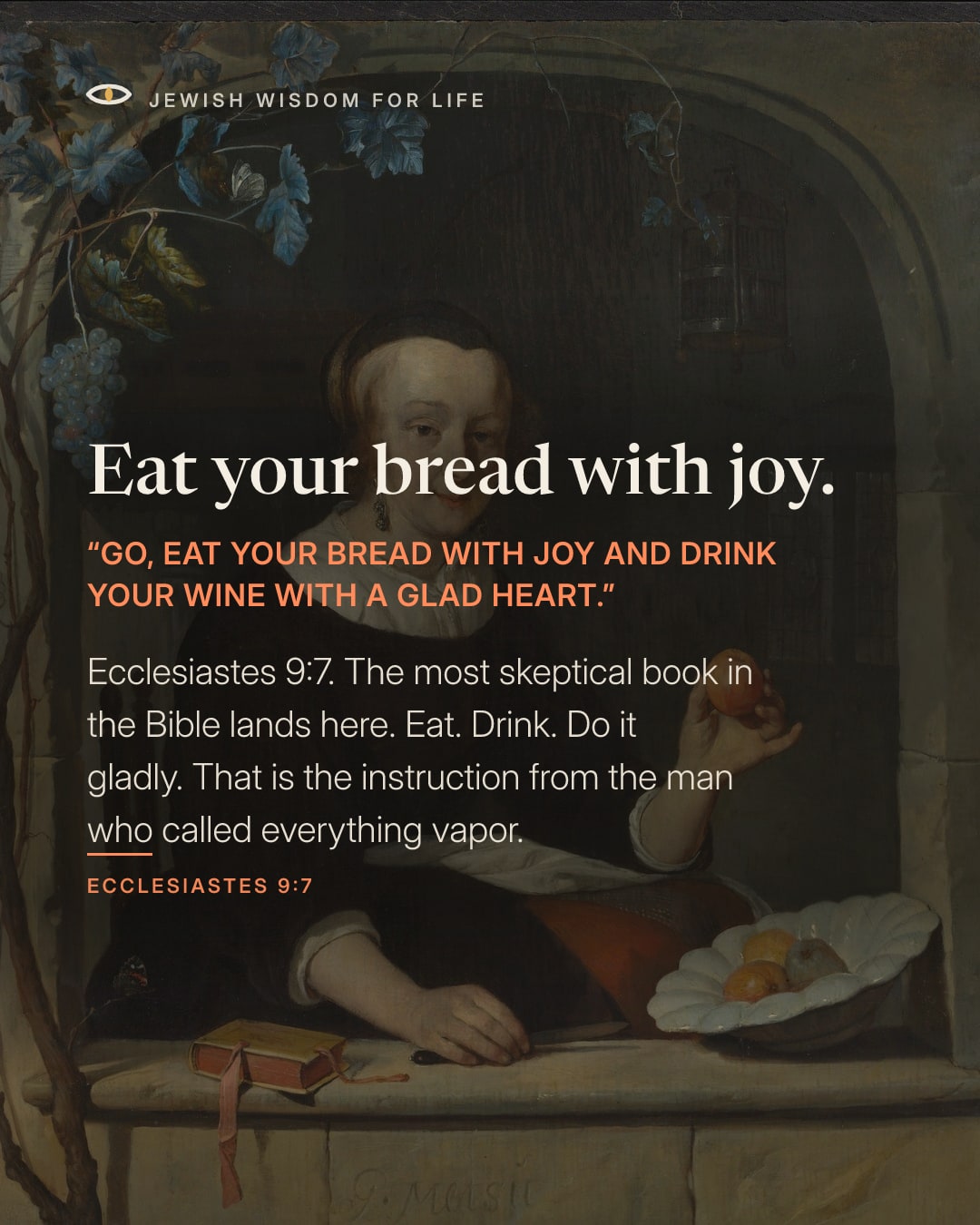
Eat your bread with joy.
אכל בשמחה“Go, eat your bread with joy and drink your wine with a glad heart.”Ecclesiastes 9:7
Ecclesiastes 9:7. The most skeptical book in the Bible lands here. Eat. Drink. Do it gladly. That is the instruction from the man who called everything vapor.
- 5
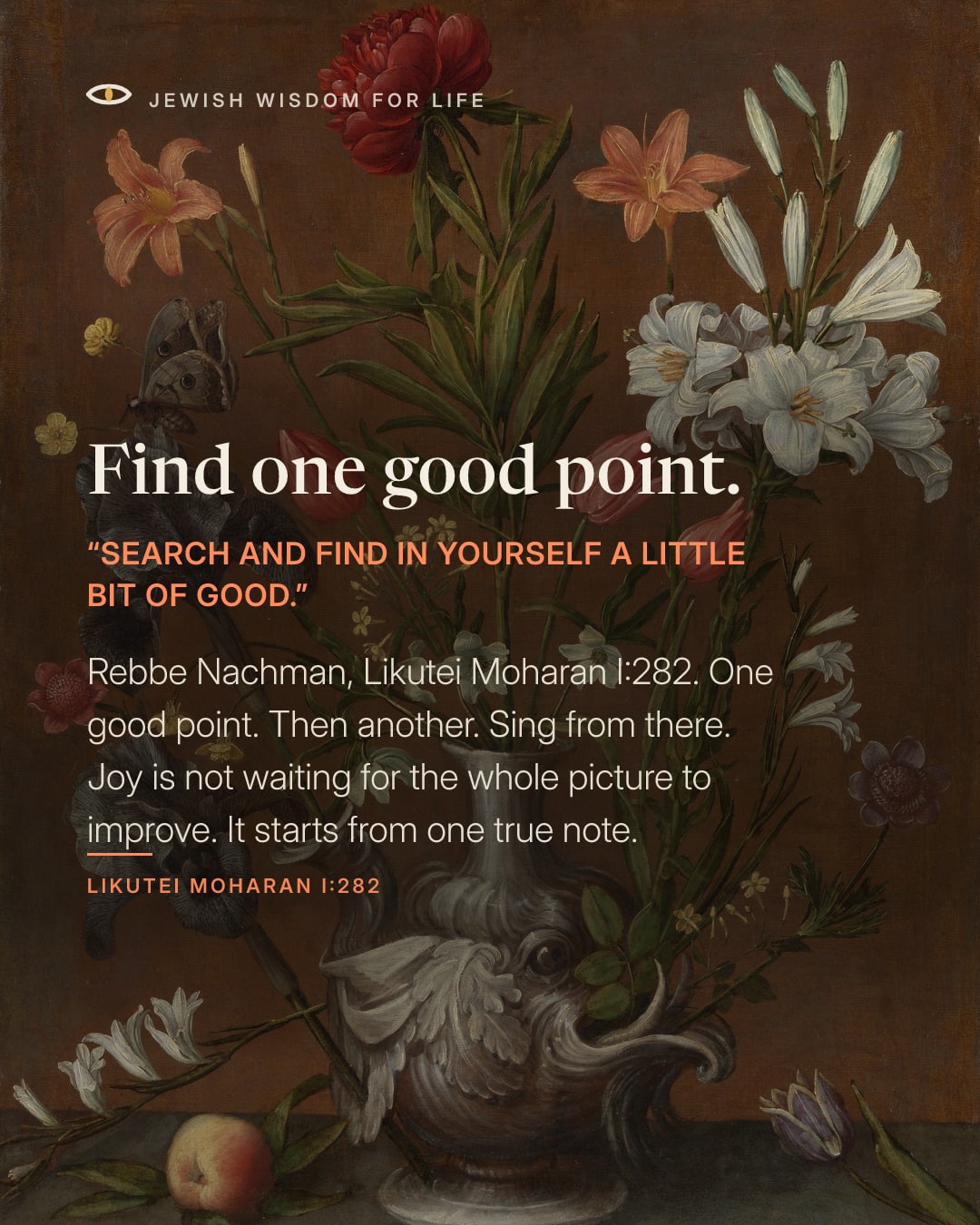
Find one good point.
נקודה טובה“Search and find in yourself a little bit of good.”Likutei Moharan I:282
Rebbe Nachman, Likutei Moharan I:282. One good point. Then another. Sing from there. Joy is not waiting for the whole picture to improve. It starts from one true note.
Joy isn't a feeling you wait for.
It's a table you set. Then you sit down.
Save this for a flat day, and send it to someone who's forgotten how to celebrate.
Sources
- Deuteronomy 16:14 on Sefaria
- Psalm 100:2 on Sefaria
- Deuteronomy 28:47 on Sefaria
- Ecclesiastes 9:7 on Sefaria
- Likutei Moharan I:282
Art on the slides: Gabriël Metsu, A Musical Party (1659) · Gaspare Traversi, Teasing a Sleeping Girl (ca. 1760) · Valentin de Boulogne, Lute Player (ca. 1625–26) · Sir David Wilkie, The Highland Family (1824) · Gabriël Metsu, A Woman Seated at a Window (early 1660s) · Orsola Maddalena Caccia, Flowers in a Grotesque Vase (ca. 1635) · Auguste Renoir, Nini in the Garden (Nini Lopez) (1876). The Metropolitan Museum of Art, open access.