Lesson 034 · posted Fri Sep 11 2026
Afraid of Getting Older?
What Judaism says about age: five ideas, each with its source.
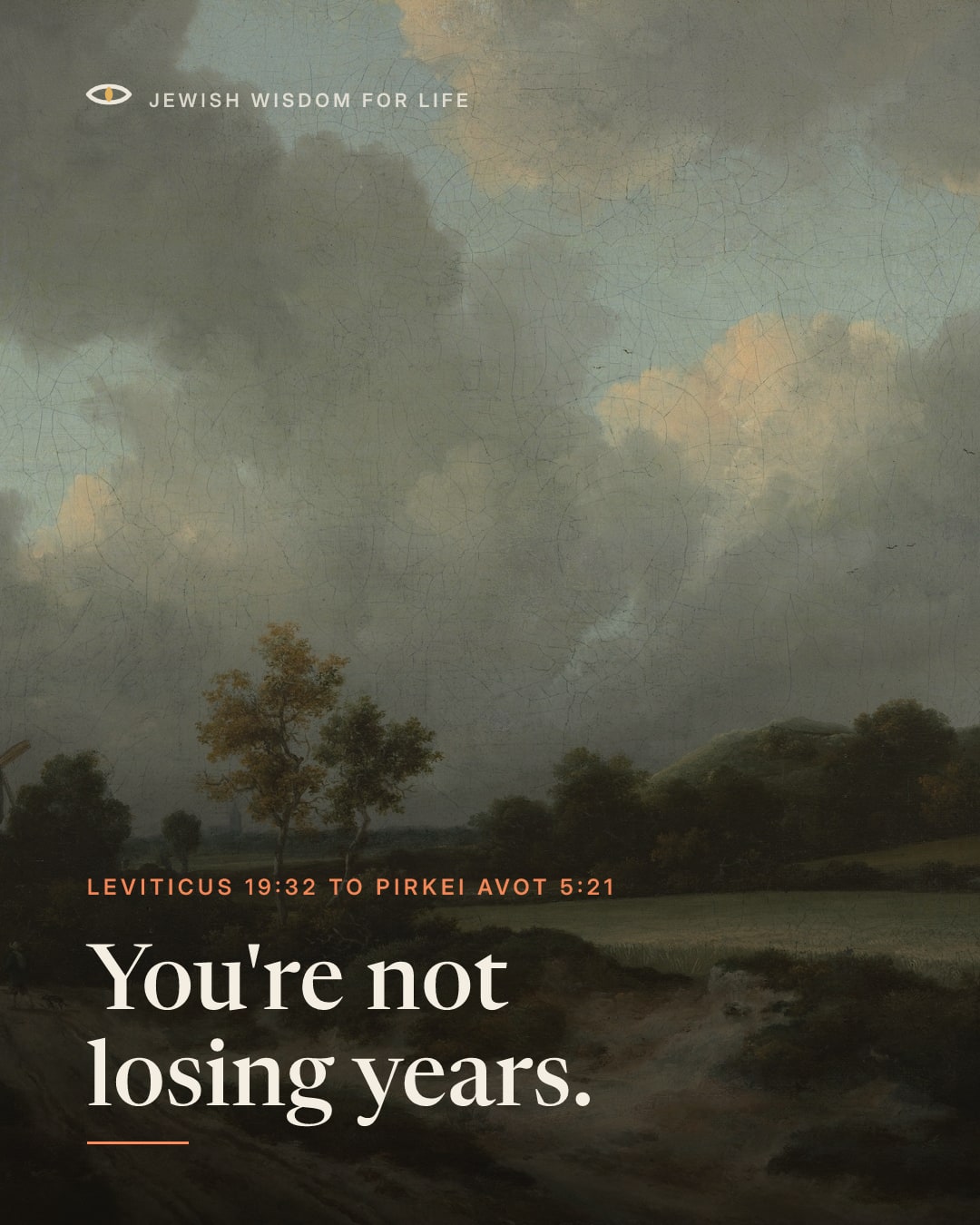
5 things Judaism can teach us about age. You're not losing years. You're accumulating them. That's a different bank account.

- 1
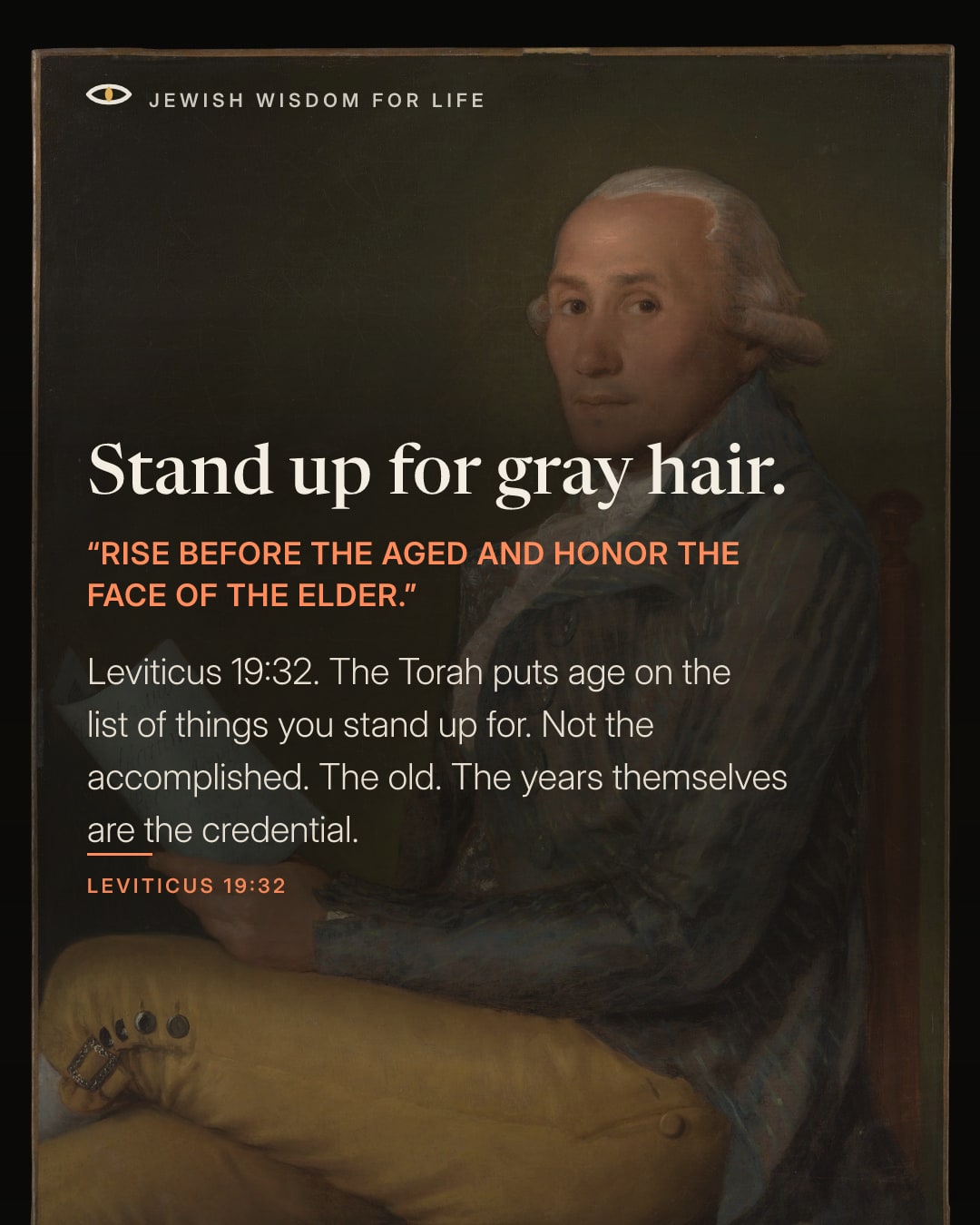
Stand up for gray hair.
מפני שיבה“Rise before the aged and honor the face of the elder.”Leviticus 19:32
Leviticus 19:32. The Torah puts age on the list of things you stand up for. Not the accomplished. The old. The years themselves are the credential.
- 2
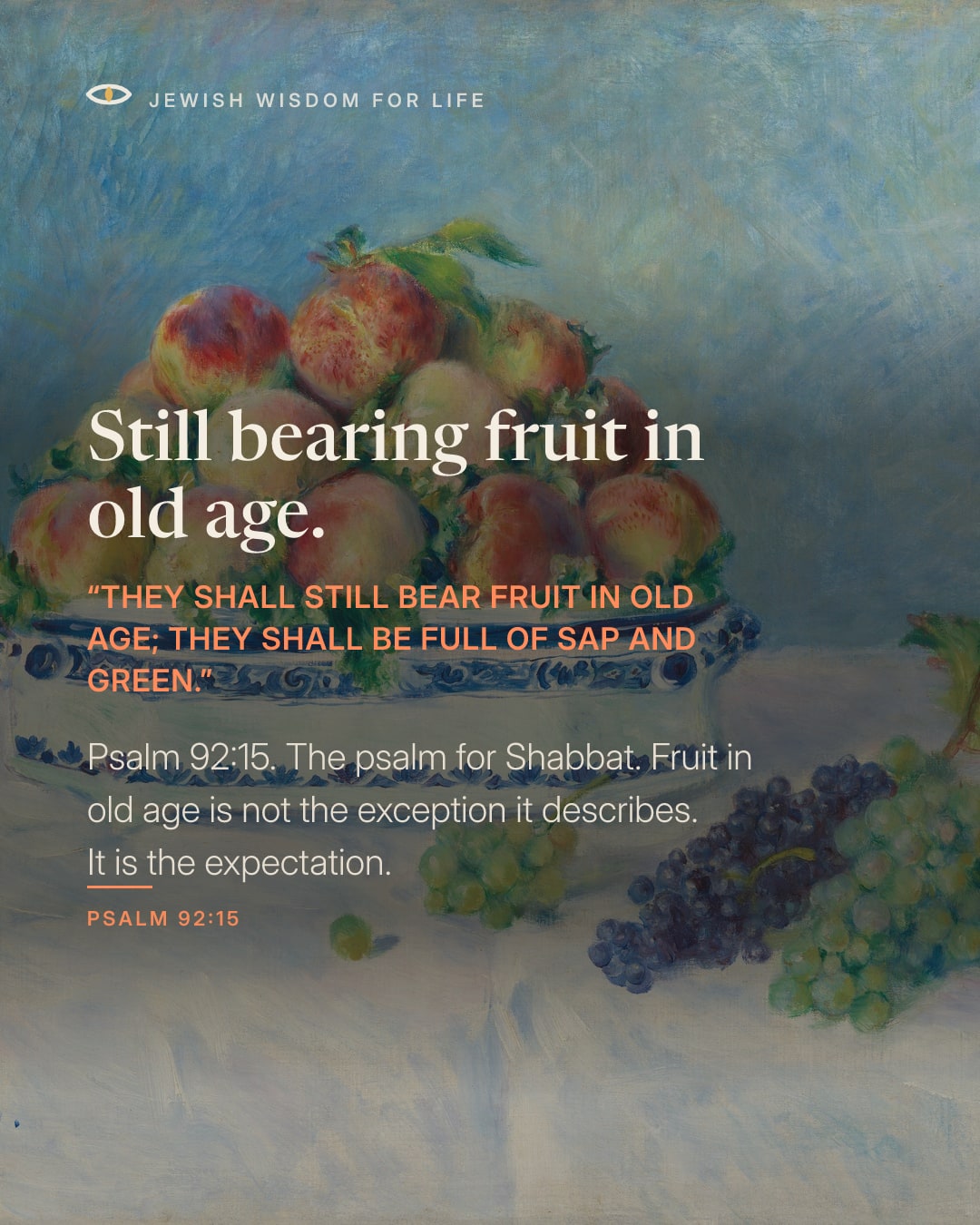
Still bearing fruit in old age.
ינובון בשיבה“They shall still bear fruit in old age; they shall be full of sap and green.”Psalm 92:15
Psalm 92:15. The psalm for Shabbat. Fruit in old age is not the exception it describes. It is the expectation.
- 3
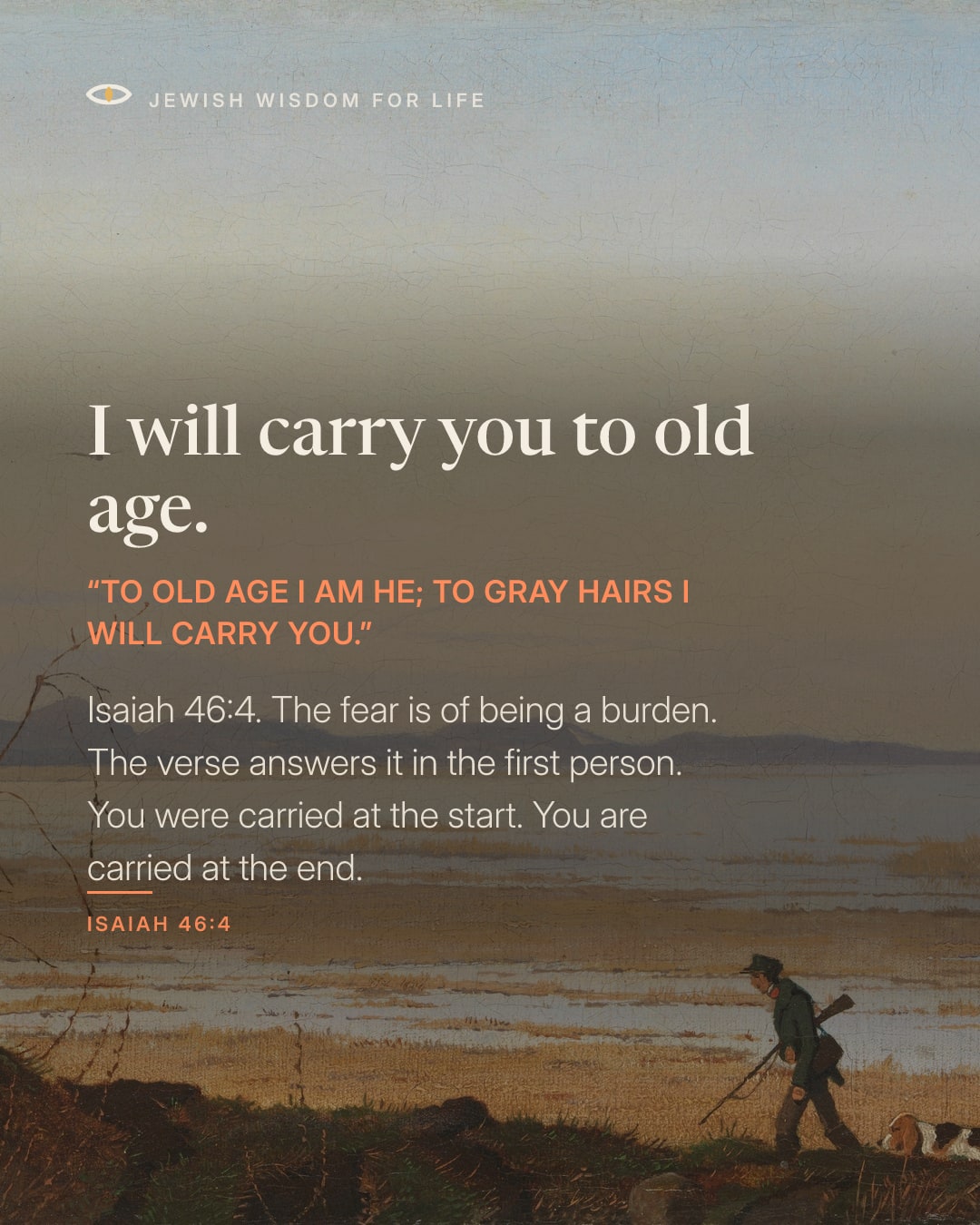
I will carry you to old age.
עד זקנה“To old age I am He; to gray hairs I will carry you.”Isaiah 46:4
Isaiah 46:4. The fear is of being a burden. The verse answers it in the first person. You were carried at the start. You are carried at the end.
- 4
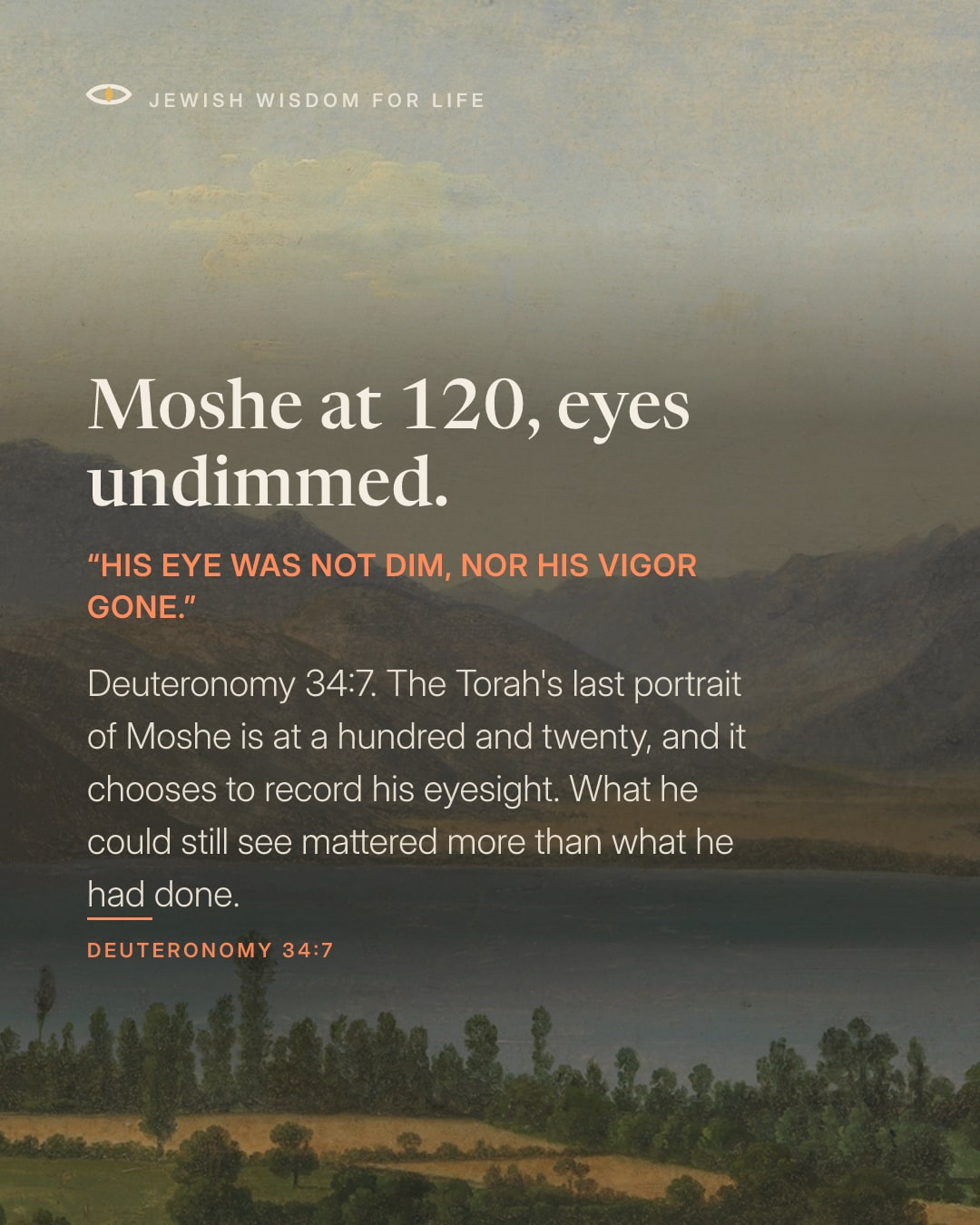
Moshe at 120, eyes undimmed.
לא כהתה עינו“His eye was not dim, nor his vigor gone.”Deuteronomy 34:7
Deuteronomy 34:7. The Torah's last portrait of Moshe is at a hundred and twenty, and it chooses to record his eyesight. What he could still see mattered more than what he had done.
- 5
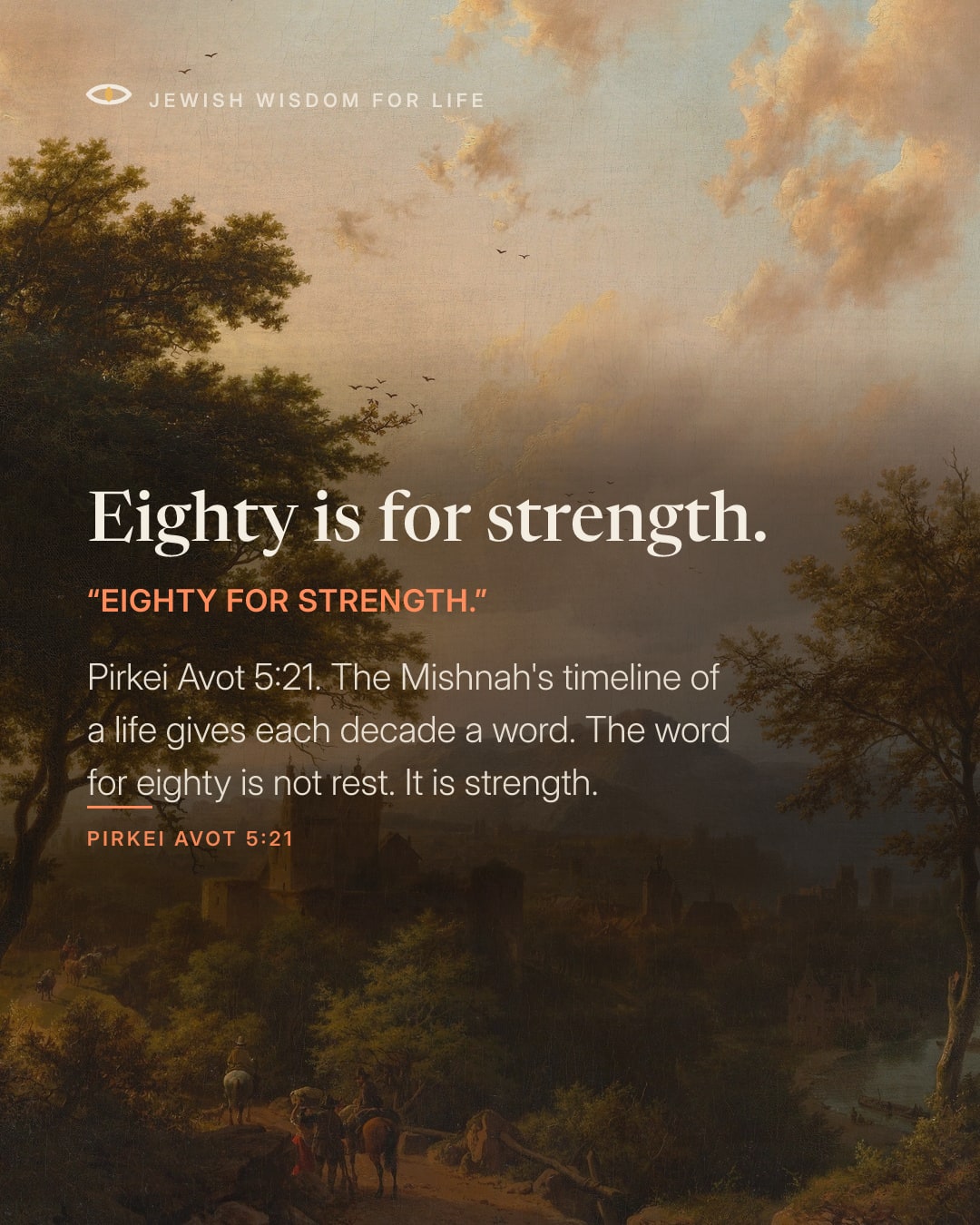
Eighty is for strength.
בן שמונים“Eighty for strength.”Pirkei Avot 5:21
Pirkei Avot 5:21. The Mishnah's timeline of a life gives each decade a word. The word for eighty is not rest. It is strength.
You're not losing years.
You're accumulating them. That's a different bank account.
Save this for a birthday you're dreading, and send it to someone who fears the number.
Sources
- Leviticus 19:32 on Sefaria
- Psalm 92:15 on Sefaria
- Isaiah 46:4 on Sefaria
- Deuteronomy 34:7 on Sefaria
- Pirkei Avot 5:21 on Sefaria
Art on the slides: Jacob van Ruisdael, Grainfields (mid- or late 1660s) · Goya (Francisco de Goya y Lucientes), Sebastián Martínez y Pérez (1747–1800) (1792) · Auguste Renoir, Still Life with Peaches and Grapes (1881) · Johan Thomas Lundbye, An Evening beside Lake Arresø (ca. 1837) · Joseph Bidauld, Lake Fucino and the Abruzzi Mountains (ca. 1789) · Barend Cornelis Koekkoek, Sunset on the Rhine (1853) · Vincent van Gogh, Cypresses (1889). The Metropolitan Museum of Art, open access.