Lesson 035 · posted Fri Sep 11 2026
Can't Say No?
What Judaism says about boundaries: five ideas, each with its source.
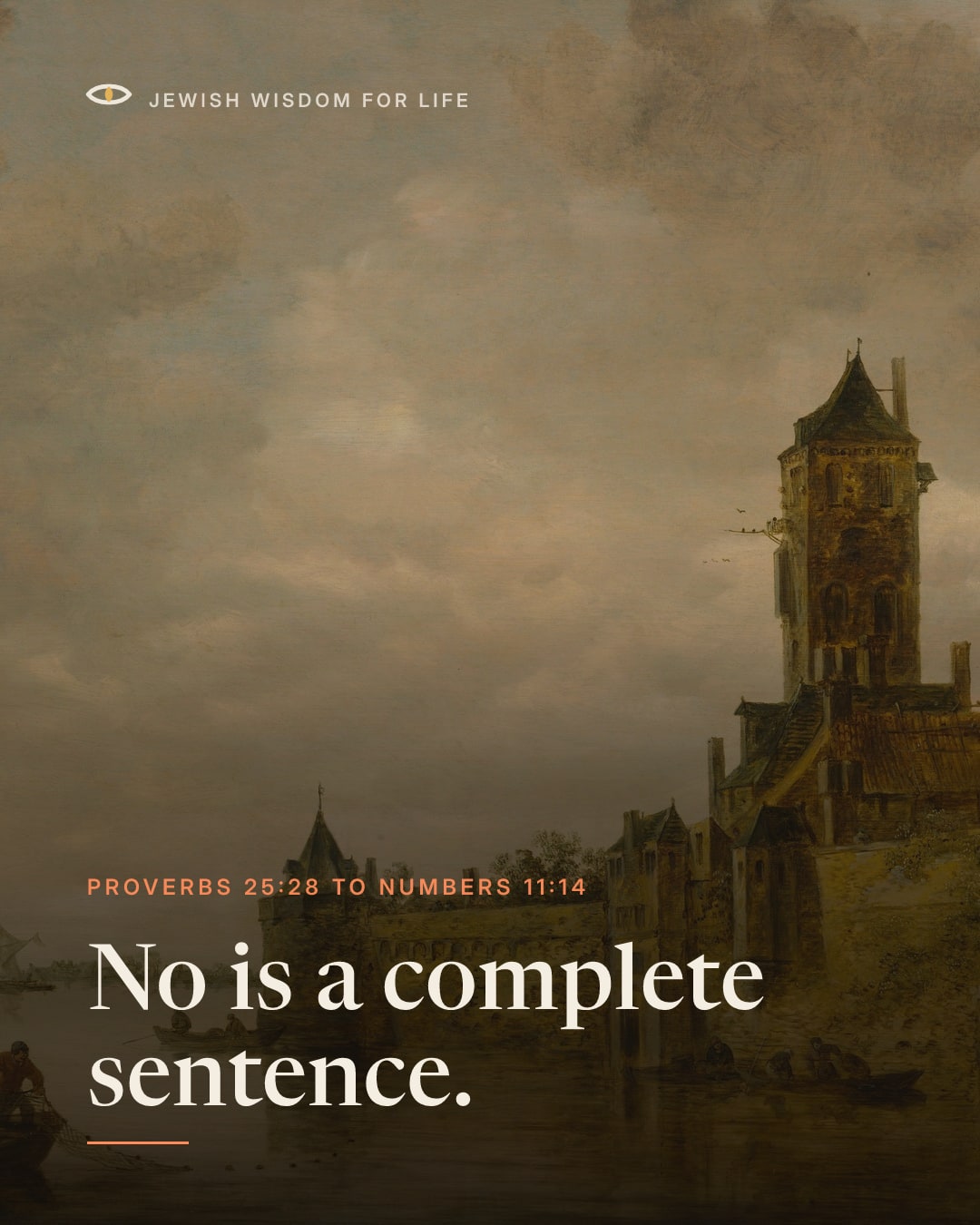
5 things Judaism can teach us about boundaries. No is a complete sentence. And in this tradition, a holy one.
- 1
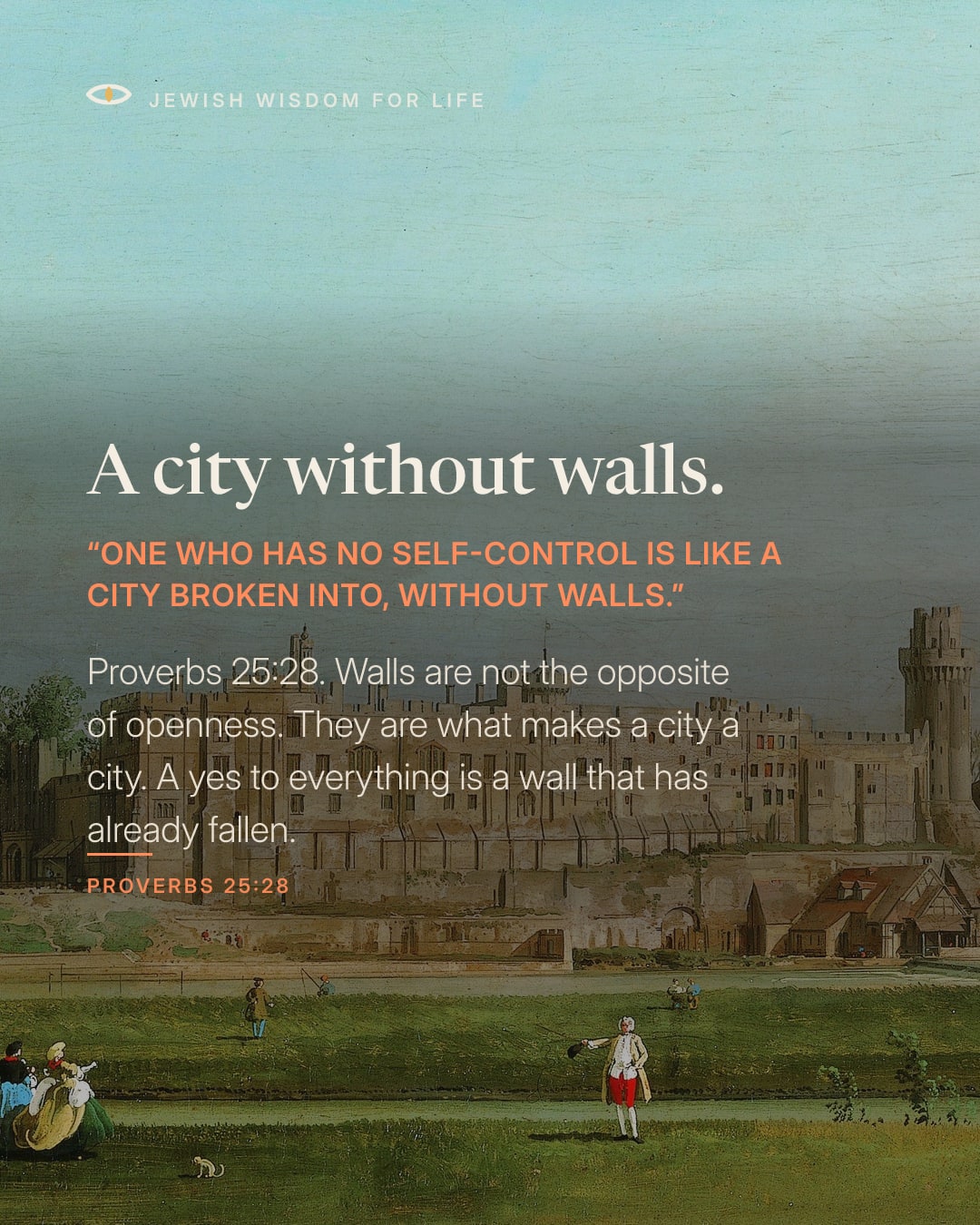
A city without walls.
עיר פרוצה“One who has no self-control is like a city broken into, without walls.”Proverbs 25:28
Proverbs 25:28. Walls are not the opposite of openness. They are what makes a city a city. A yes to everything is a wall that has already fallen.
- 2
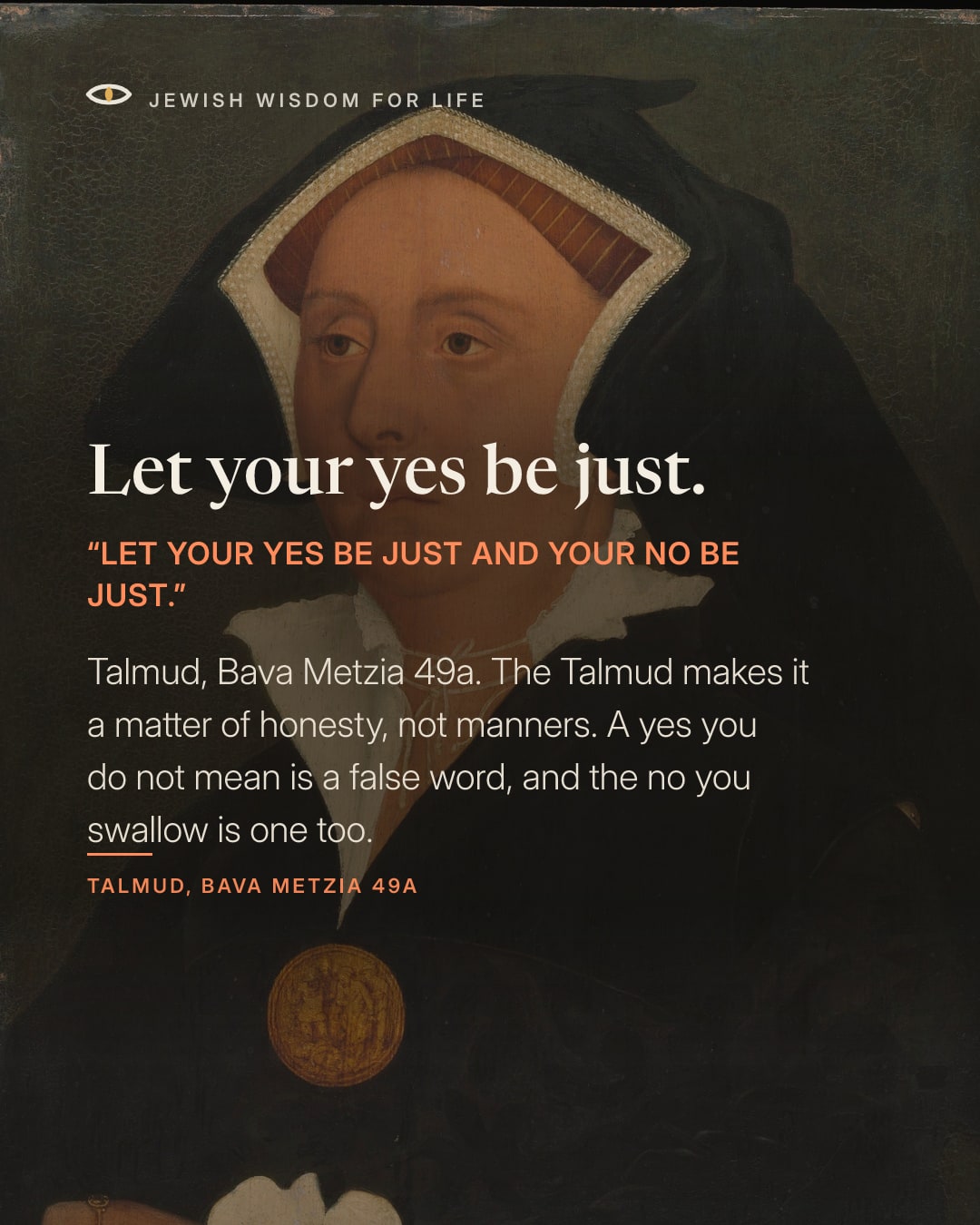
Let your yes be just.
הין צדק“Let your yes be just and your no be just.”Talmud, Bava Metzia 49a
Talmud, Bava Metzia 49a. The Talmud makes it a matter of honesty, not manners. A yes you do not mean is a false word, and the no you swallow is one too.
- 3
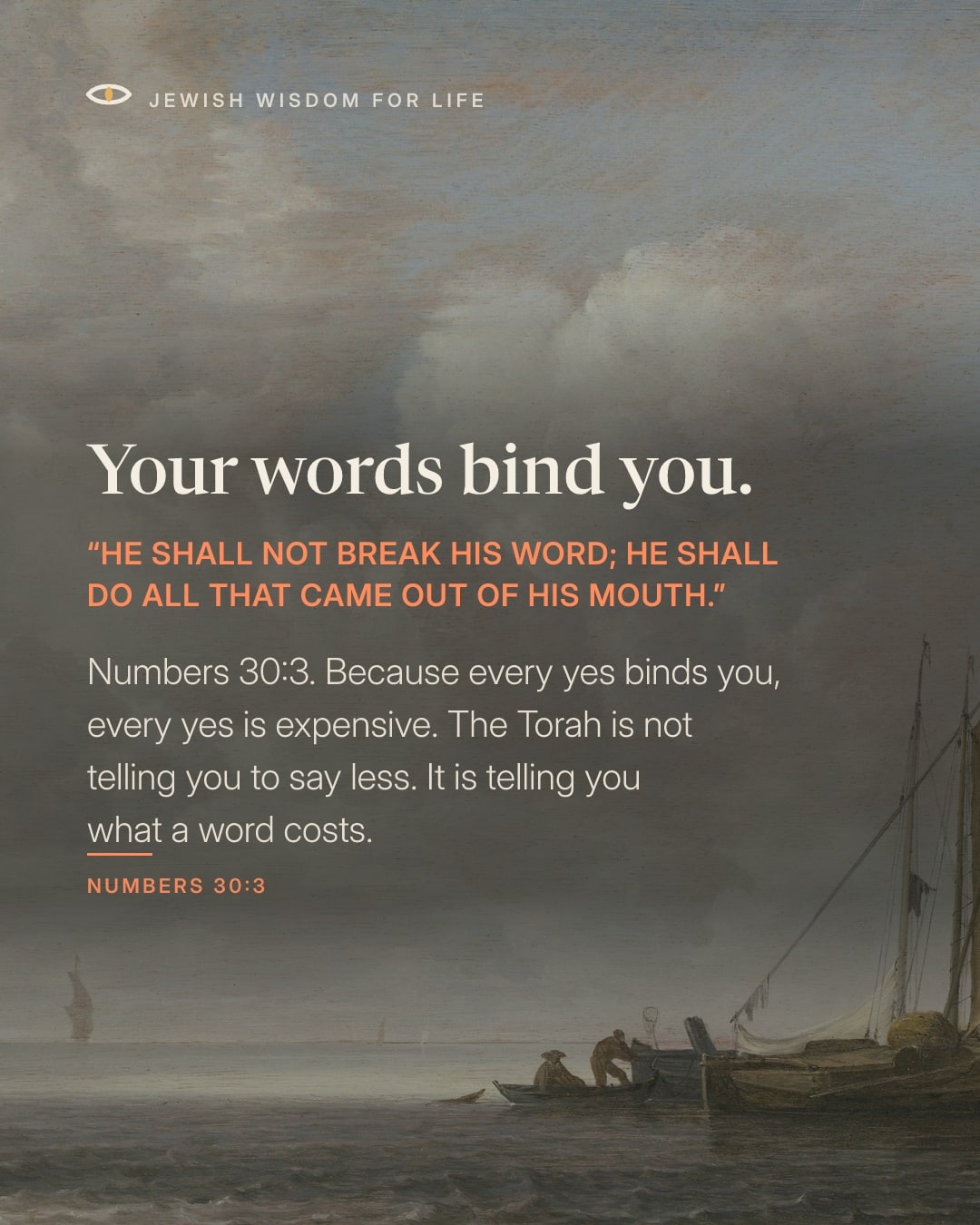
Your words bind you.
לא יחל דברו“He shall not break his word; he shall do all that came out of his mouth.”Numbers 30:3
Numbers 30:3. Because every yes binds you, every yes is expensive. The Torah is not telling you to say less. It is telling you what a word costs.
- 4
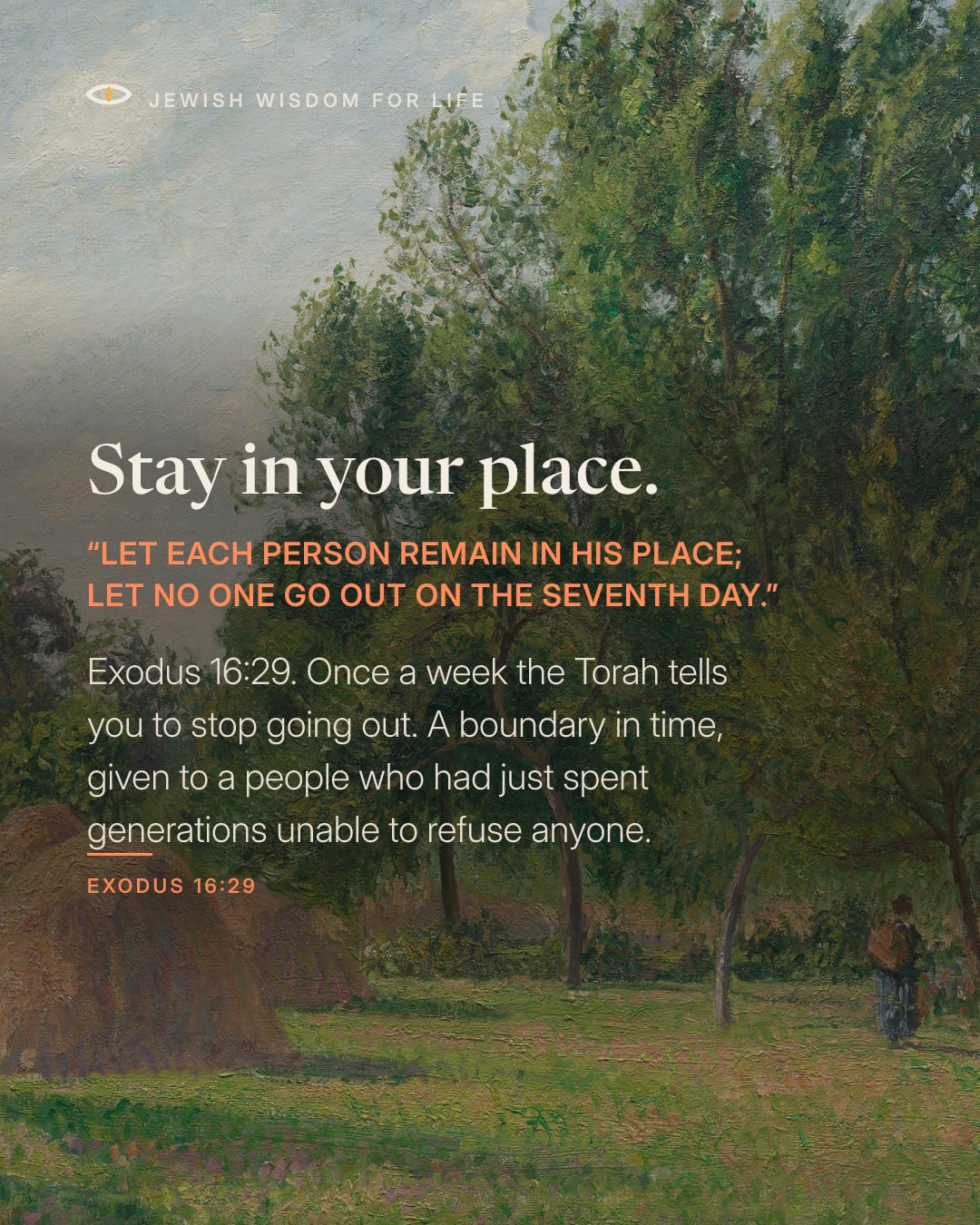
Stay in your place.
שבו איש תחתיו“Let each person remain in his place; let no one go out on the seventh day.”Exodus 16:29
Exodus 16:29. Once a week the Torah tells you to stop going out. A boundary in time, given to a people who had just spent generations unable to refuse anyone.
- 5
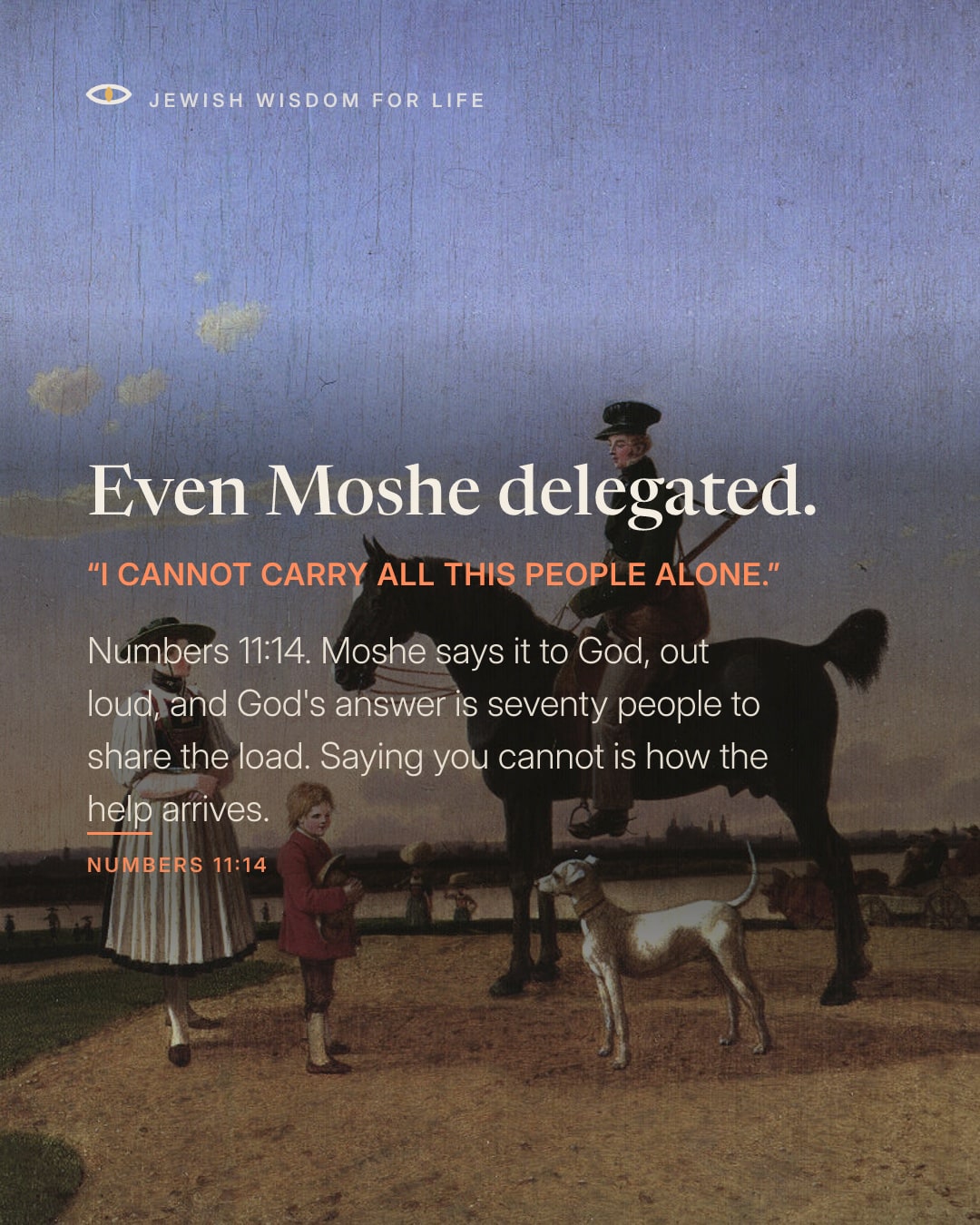
Even Moshe delegated.
לא אוכל אנכי לבדי“I cannot carry all this people alone.”Numbers 11:14
Numbers 11:14. Moshe says it to God, out loud, and God's answer is seventy people to share the load. Saying you cannot is how the help arrives.
No is a complete sentence.
And in this tradition, a holy one.
Save this for the next request you'll regret, and send it to the friend who says yes to everyone.
Sources
- Proverbs 25:28 on Sefaria
- Talmud, Bava Metzia 49a on Sefaria
- Numbers 30:3 on Sefaria
- Exodus 16:29 on Sefaria
- Numbers 11:14 on Sefaria
Art on the slides: Jan van Goyen, Castle by a River (1647) · Canaletto (Giovanni Antonio Canal), Warwick Castle (1748) · Hans Holbein the Younger, Lady Rich (Elizabeth Jenks, died 1558) (ca. 1540) · Simon de Vlieger, Calm Sea (after 1640) · Camille Pissarro, Haystacks, Morning, Eragny (1899) · Wilhelm von Kobell, A Huntsman and a Peasant Woman by the Isar River with a View of Munich (1823) · Alfred Sisley, Sahurs Meadows in Morning Sun (1894). The Metropolitan Museum of Art, open access.