Lesson 048 · posted Wed Sep 16 2026
What Is a Mezuzah, Really?
What Judaism says about the scroll on the door: five ideas, each with its source.
5 things about the scroll on the door. Your door says something. The One. Guarded. Both directions.
- 1
Write them on your doorposts.
על מזוזות“Write them on your doorposts.”Deuteronomy 6:9
"Write them on the doorposts of your house and on your gates." — Deuteronomy 6:9. The Shema, hand-written on parchment, in a case. That's what's inside.
- 2
The king guards from outside.
אונקלוס“The king guards from outside.”Avodah Zarah 11a
Onkelos the convert to Roman soldiers: "A king sits inside and his servants guard him. Here, God guards from outside." — Avodah Zarah 11a. They converted.
- 3
Your going out, your coming in.
צאתך ובואך“Your going out, your coming in.”Psalm 121:8
"The Lord will guard your going out and your coming in." — Psalm 121:8. A mezuzah marks both directions.
- 4
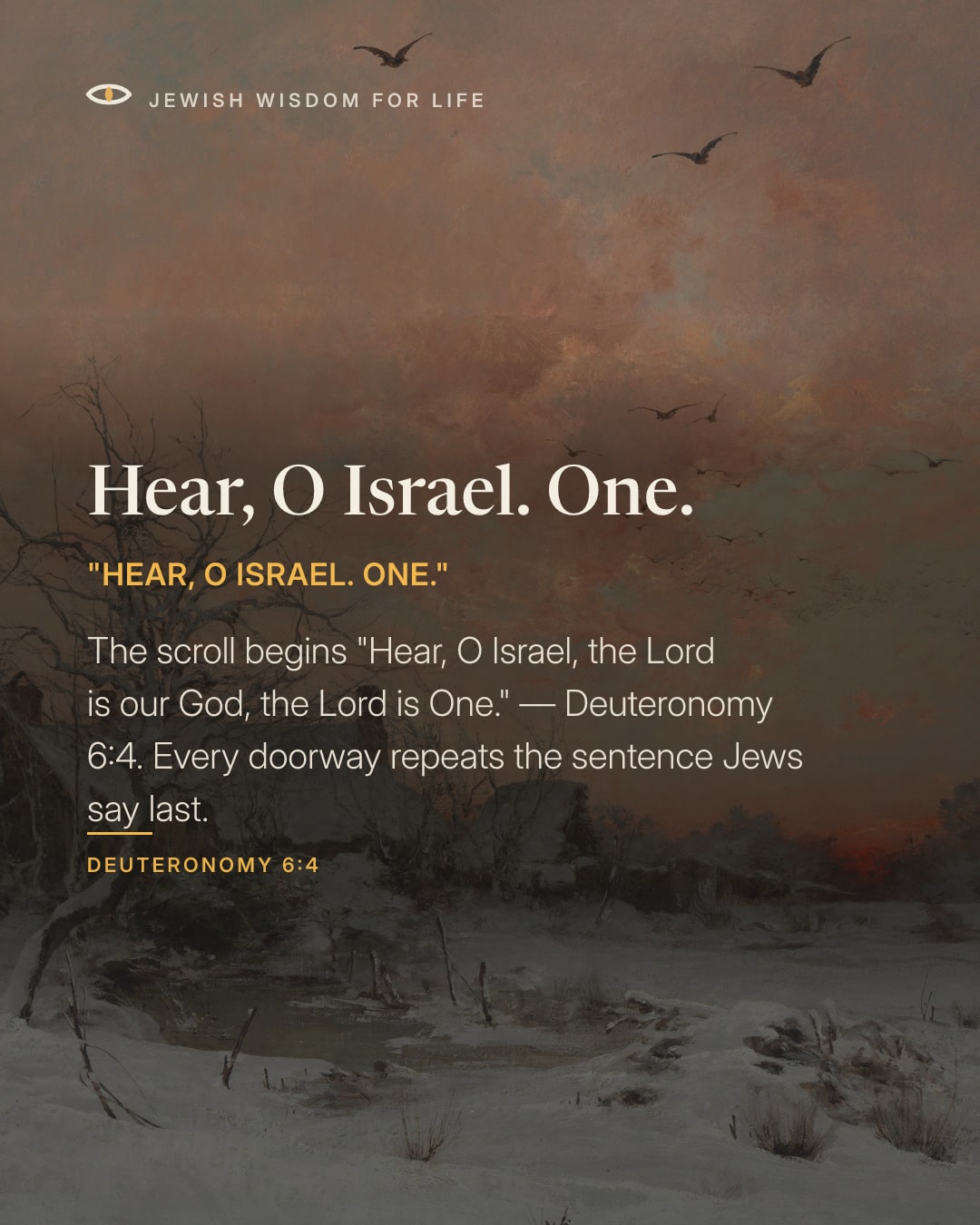
Hear, O Israel. One.
שמע ישראל“Hear, O Israel. One.”Deuteronomy 6:4
The scroll begins "Hear, O Israel, the Lord is our God, the Lord is One." — Deuteronomy 6:4. Every doorway repeats the sentence Jews say last.
- 5
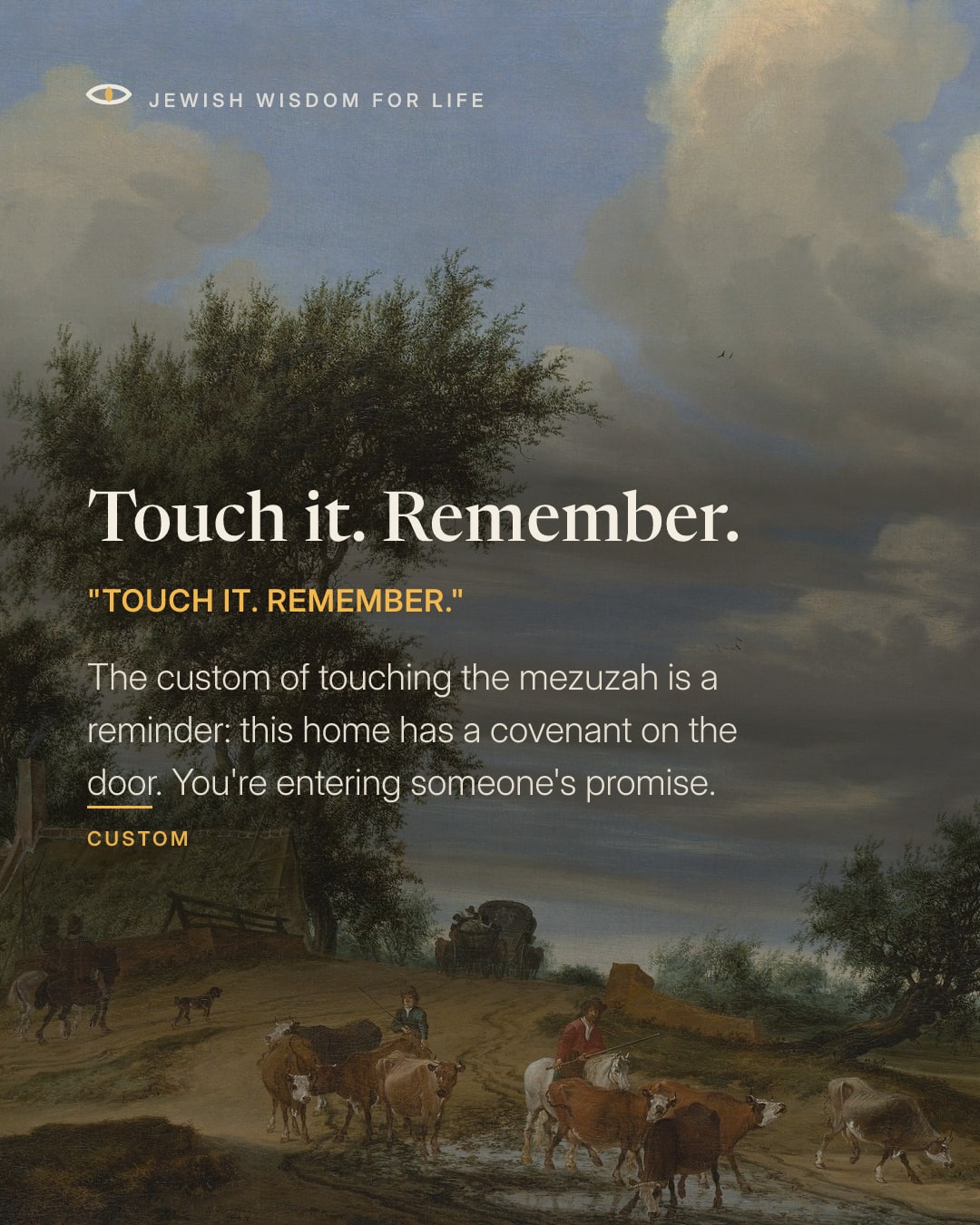
Touch it. Remember.
והיו הדברים“Touch it. Remember.”custom
The custom of touching the mezuzah is a reminder: this home has a covenant on the door. You're entering someone's promise.
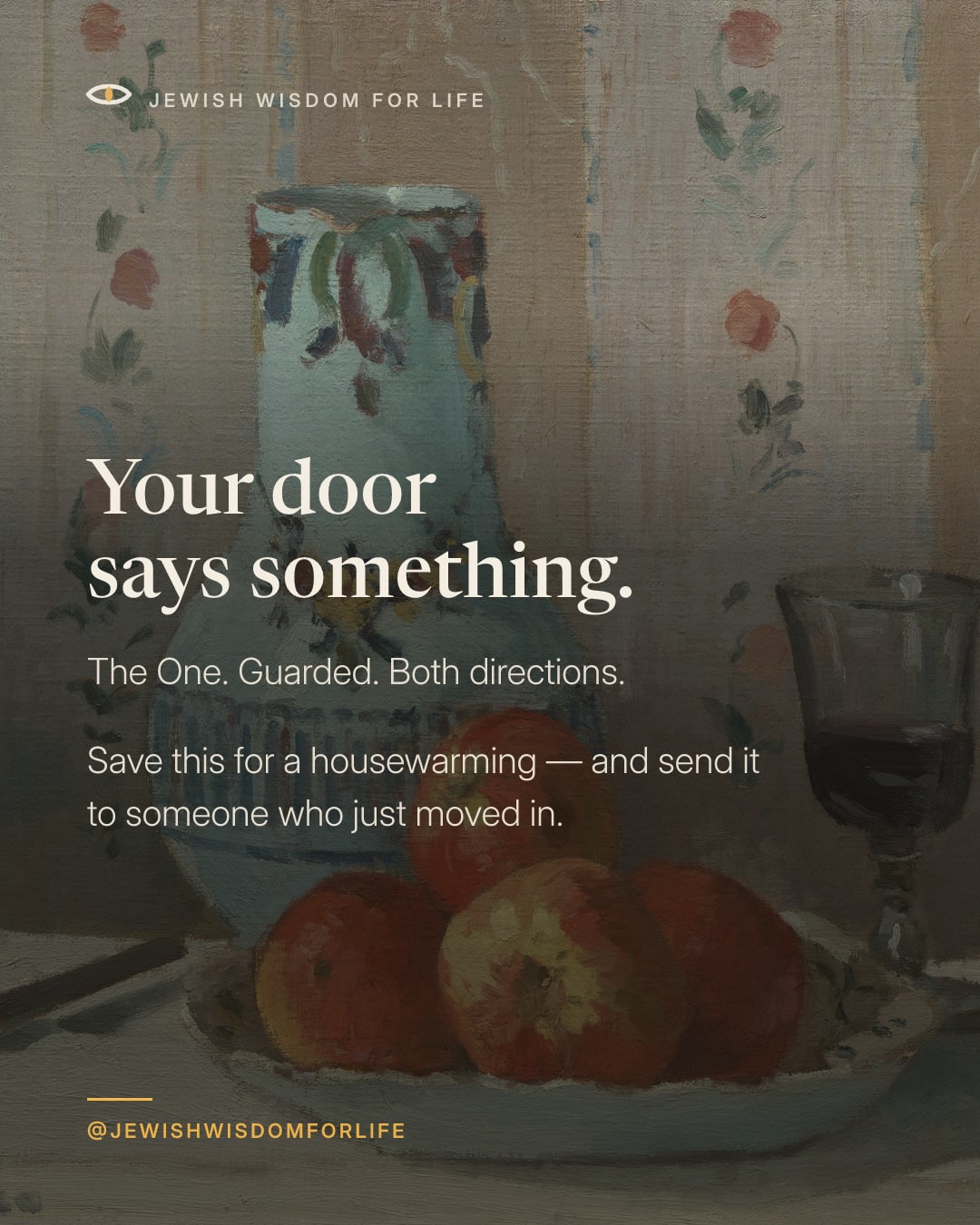
Your door says something.
The One. Guarded. Both directions.
Save this for a housewarming — and send it to someone who just moved in.
Sources
- Deuteronomy 6:9 on Sefaria
- Avodah Zarah 11a on Sefaria
- Psalm 121:8 on Sefaria
- Deuteronomy 6:4 on Sefaria
- custom
Art on the slides: Vincent van Gogh, Cypresses (1889) · Nicolas Poussin, Blind Orion Searching for the Rising Sun (1658) · Georges Seurat, Circus Sideshow (Parade de cirque) (1887–88) · Aelbert Cuyp, Piping Shepherds (ca. 1643–44) · Léon-Germain Pelouse, January: Cernay, near Rambouillet () · Salomon van Ruysdael, A Country Road (1648) · Camille Pissarro, Still Life with Apples and Pitcher (1872). The Metropolitan Museum of Art, open access.