Lesson 049 · posted Wed Sep 16 2026
Why Light Candles on Friday?
What Judaism says about the Shabbat flames: five ideas, each with its source.
5 things about the Shabbat flames. The week ends when you say so. Two flames, one home, on purpose.
- 1
Peace in the home comes first.
שלום בית“Peace in the home comes first.”Shabbat 23b
The Talmud rules: if you can afford only one, Shabbat candles beat even the Chanukah light — because of shalom bayit, peace in the home. — Shabbat 23b
- 2
Remember and keep.
זכור ושמור“Remember and keep.”Exodus 20:8
Two candles for two words: “Remember” the Sabbath — Exodus 20:8 — and “Keep” it — Deuteronomy 5:12. Two commandments, one moment.
- 3
Let there be light.
יהי אור“Let there be light.”Genesis 1:3
“Let there be light.” — Genesis 1:3. The first thing created. Friday evening, a home re-creates it on purpose.
- 4
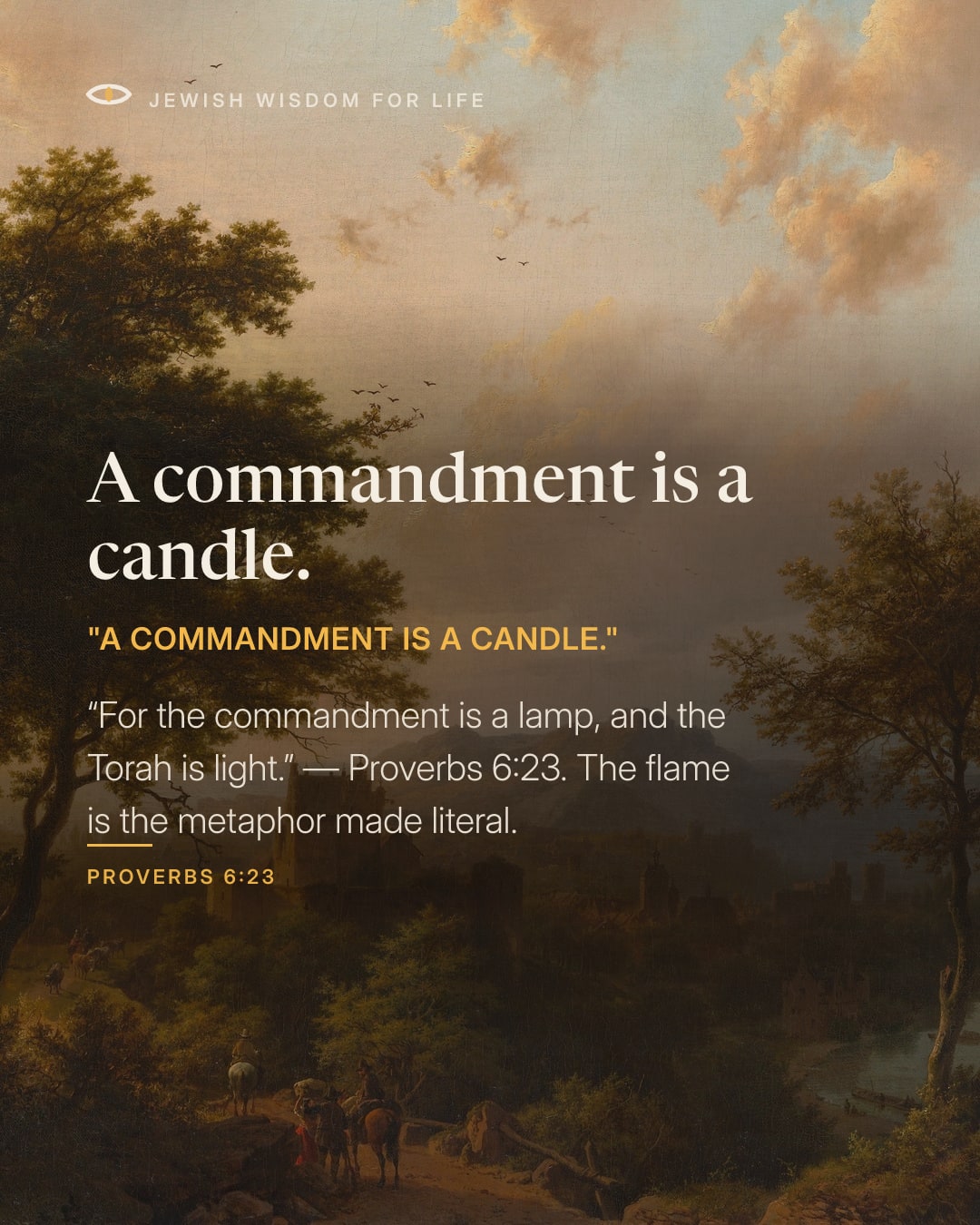
A commandment is a candle.
נר מצוה“A commandment is a candle.”Proverbs 6:23
“For the commandment is a lamp, and the Torah is light.” — Proverbs 6:23. The flame is the metaphor made literal.
- 5
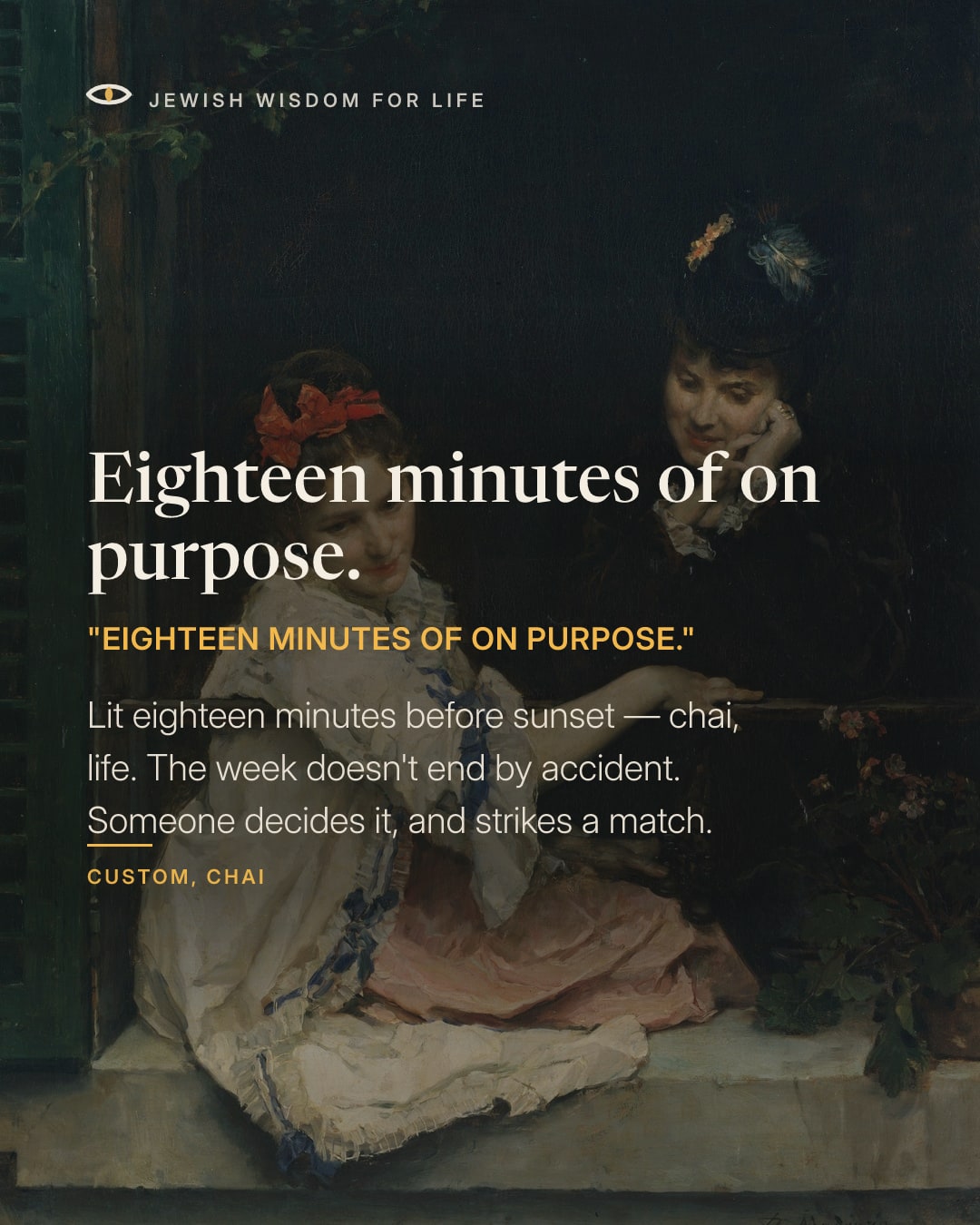
Eighteen minutes of on purpose.
ח״י“Eighteen minutes of on purpose.”custom, chai
Lit eighteen minutes before sunset — chai, life. The week doesn't end by accident. Someone decides it, and strikes a match.
The week ends when you say so.
Two flames, one home, on purpose.
Save this for Friday — and send it to someone who's never lit.
Sources
- Shabbat 23b on Sefaria
- Exodus 20:8 on Sefaria
- Genesis 1:3 on Sefaria
- Proverbs 6:23 on Sefaria
- custom, chai
Art on the slides: Auguste Renoir, A Road in Louveciennes (ca. 1870) · Antoine Watteau, Mezzetin (ca. 1718–20) · Johannes Vermeer, Young Woman with a Water Pitcher (ca. 1662) · Velázquez, Portrait of a Man (ca. 1650) · Barend Cornelis Koekkoek, Sunset on the Rhine (1853) · Raimundo de Madrazo y Garreta, Girls at a Window (ca. 1875) · Vincent van Gogh, Olive Trees (1889). The Metropolitan Museum of Art, open access.