Lesson 063 · posted Wed Sep 16 2026
Bored of Your Routine?
What Judaism says about newness: five ideas, each with its source.
5 things Judaism can teach us about newness. Routine is a frame. Attention is the picture. Same words, same mornings — new every single one.
- 1
New every morning.
חדשים לבקרים“New every morning.”Lamentations 3:23
“They are new every morning; great is Your faithfulness.” — Lamentations 3:23. Written in the ruins. Even there, mornings were new.
- 2
Sing a new song.
שיר חדש“Sing a new song.”Psalm 96:1
“Sing to the Lord a new song.” — Psalm 96:1. The same Psalm, sung for millennia, keeps commanding newness. That's the trick.
- 3
This day. As if new.
היום הזה“This day. As if new.”Deuteronomy 26:16
“This day the Lord commands you.” — Deuteronomy 26:16. Rashi: every day, treat the words as if given today. The routine is only old if you read it that way.
- 4
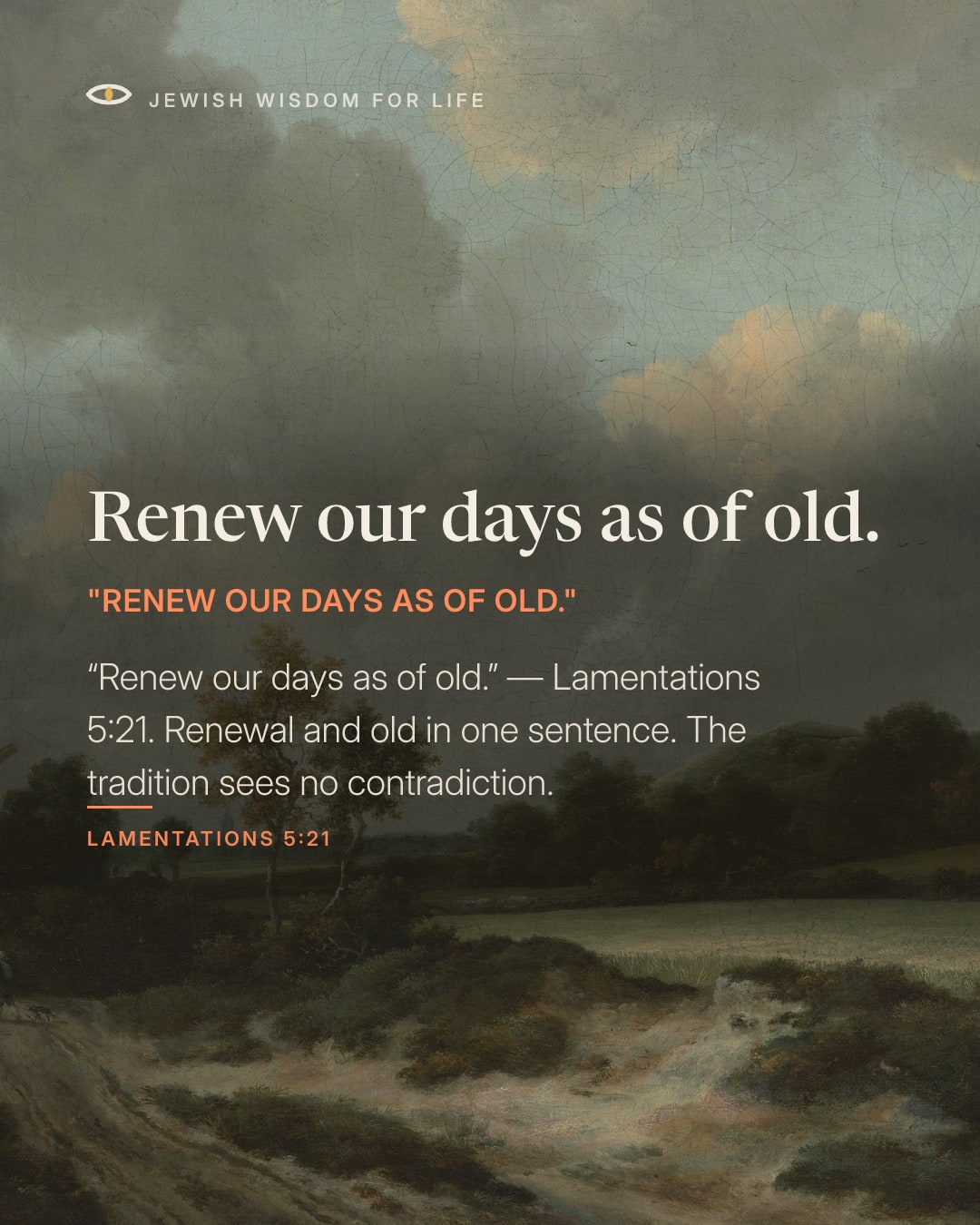
Renew our days as of old.
חדש ימינו“Renew our days as of old.”Lamentations 5:21
“Renew our days as of old.” — Lamentations 5:21. Renewal and old in one sentence. The tradition sees no contradiction.
- 5
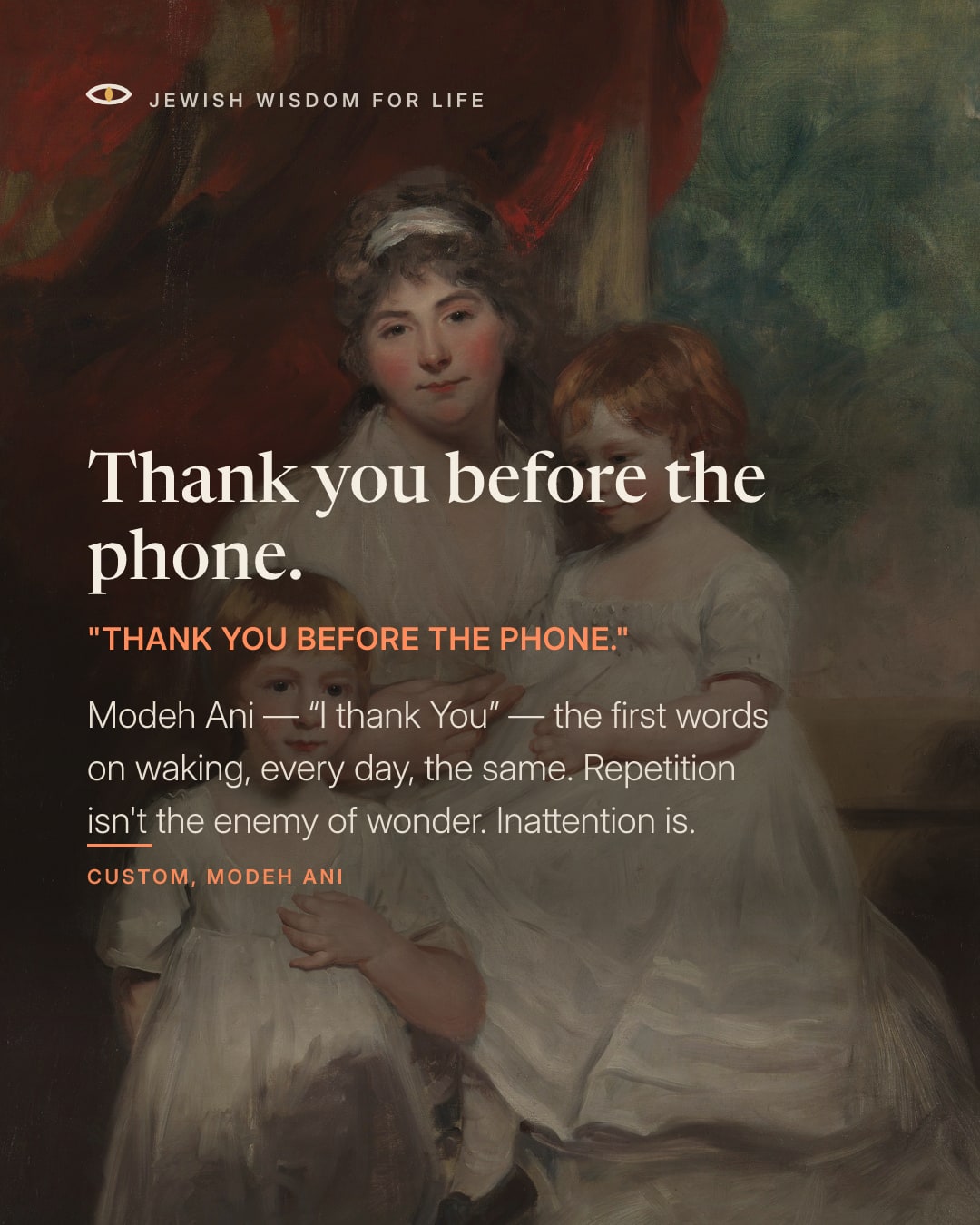
Thank you before the phone.
מודה אני“Thank you before the phone.”custom, Modeh Ani
Modeh Ani — “I thank You” — the first words on waking, every day, the same. Repetition isn't the enemy of wonder. Inattention is.
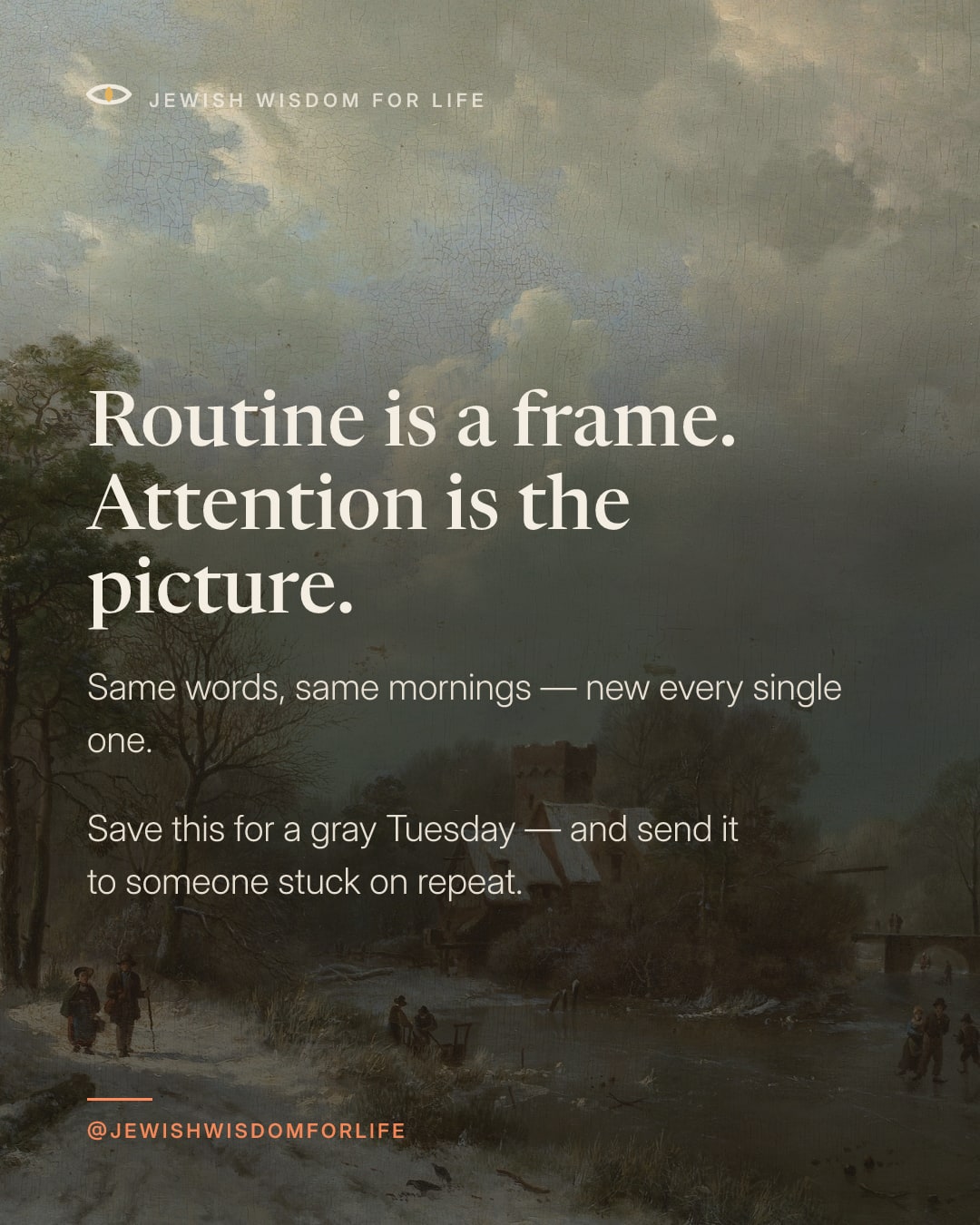
Routine is a frame. Attention is the picture.
Same words, same mornings — new every single one.
Save this for a gray Tuesday — and send it to someone stuck on repeat.
Sources
- Lamentations 3:23
- Psalm 96:1 on Sefaria
- Deuteronomy 26:16 on Sefaria
- Lamentations 5:21
- custom, Modeh Ani
Art on the slides: Edouard Manet, The Monet Family in Their Garden at Argenteuil (1874) · Richard Parkes Bonington, View near Rouen (ca. 1825) · Vincent van Gogh, Sunflowers (1887) · Edmond-François Aman-Jean, The Outskirts of a Village (ca. 1880) · Jacob van Ruisdael, Grainfields (mid- or late 1660s) · John Hoppner, Mrs. John Garden (Ann Garden, 1769–1842) and Her Children, John (1796–1854) and Ann Margaret (born 1793) (1796 or 1797) · Barend Cornelis Koekkoek, Winter Landscape, Holland (1833). The Metropolitan Museum of Art, open access.