Lesson 024 · posted Mon Sep 7 2026
Feel Like a Fraud?
What Judaism says about impostor syndrome: five ideas, each with its source.
5 things Judaism can teach us about impostor syndrome. Every prophet felt unqualified. The feeling isn’t evidence. It’s the entrance fee.
- 1
Moshe asked: who am I?
מי אנכי“Who am I that I should go to Pharaoh?”Exodus 3:11
At the burning bush, Moshe’s first words were not a résumé request. He asked God who he was. God’s answer wasn’t about Moshe. It was: “I will be with you.” The qualification was never supposed to be internal.
- 2
Jeremiah said: I’m just a boy.
נער אנכי“I do not know how to speak, for I am a boy.”Jeremiah 1:6
“I don’t know how to speak, I am a boy.” — Jeremiah 1:6. He became the prophet anyway. The feeling was real. The conclusion was wrong. The Talmud teaches: your own doubt is not evidence of your unfitness.
- 3
Akiva started at forty.
רבי עקיבא“If water, which is soft, can hollow out stone, which is hard, how much more can words of Torah carve into my heart.”Avot d’Rabbi Natan 6
Rabbi Akiva couldn’t read until age forty. One day he saw water wearing away stone and thought: if something soft can wear down something hard, then persistence can wear down anything — including the voice that says you’re too late. He learned. He became the greatest rabbi of his generation.
- 4
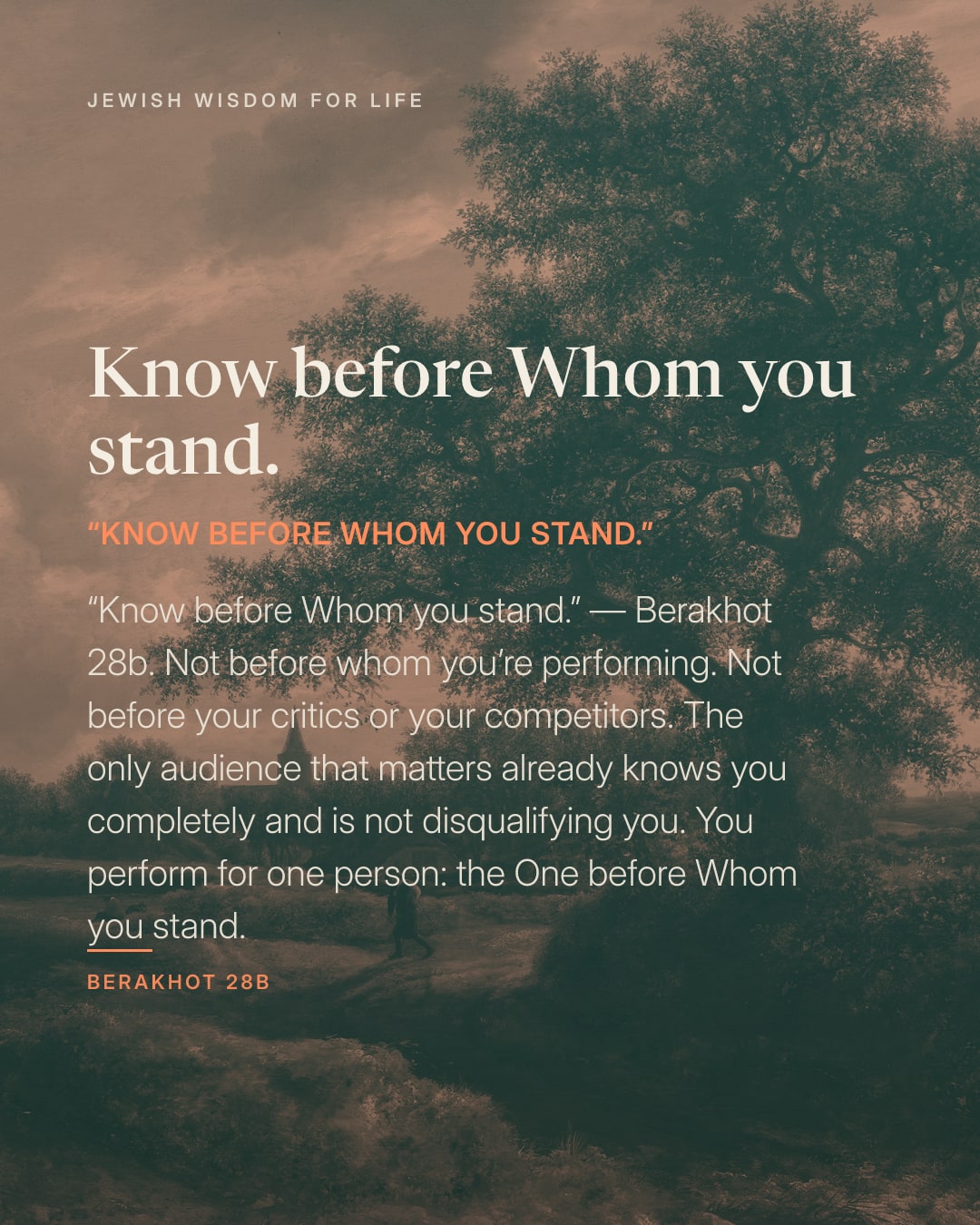
Know before Whom you stand.
לפני מי“Know before Whom you stand.”Berakhot 28b
“Know before Whom you stand.” — Berakhot 28b. Not before whom you’re performing. Not before your critics or your competitors. The only audience that matters already knows you completely and is not disqualifying you. You perform for one person: the One before Whom you stand.
- 5
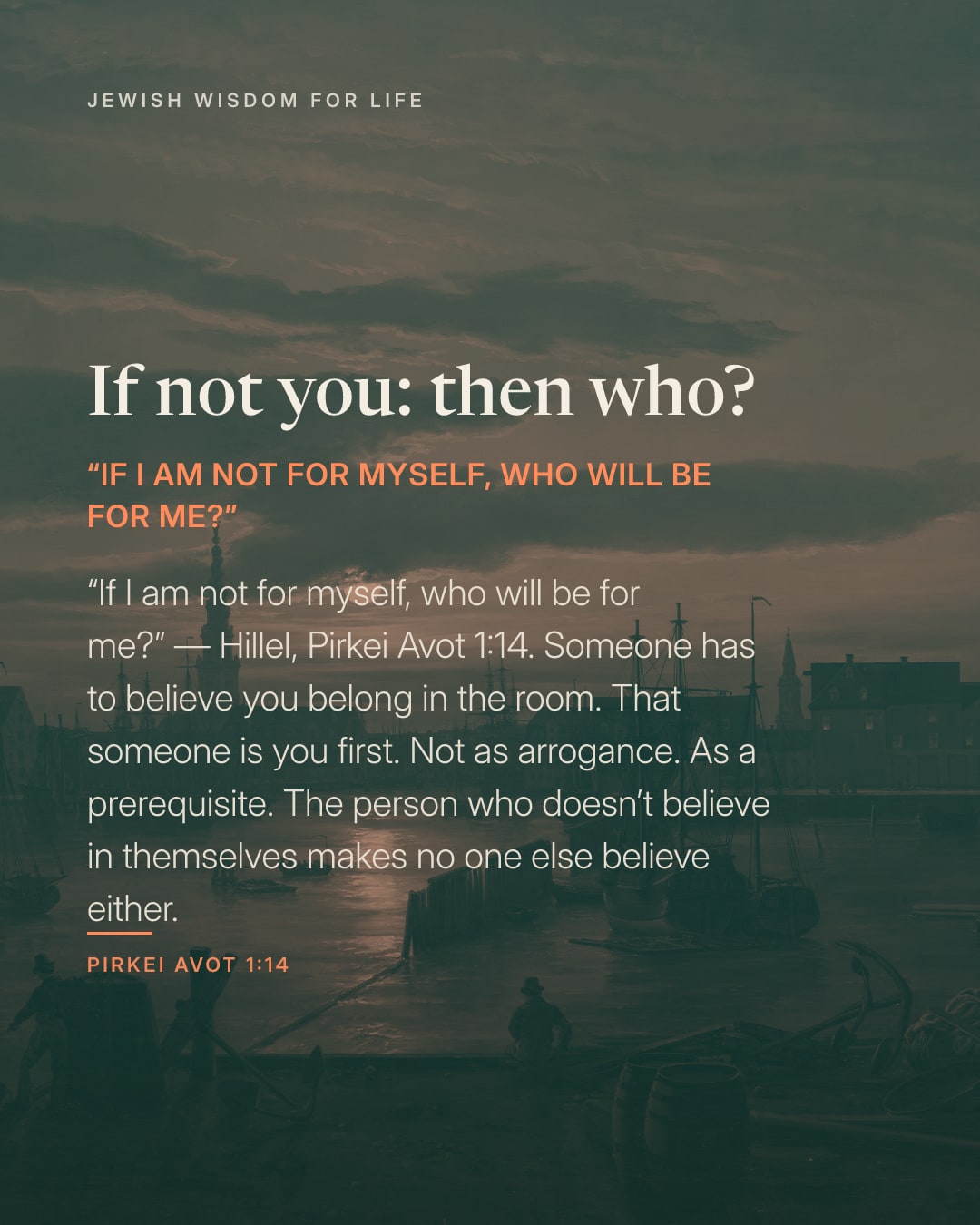
If not you: then who?
אם אין אני לי“If I am not for myself, who will be for me?”Pirkei Avot 1:14
“If I am not for myself, who will be for me?” — Hillel, Pirkei Avot 1:14. Someone has to believe you belong in the room. That someone is you first. Not as arrogance. As a prerequisite. The person who doesn’t believe in themselves makes no one else believe either.
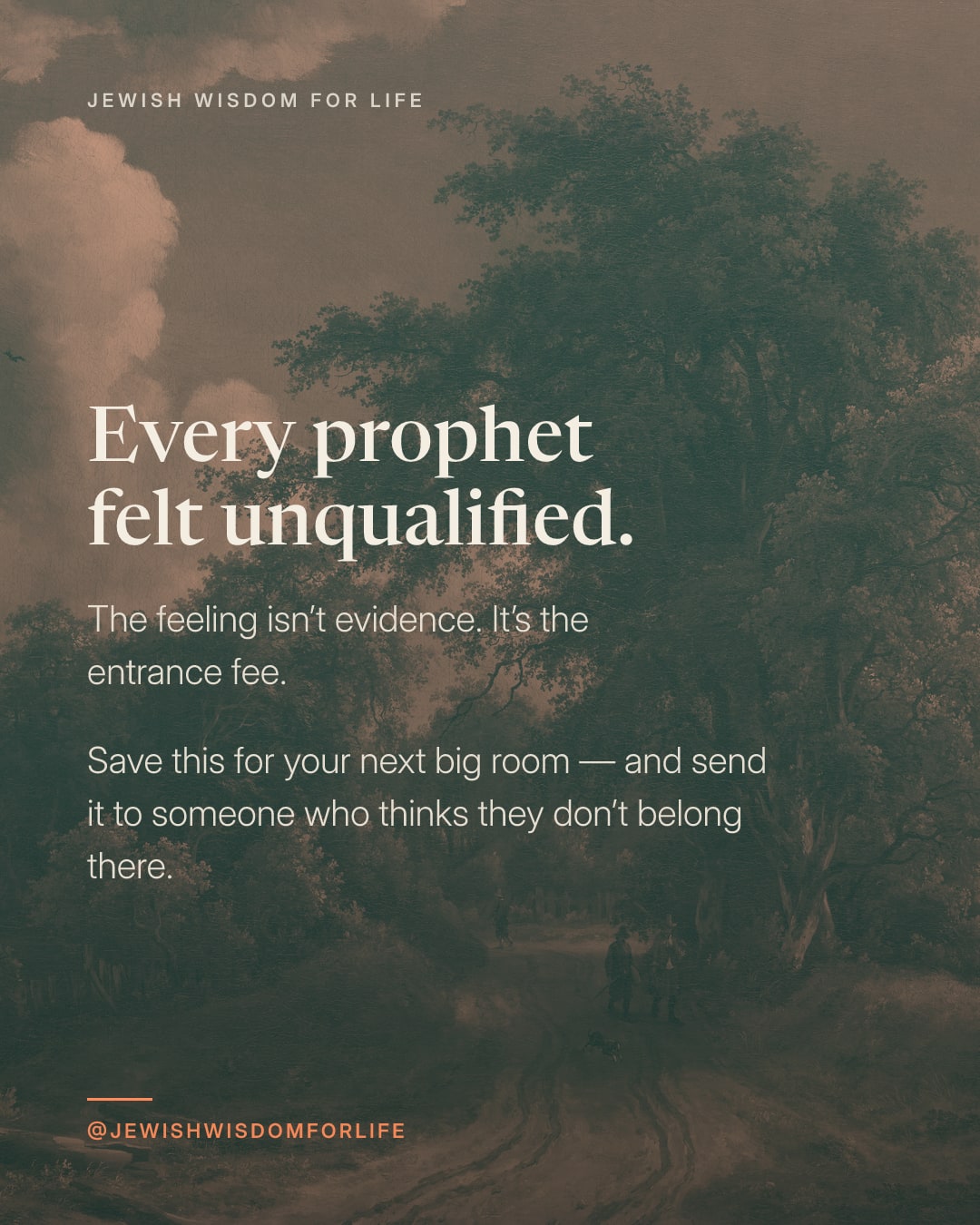
Every prophet felt unqualified.
The feeling isn’t evidence. It’s the entrance fee.
Save this for your next big room — and send it to someone who thinks they don’t belong there.
Sources
- Exodus 3:11 on Sefaria
- Jeremiah 1:6 on Sefaria
- Avot d’Rabbi Natan 6
- Berakhot 28b on Sefaria
- Pirkei Avot 1:14 on Sefaria
Art on the slides: Velázquez (Diego Rodríguez de Silva y Velázquez), Philip IV (1605–1665), King of Spain (probably 1624) · Vincent van Gogh, L'Arlésienne: Madame Joseph-Michel Ginoux (Marie Julien, 1848–1911) (1888–89) · Joseph Mallord William Turner, Whalers (ca. 1845) · Frederic Edwin Church, Heart of the Andes (1859) · Jacob van Ruisdael, Landscape with a Village in the Distance (1646) · Johan Christian Dahl, Copenhagen Harbor by Moonlight (1846) · Meyndert Hobbema, Woodland Road (ca. 1670). The Metropolitan Museum of Art, open access.