Lesson 025 · posted Mon Sep 7 2026
Why Fast on Yom Kippur?
5 things the holiest day is actually about. Hunger is the tool. Honesty is the point. Twenty-five hours to become someone who can look at themselves.
- 1
Not a punishment. A clearing.
תענו“You shall afflict your souls.”Leviticus 16:29
Leviticus 16:29 says "you shall afflict your souls" on the fast day. The rabbis read it not as punishment — a fine paid in hunger — but as clearing. An empty stomach hears differently. You cannot think straight when you are full. The hunger is a tool to hear yourself.
- 2
The prophet hated hollow fasting.
הלוא זה צום“Is this not the fast I choose: to loosen the bonds of injustice, to let the oppressed go free, and to break every yoke?”Isaiah 58:6–7
Isaiah 58:6–7, read on the morning of Yom Kippur itself, says God despises a fast that is only hunger. The fast God wants: free the oppressed, feed the hungry, clothe the naked. The hunger is a teacher, not the point. You enter the day having read the words that say it.
- 3
It doesn't fix what you owe people.
עד שירצה“Yom Kippur does not atone for the harm between one human being and another until they are reconciled.”Mishnah, Yoma 8:9
The Mishnah is blunt about this: Yom Kippur atones for what is between you and God. For what is between you and another person, Yom Kippur does nothing. You have to go to them first. The fast teaches you the need. The person teaches you the way.
- 4
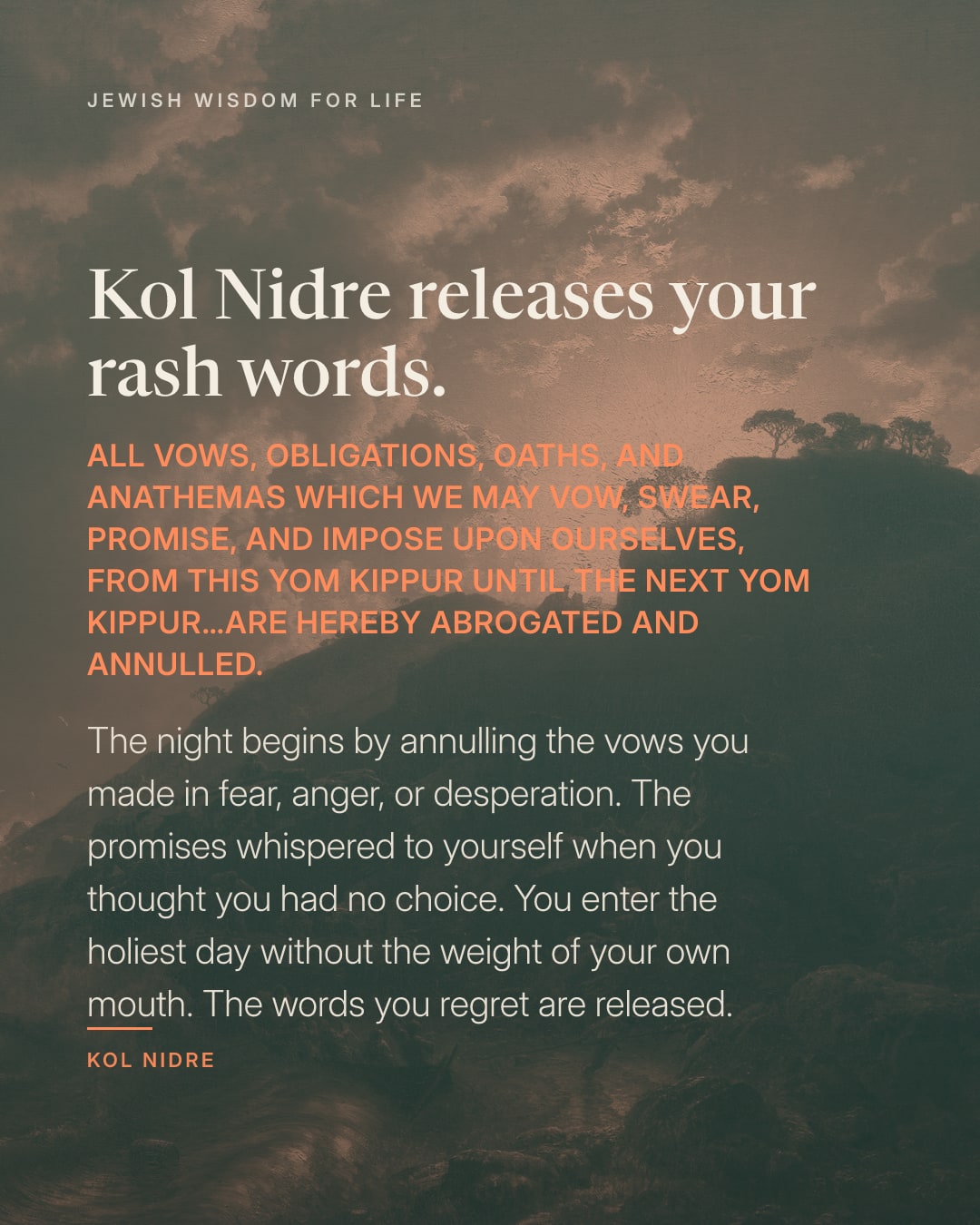
Kol Nidre releases your rash words.
כל נדרי“All vows, obligations, oaths, and anathemas which we may vow, swear, promise, and impose upon ourselves, from this Yom Kippur until the next Yom Kippur…are hereby abrogated and annulled.”Kol Nidre
The night begins by annulling the vows you made in fear, anger, or desperation. The promises whispered to yourself when you thought you had no choice. You enter the holiest day without the weight of your own mouth. The words you regret are released.
- 5
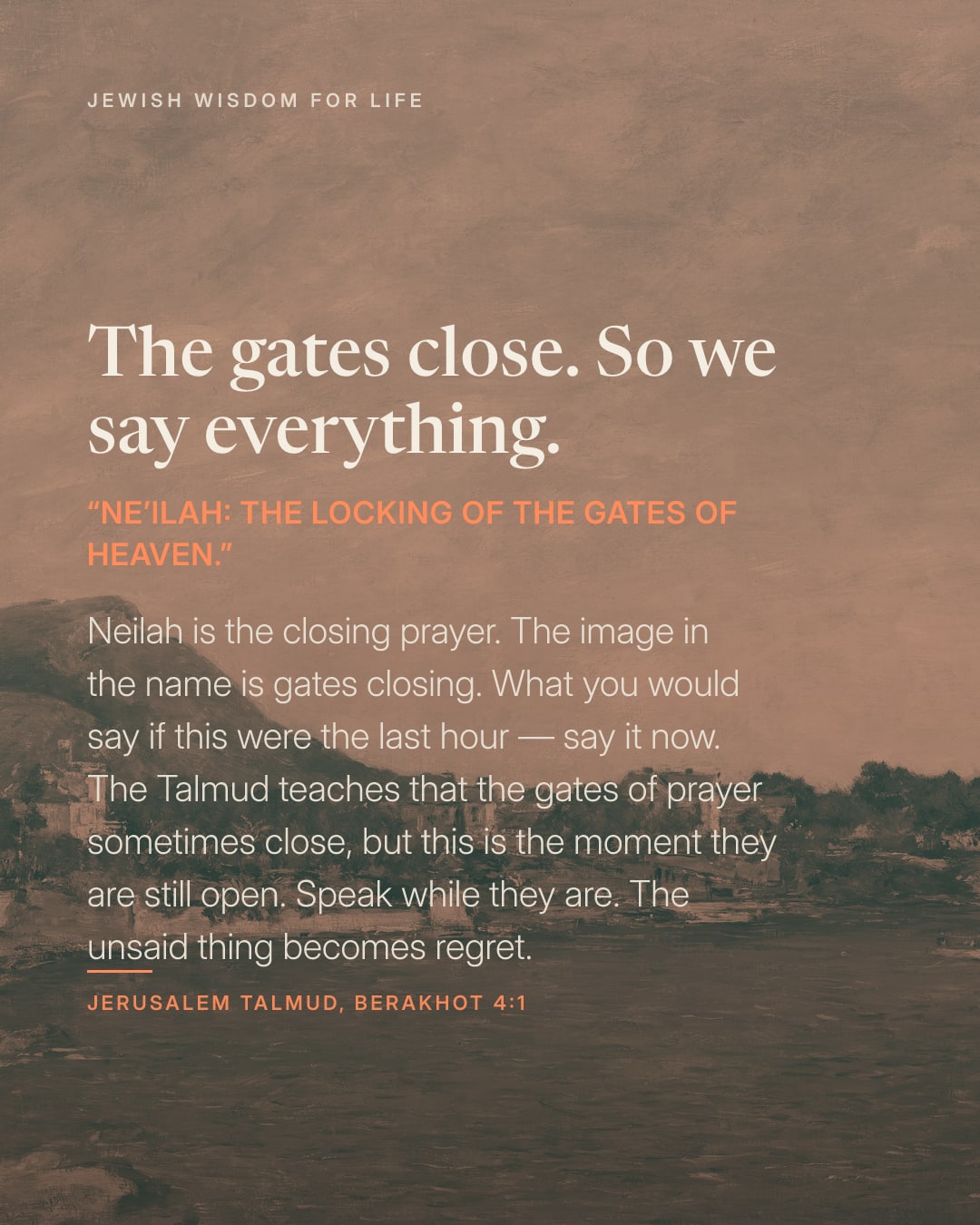
The gates close. So we say everything.
נעילה“Ne’ilah: the locking of the gates of Heaven.”Jerusalem Talmud, Berakhot 4:1
Neilah is the closing prayer. The image in the name is gates closing. What you would say if this were the last hour — say it now. The Talmud teaches that the gates of prayer sometimes close, but this is the moment they are still open. Speak while they are. The unsaid thing becomes regret.
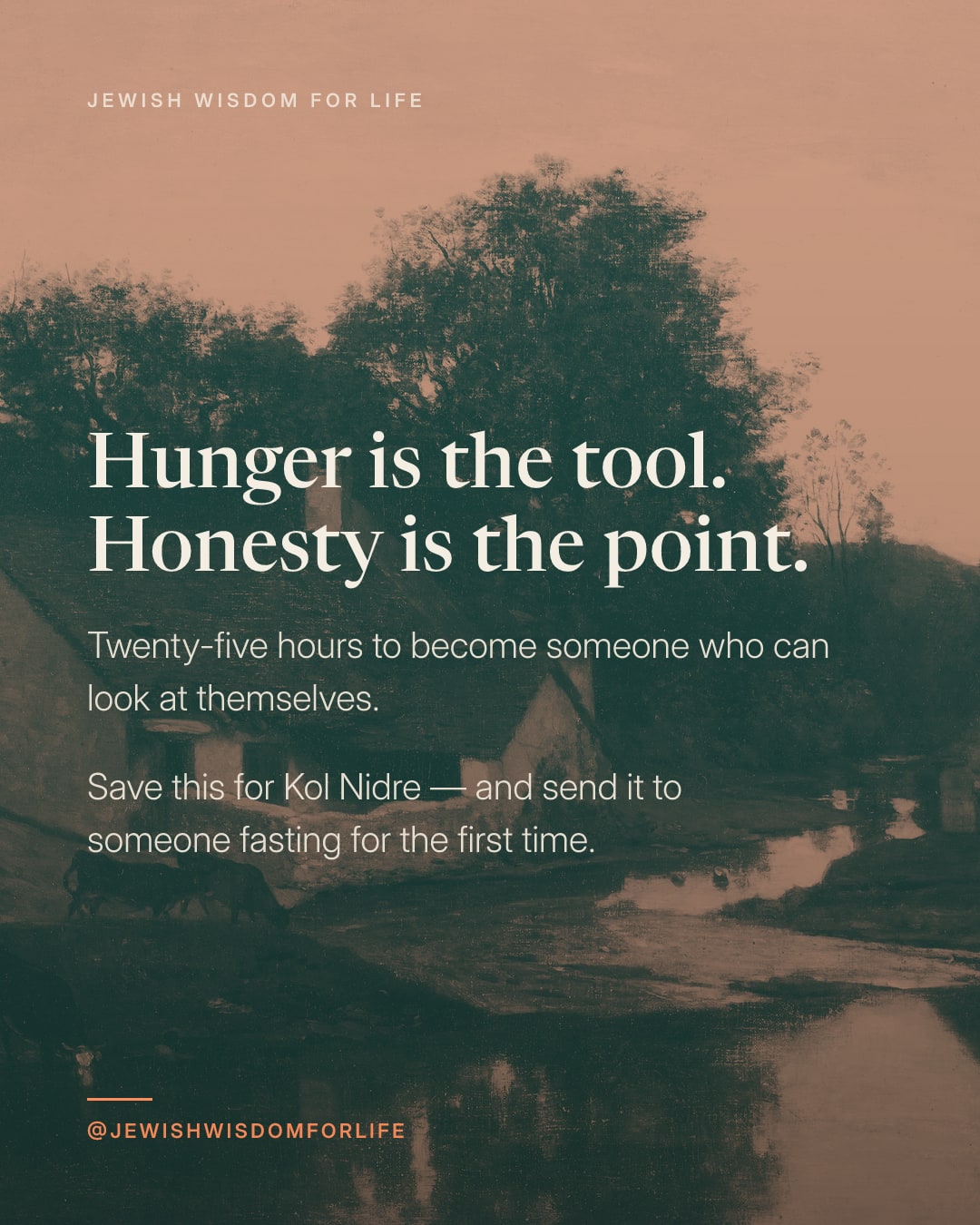
Hunger is the tool. Honesty is the point.
Twenty-five hours to become someone who can look at themselves.
Save this for Kol Nidre — and send it to someone fasting for the first time.
Sources
- Leviticus 16:29 on Sefaria
- Isaiah 58:6–7 on Sefaria
- Mishnah, Yoma 8:9
- Kol Nidre
- Jerusalem Talmud, Berakhot 4:1
Art on the slides: Eugène Boudin, On the Beach, Sunset (1865) · Charles-François Daubigny, The Banks of the Oise (1863) · Auguste Renoir, Sea and Cliffs (ca. 1885) · Pieter de Hooch, The Visit (ca. 1657) · Andreas Achenbach, Sunset after a Storm on the Coast of Sicily (1853) · Eugène Boudin, Beaulieu: The Bay of Fourmis (1892) · Charles-François Daubigny, The Hamlet of Optevoz (ca. 1852). The Metropolitan Museum of Art, open access.