Lesson 026 · posted Tue Sep 8 2026
Struggling With Faith?
What Judaism says about doubt: five ideas, each with its source.
5 things Judaism can teach us about doubt. Doubt is not the opposite of faith. Silence is. Keep talking to Him — even if it's arguing.
- 1
Avraham argued with God.
השופט“Shall the Judge of all the earth not do justice?”Genesis 18:25
Genesis 18:25. The first Jew's faith included cross-examining God. Abraham stood before Him and argued. Doubt wasn't disqualifying. It was intimacy.
- 2
Israel means wrestles with God.
שרית“For you have struggled with God and prevailed.”Genesis 32:29
Genesis 32:29. Yaakov wrestled all night and was renamed Israel. The nation is not named after obedience. It's named after the struggle. Striving with God is in the name.
- 3
The Psalms scream How long?
עד אנה“How long, O Lord, will You forget me forever?”Psalm 13
Psalm 13. It's in the prayer book. Complaint is a form of faith. Not silence. Crying out. The Psalms are full of it.
- 4
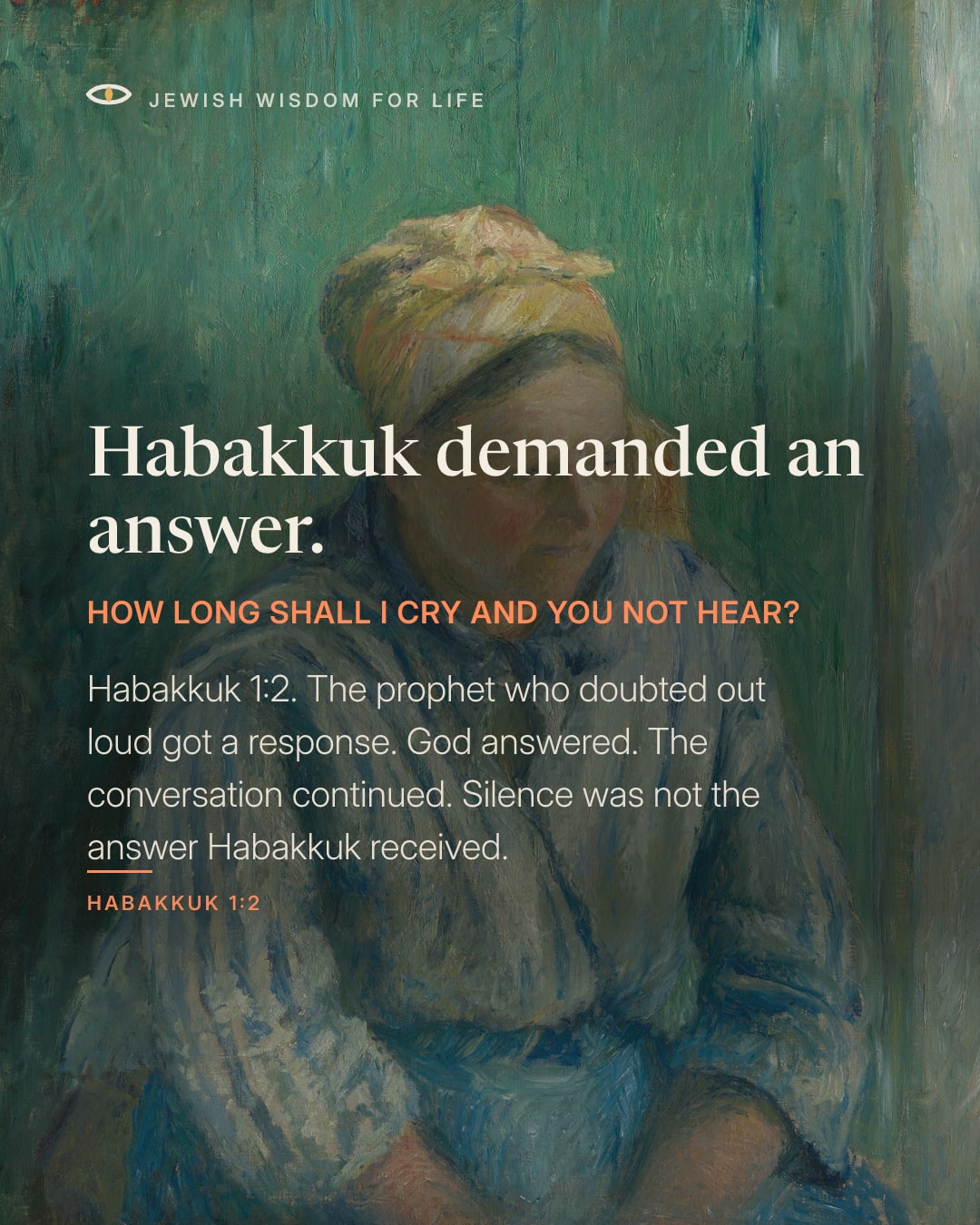
Habakkuk demanded an answer.
חבקוק“How long shall I cry and You not hear?”Habakkuk 1:2
Habakkuk 1:2. The prophet who doubted out loud got a response. God answered. The conversation continued. Silence was not the answer Habakkuk received.
- 5
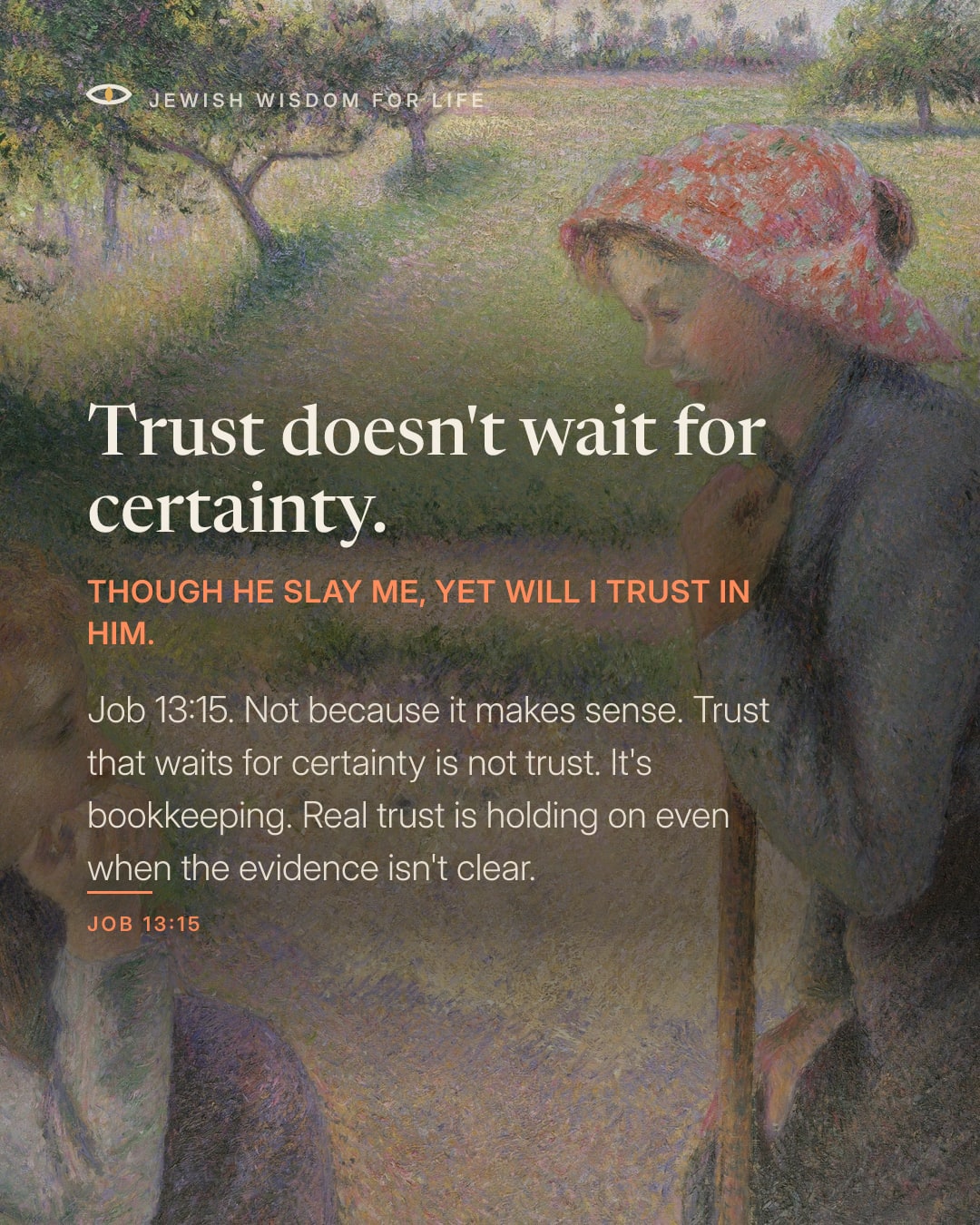
Trust doesn't wait for certainty.
איוב“Though He slay me, yet will I trust in Him.”Job 13:15
Job 13:15. Not because it makes sense. Trust that waits for certainty is not trust. It's bookkeeping. Real trust is holding on even when the evidence isn't clear.
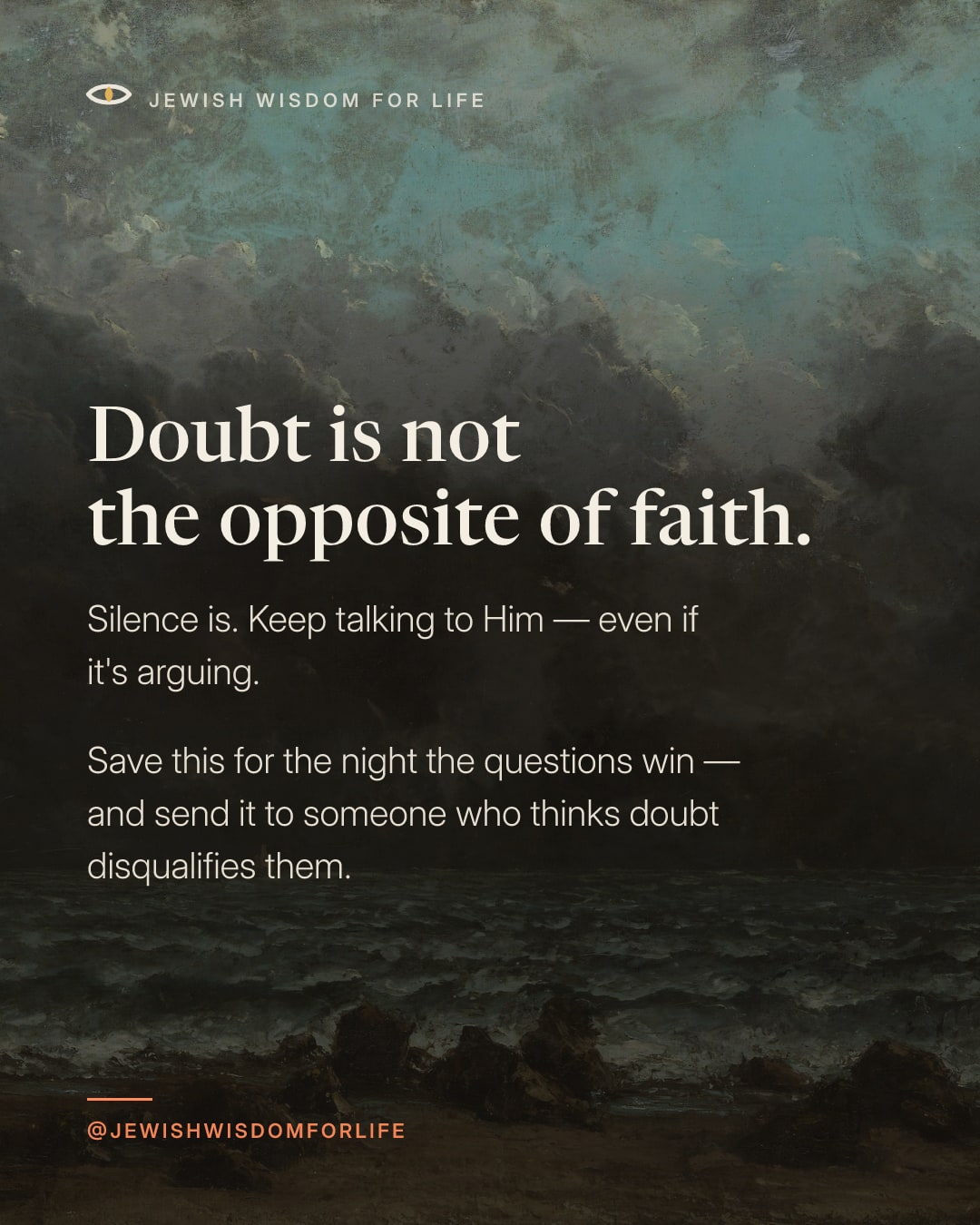
Doubt is not the opposite of faith.
Silence is. Keep talking to Him — even if it's arguing.
Save this for the night the questions win — and send it to someone who thinks doubt disqualifies them.
Sources
- Genesis 18:25 on Sefaria
- Genesis 32:29 on Sefaria
- Psalm 13 on Sefaria
- Habakkuk 1:2 on Sefaria
- Job 13:15 on Sefaria
Art on the slides: Pieter de Hooch, Woman with a Water Pitcher, and a Man by a Bed (ca. 1667–70) · Pieter de Hooch, Paying the Hostess (ca. 1670) · Camille Pissarro, The Public Garden at Pontoise (1874) · Camille Pissarro, Barges at Pontoise (1876) · Camille Pissarro, Washerwoman, Study (1880) · Camille Pissarro, Two Young Peasant Women (1891–92) · Gustave Courbet, The Sea (1865 or later). The Metropolitan Museum of Art, open access.