Lesson 055 · posted Tue Sep 15 2026
Can't Let Go of the Past?
What Judaism says about moving on: five ideas, each with its source.
5 things Judaism can teach us about moving on. The past is a place you visit. Not a place you live. Turn around before the salt sets.

- 1
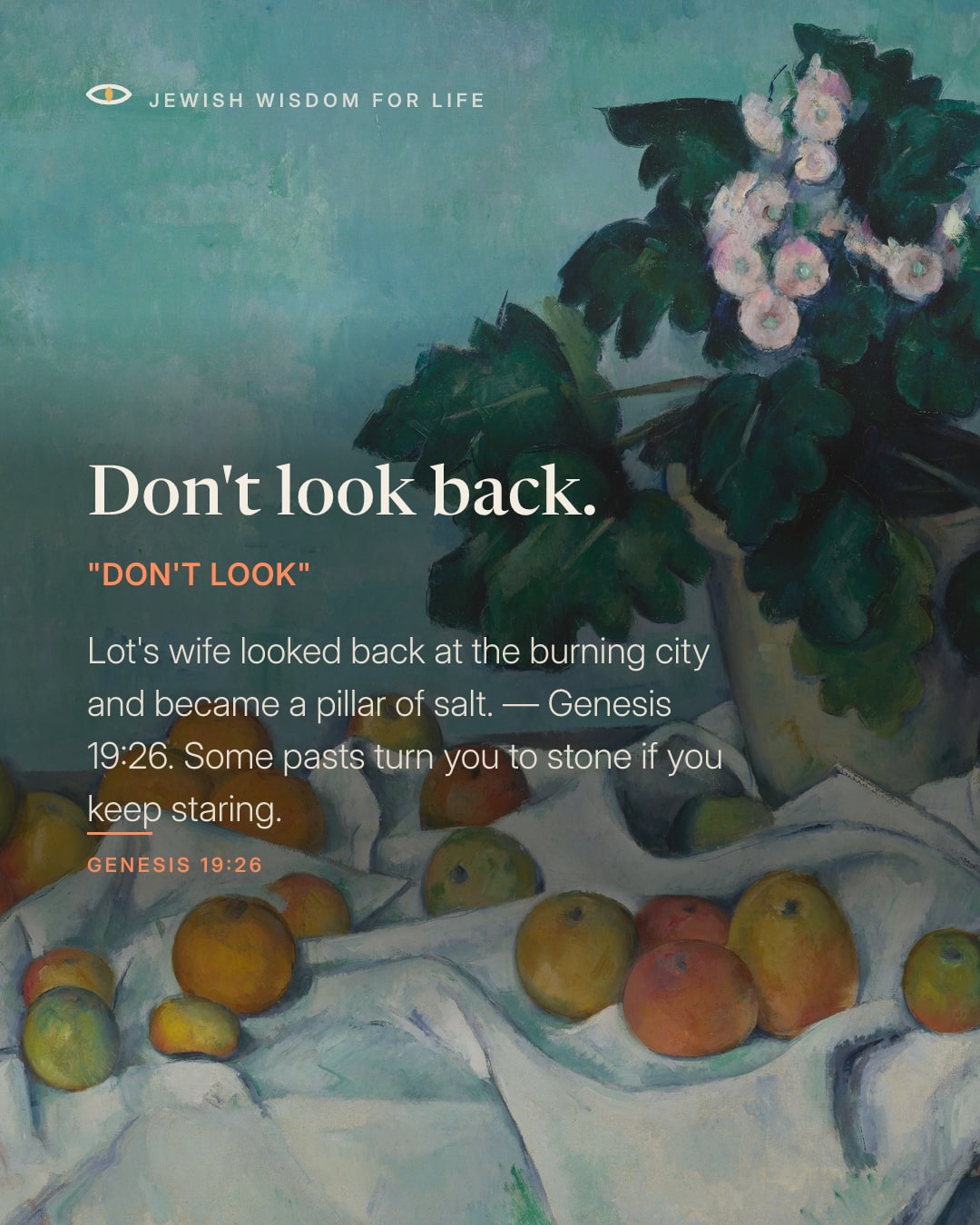
Don't look back.
נציב מלח“Don't look”Genesis 19:26
Lot's wife looked back at the burning city and became a pillar of salt. — Genesis 19:26. Some pasts turn you to stone if you keep staring.
- 2
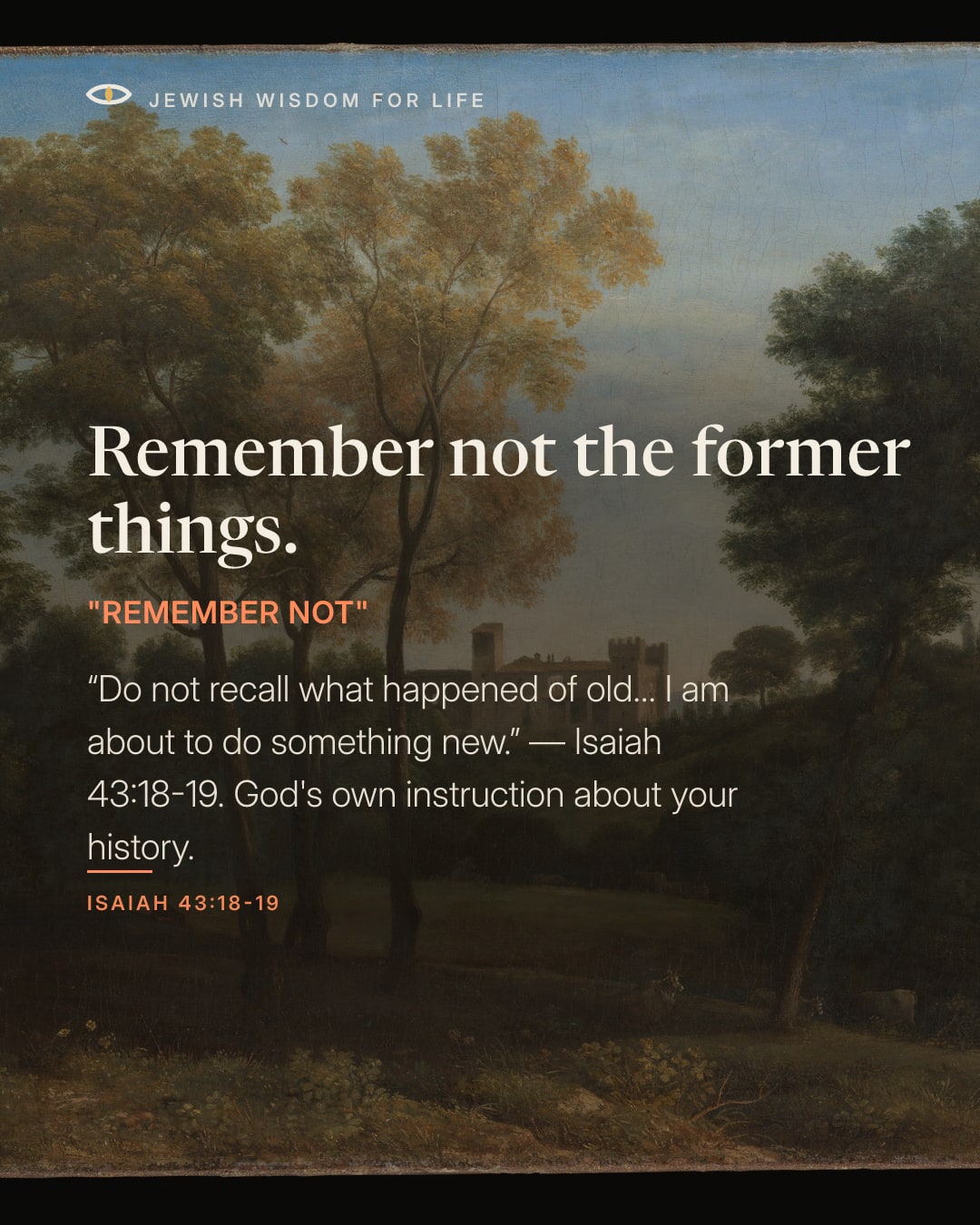
Remember not the former things.
אל תזכרו ראשנות“Remember not”Isaiah 43:18-19
“Do not recall what happened of old… I am about to do something new.” — Isaiah 43:18-19. God's own instruction about your history.
- 3
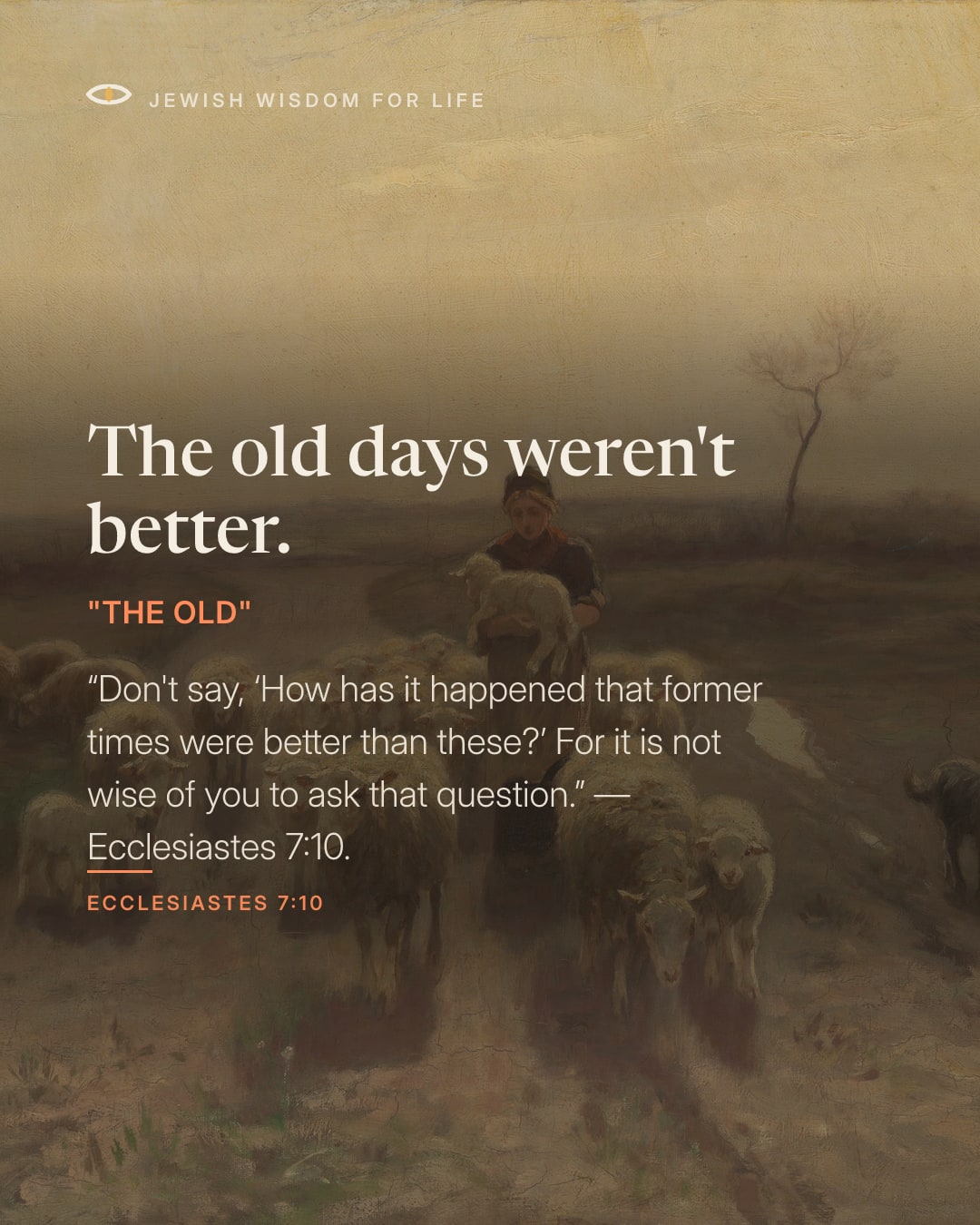
The old days weren't better.
לא מחכמה“The old”Ecclesiastes 7:10
“Don't say, ‘How has it happened that former times were better than these?’ For it is not wise of you to ask that question.” — Ecclesiastes 7:10.
- 4
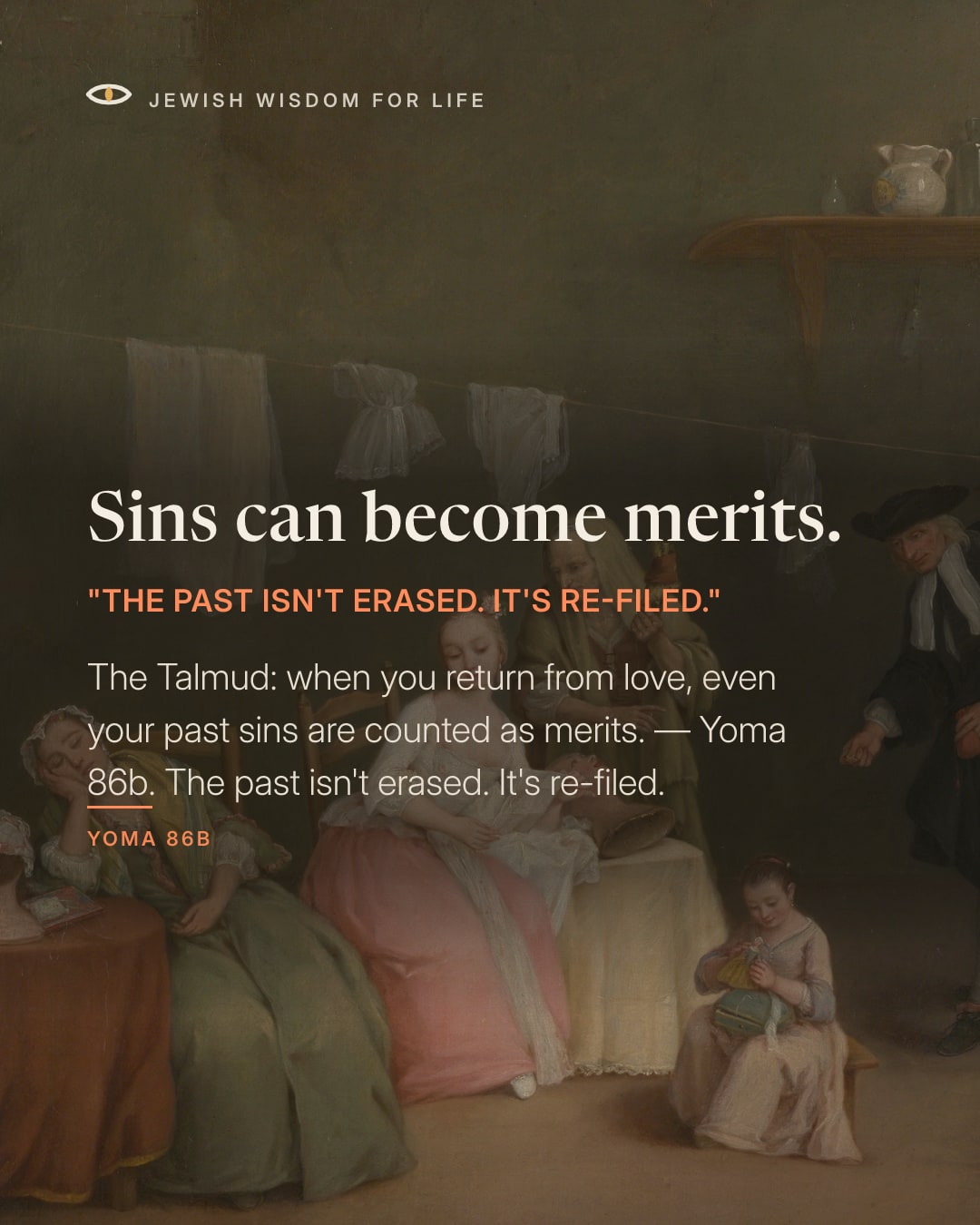
Sins can become merits.
זכיות“The past isn't erased. It's re-filed.”Yoma 86b
The Talmud: when you return from love, even your past sins are counted as merits. — Yoma 86b. The past isn't erased. It's re-filed.
- 5
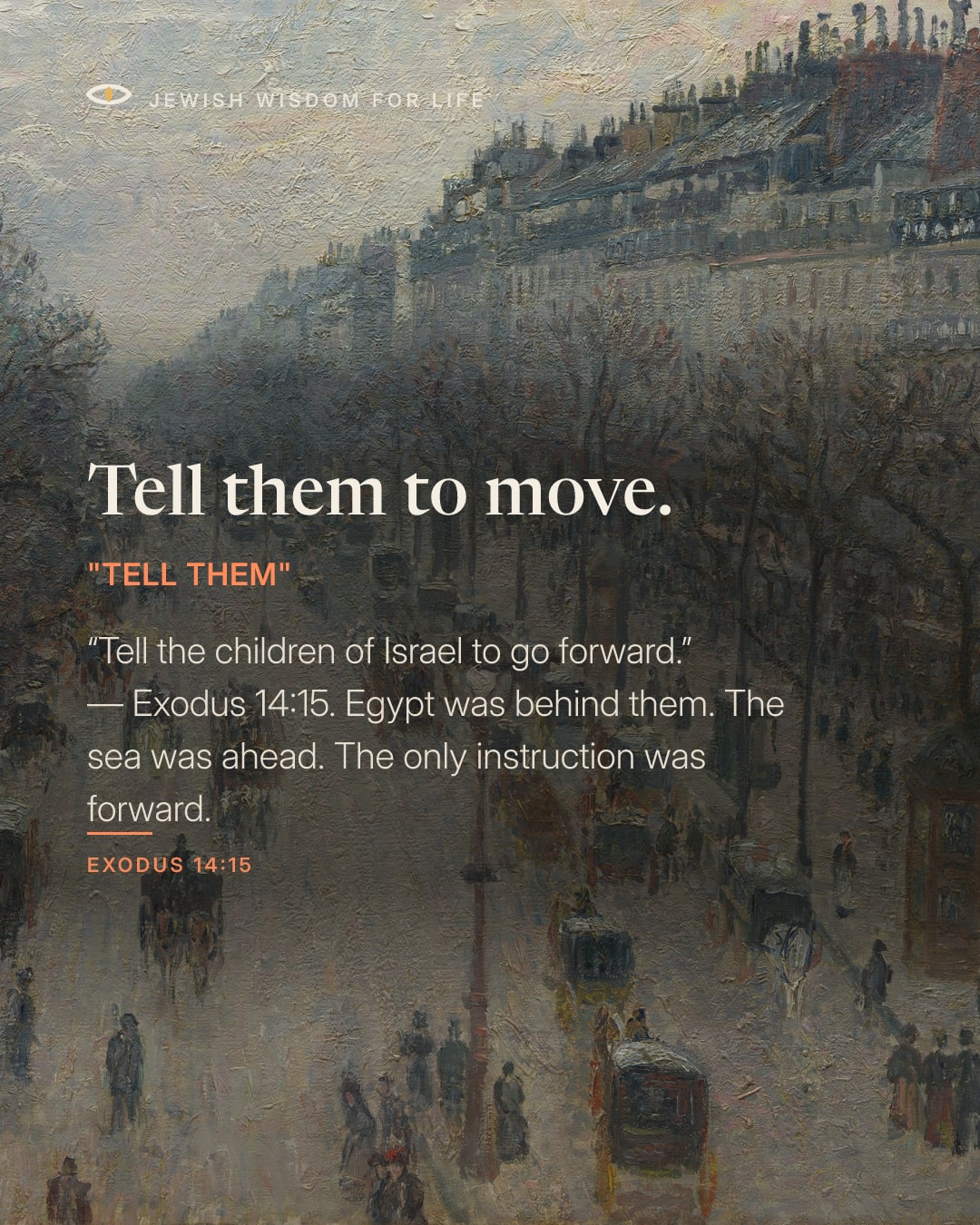
Tell them to move.
ויסעו“Tell them”Exodus 14:15
“Tell the children of Israel to go forward.” — Exodus 14:15. Egypt was behind them. The sea was ahead. The only instruction was forward.
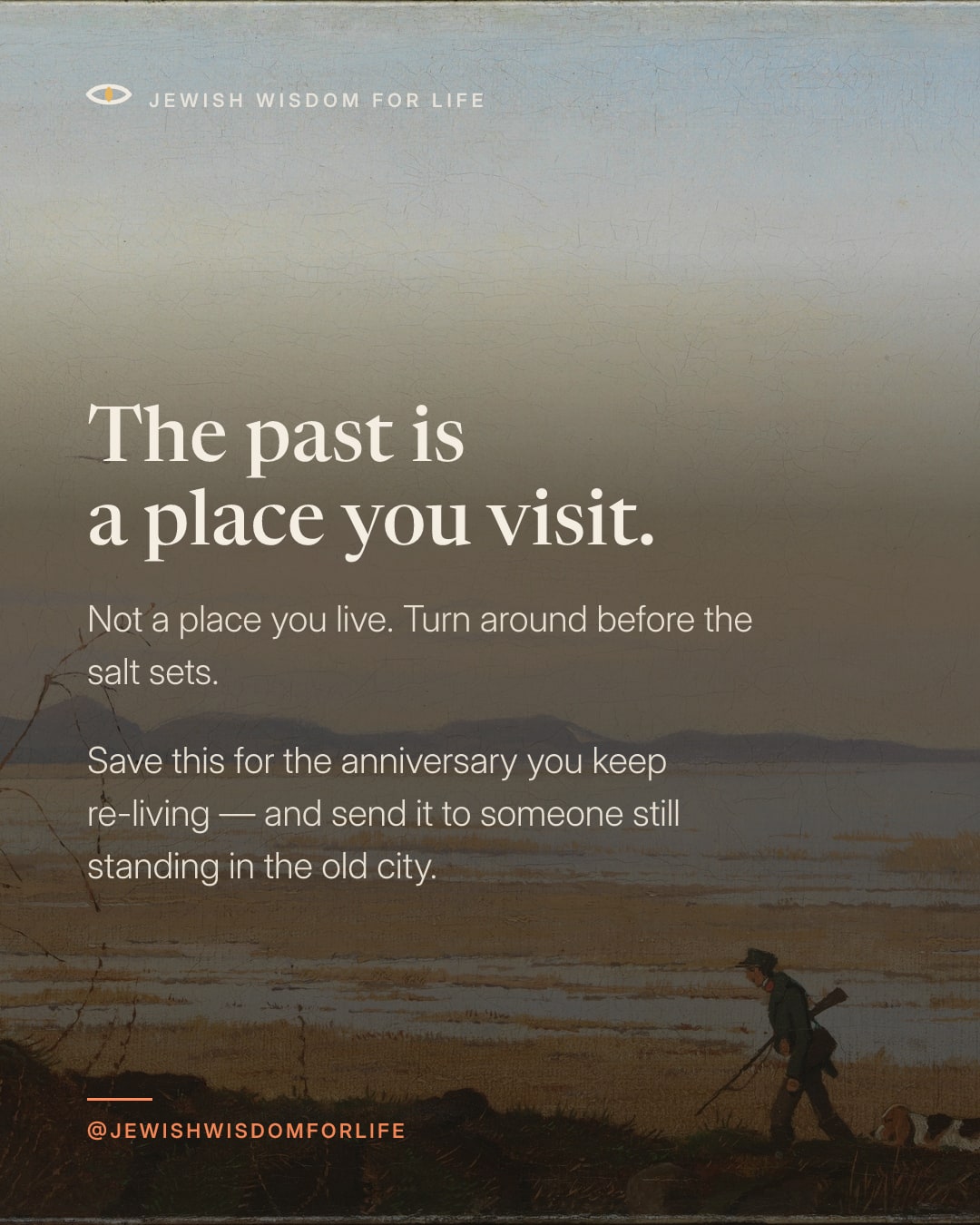
The past is a place you visit.
Not a place you live. Turn around before the salt sets.
Save this for the anniversary you keep re-living — and send it to someone still standing in the old city.
Sources
- Genesis 19:26 on Sefaria
- Isaiah 43:18-19 on Sefaria
- Ecclesiastes 7:10 on Sefaria
- Yoma 86b on Sefaria
- Exodus 14:15 on Sefaria
Art on the slides: Pieter de Hooch, Paying the Hostess (ca. 1670) · Paul Cézanne, Still Life with Apples and a Pot of Primroses (ca. 1890) · Claude Lorrain (Claude Gellée), View of La Crescenza (1648–50) · Anton Mauve, A Shepherdess and Her Flock · Pietro Longhi (Pietro Falca), The Letter (1746) · Camille Pissarro, The Boulevard Montmartre on a Winter Morning (1897) · Johan Thomas Lundbye, An Evening beside Lake Arresø (ca. 1837). The Metropolitan Museum of Art, open access.